
Beautiful Plants For Your Interior
Beautiful Plants For Your Interior
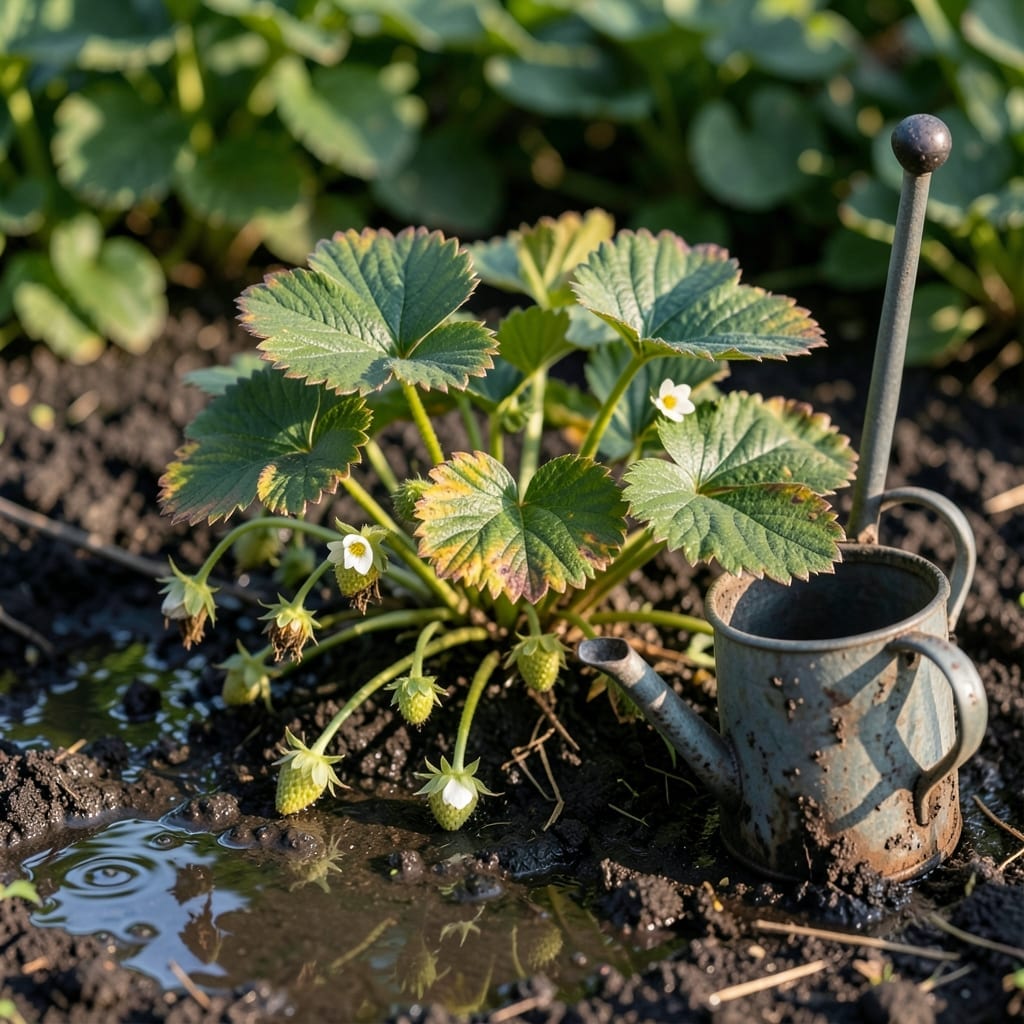
Strawberry leaves turning yellow and wilting? I’ve been there—watching my plants drown in what I thought was care. Overwatering is sneakier than drought because it looks like thirst at first.
The fix starts with letting the soil dry between waterings. Strawberries need moisture, but their roots will rot in soggy conditions. I learned this after losing half a bed to my enthusiasm with the hose.
You’ll see improvement in 3-5 days once the roots can breathe again. The key is consistent moisture without waterlogging, and using well-draining soil helps prevent future issues.
This works for in-ground plants, containers, and hanging baskets. Rescue is possible if you act fast.
Overwatering strawberries disrupts their delicate balance, leading to droopy, yellowing, or wilting leaves. Here’s why it happens, broken down by the root causes:
Strawberry roots need oxygen to thrive. When soil is constantly saturated, water fills the air pockets, suffocating the roots. This anaerobic stress prevents nutrient uptake (like nitrogen and potassium) and triggers root rot. Fusarium and Phytophthora fungi thrive in waterlogged soil, attacking roots and stunting leaf health.
Heavy or compacted soil (like clay) traps water around the roots. Even if you water moderately, poor drainage mimics overwatering. Strawberries in containers without drainage holes are especially vulnerable—water pools at the bottom, drowning the root system over time.
Inconsistent watering—drowning plants after dry spells—shocks the roots. Strawberries prefer steady moisture (1–1.5 inches per week). Sudden overwatering after drought stress causes cells to burst from rapid water uptake, leading to limp, dark-green leaves.
Cool, humid weather slows evaporation, so soil stays wet longer. If you water on a fixed schedule without adjusting for climate, you risk overwatering. Strawberry leaves also transpire less in high humidity, reducing their ability to “breathe” and process excess water.
If your strawberry plants are showing signs of overwatering, act quickly to restore their health. Below are targeted solutions for common issues, along with prevention tips to keep your plants thriving.
Yellow leaves often signal waterlogged roots. Move your strawberries to a pot with drainage holes or amend garden soil with compost and perlite to improve airflow. If planted in containers, ensure excess water can escape easily. Prevention tip: Use raised beds or well-draining soil mixes to avoid future issues.
Wilting can paradoxically result from both under- and overwatering. Let the top inch of soil dry out before watering again. Stick your finger in the soil—if it feels damp, hold off. Prevention tip: Water deeply but less frequently (2-3 times per week) rather than daily light sprinkles.
Fungal growth thrives in damp conditions. Remove affected leaves and space plants 12-18 inches apart for better air circulation. Mulch with straw to prevent soil splashing onto leaves. Prevention tip: Water at the base of the plant, not the leaves, and avoid overhead watering.
If roots are brown and mushy, gently remove the plant, trim the rotten roots with clean shears, and repot in fresh, dry soil. For garden plants, improve drainage by mixing in sand or organic matter. Prevention tip: Avoid soggy soil by checking moisture levels with a meter or your finger.
💡 Pro tip: Always use room-temperature water to avoid shocking the roots, and water in the morning so excess moisture evaporates during the day.
Water deeply 2-3 times per week, letting the top inch of soil dry between sessions. Morning watering is best to allow evaporation during the day.
Use well-draining soil mixed with compost and perlite. For containers, ensure pots have drainage holes to prevent waterlogging.
Yes, trim mushy roots with clean shears and repot in fresh, dry soil. Recovery takes 1-2 weeks if caught early.
Yellowing leaves signal waterlogged roots suffocating from lack of oxygen. Reduce watering and improve drainage immediately.