
Beautiful Plants For Your Interior
Beautiful Plants For Your Interior
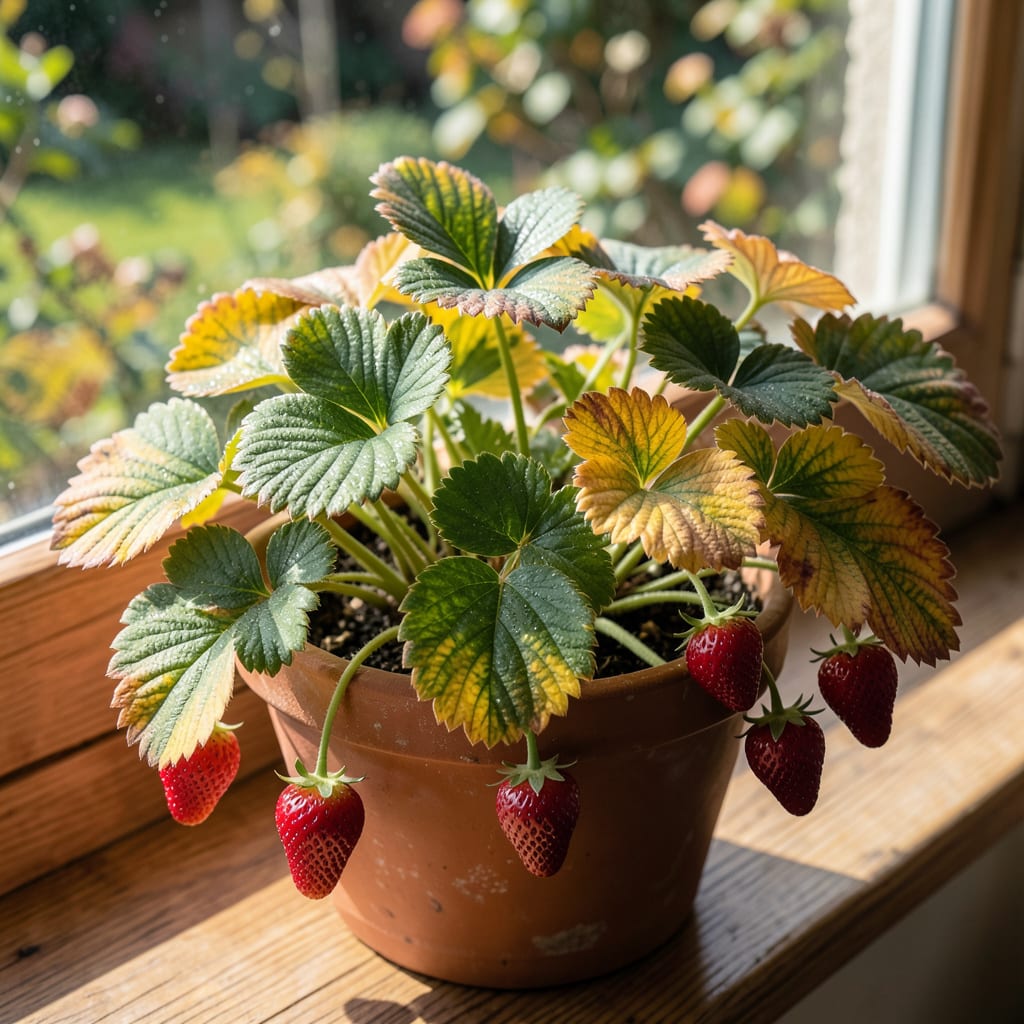
Yellow strawberry leaves mean your plants are sending an SOS. I’ve seen this in my own patch, and the fix is usually simpler than you’d think—often just a watering adjustment or missing nutrient.
The good news? Most causes are reversible with early action. Overwatering, nitrogen deficiency, and spider mites top the list. Each leaves a slightly different yellow pattern, which helps pinpoint the problem fast.
With a few observations and organic solutions, you can turn those sad yellow leaves back to deep green. I rescued a whole bed last season using just compost tea and better drainage.
This works for potted plants, garden beds, and hanging baskets. Spot the sign, apply the fix, and watch your strawberries bounce back.
Strawberry leaves turn yellow due to a mix of environmental, nutritional, and biological stressors. Identifying the root cause is key to restoring plant health. Below are the most common culprits, explained with actionable insights.
Yellowing often signals a lack of essential nutrients. Nitrogen deficiency causes uniform yellowing in older leaves first, as the plant redirects resources to new growth. Iron or magnesium deficiencies trigger interveinal chlorosis—yellowing between leaf veins—while potassium shortages lead to yellow edges with green centers. Conduct a soil test to pinpoint deficiencies, then amend with organic fertilizers like compost or fish emulsion.
Extreme temperatures, improper watering, or poor drainage can stress strawberries. Overwatering suffocates roots, reducing nutrient uptake and causing yellow, wilting leaves. Underwatering leads to dry, crispy yellowing. Similarly, heat stress (above 85°F) or frost damage disrupts chlorophyll production. Mulch with straw to regulate soil temperature and moisture, and ensure consistent watering (1–1.5 inches per week).
Pests like spider mites and aphids sap nutrients from leaves, causing stippled yellowing or curling. Fungal diseases such as powdery mildew or leaf spot create yellow patches with dark borders. For pests, spray leaves with neem oil or introduce ladybugs. For fungi, improve air circulation, remove infected foliage, and apply copper-based fungicides preventatively.
Strawberries thrive in slightly acidic soil (pH 5.5–6.5). Alkaline soils (pH > 7) lock out iron and manganese, even if they’re present, leading to chlorosis. Test soil pH with a kit and lower it with elemental sulfur or pine needle mulch if needed.
Once you’ve identified the root cause, these targeted fixes will nurse your strawberry plants back to health.
If dry soil is the culprit, water deeply at the base—not the leaves—to encourage strong roots. Aim for 1–1.5 inches per week, adjusting for heat or drought. For soggy soil, improve drainage by mixing in compost or perlite. Raised beds can prevent waterlogging in heavy clay.
Prevention tip 💡: Mulch with straw to retain moisture and reduce evaporation.
A lack of nitrogen, iron, or magnesium often shows as yellowing. Side-dress with compost or use a balanced organic fertilizer (like 5-5-5). For iron deficiency (young leaves yellow with green veins), apply chelated iron or work sulfur into the soil to lower pH. Magnesium shortages? Spritz leaves with Epsom salt solution (1 tbsp per gallon of water).
Prevention tip 🌱: Test soil annually and amend before planting.
Spider mites and aphids sap plant vitality. Blast them off with a strong water spray, then apply neem oil or insecticidal soap, focusing on leaf undersides. For severe cases, introduce ladybugs or lacewings as natural predators.
Prevention tip 🛡️: Plant companion flowers like marigolds to deter pests.
Remove and destroy infected leaves immediately to stop spread. Apply copper fungicide or a baking soda spray (1 tsp baking soda, 1 quart water, 1 drop dish soap) for fungal problems. For bacterial leaf scorch, prune affected foliage and improve airflow by spacing plants 12–18 inches apart.
Prevention tip 🌬️: Water in the morning so leaves dry quickly, reducing fungal risks.
Check the soil 2 inches down. If it’s soggy, you’re overwatering; if bone dry, underwatering. Wilting leaves often mean too much water, while crispy edges signal thirst.
Severely yellow leaves won’t recover, but new growth will if you fix the issue. Focus on improving conditions for healthy future leaves.
Use a liquid fertilizer like fish emulsion for quick absorption. For iron, chelated iron spray works in days. Always follow package instructions.
Yes, trim them with clean shears to redirect energy to healthy growth. This also prevents disease spread if the issue is fungal.
