
Beautiful Plants For Your Interior
Beautiful Plants For Your Interior
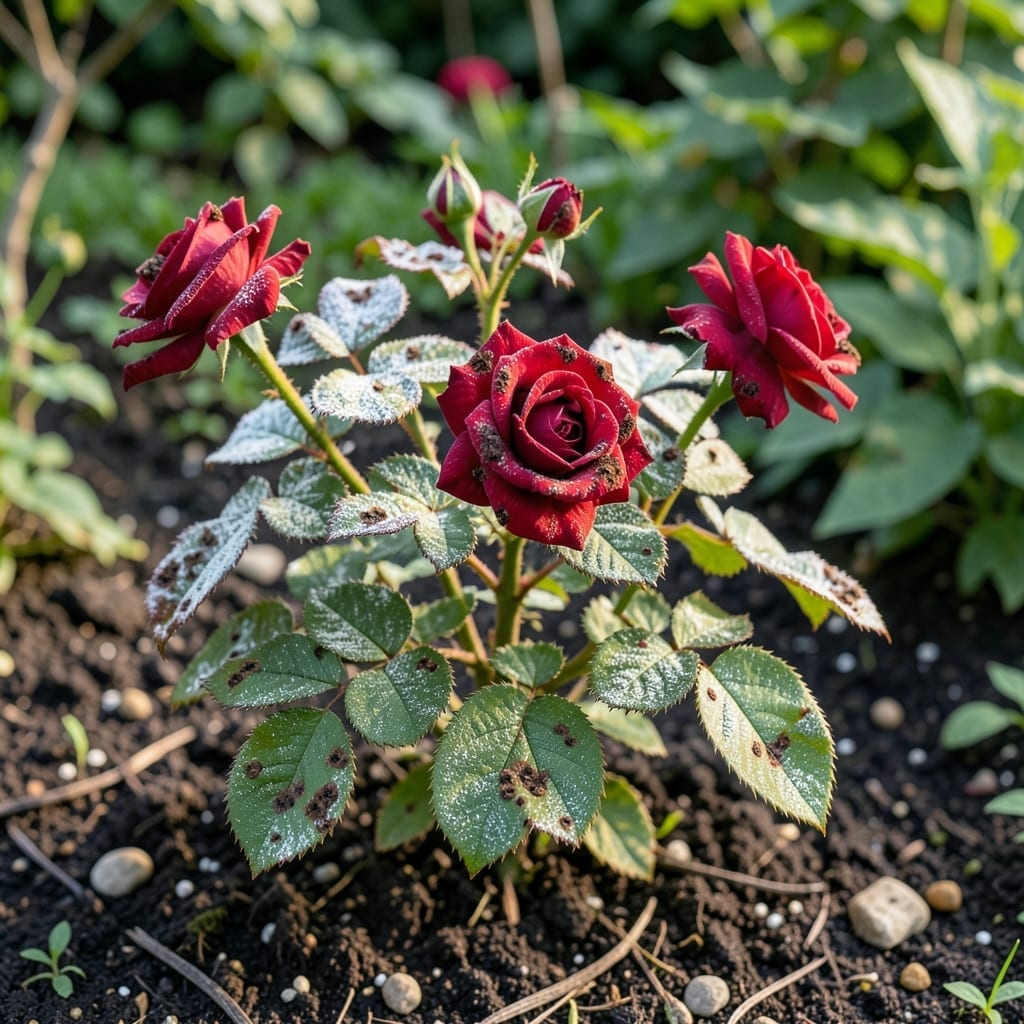
Black spots ruining your knockout roses? I’ve battled this fungus for years and finally found what works. It starts as small dark circles on leaves, then spreads fast if left unchecked.
With the right approach, you can stop it in 48 hours and keep your plants blooming all season. The solution is simpler than you think—just consistent care and the right treatments.
📚 In This Guide
Here’s the method I use to keep my roses healthy and blooming without chemical fungicides.
Start by inspecting your plants thoroughly, focusing on the undersides of leaves where black spot fungus first appears. Look for circular black spots with feathery edges—this is your first visual cue. Remove every infected leaf, no matter how small the spot, using clean pruners to prevent spreading spores.
I collect all diseased material in a sealed bag and dispose of it in the trash—never compost it. This fungus can survive in compost piles and reinfect your garden. Prune back any heavily infected canes to 6 inches below visible damage, making cuts at a 45-degree angle just above an outward-facing bud.
Thin out the center of your rose bushes by removing one-third of the oldest canes at ground level. This opens up the plant’s structure, allowing air to flow freely. Good airflow is critical because black spot thrives in damp, stagnant conditions.
Space your knockout roses at least 3 feet apart to ensure proper circulation between plants. If they’re already planted too closely, consider transplanting every other bush to a new location. Position them where they’ll receive 6-8 hours of direct sunlight daily—morning sun is particularly effective at drying dew quickly.
Mix a solution of 1 tablespoon baking soda, 1 teaspoon dormant oil, and 1 gallon of water in a spray bottle. This homemade fungicide is effective and gentle on the plant. Spray all surfaces of the leaves, including the undersides, until the solution just begins to drip.
Apply this treatment every 7-10 days throughout the growing season, or after any rain event. I’ve found that spraying in the early morning allows the solution to dry before the heat of the day, which prevents leaf burn. Always clean your sprayer thoroughly between uses to prevent clogging.
Water your knockout roses at the base of the plant, keeping the foliage dry. I use a soaker hose or drip irrigation system positioned 6 inches from the stem to deliver water directly to the roots. This method prevents moisture from settling on leaves, which is how black spot spores germinate.
Establish a regular watering schedule of 1-2 inches per week, more during extreme heat. Water deeply in the morning so the soil has time to dry slightly before evening. If you must use overhead watering, do it early enough that leaves have 4-6 hours to dry before nightfall.
Rake up and remove all fallen leaves and plant debris from around your roses weekly. Black spot fungus can overwinter in this material and reinfect your plants the following spring. I use a small hand rake to gently gather debris without disturbing the soil.
At the end of the growing season, remove all remaining leaves from the plants and the ground. Sanitize your pruning tools by wiping them with rubbing alcohol between cuts and at the end of each pruning session. This simple step prevents you from accidentally spreading the fungus to healthy plants.
These practical strategies will help you stay ahead of black spot fungus and keep your roses thriving.
Pruning Precision: In Step 1, always make cuts at that 45-degree angle—this isn’t just for looks. The angled cut sheds water more efficiently than a flat cut, preventing moisture from pooling and inviting fungus. And remember, pruning 6 inches below visible damage ensures you’re removing all infected tissue, not just what’s visible on the surface.
Sunlight Strategy: The 6-8 hours of direct sunlight mentioned in Step 2 is non-negotiable for knockout roses. Morning sun is particularly valuable because it quickly evaporates dew from leaves. If your roses aren’t getting enough light, consider relocating them or thinning nearby plants that might be casting shade.
Spray Timing: For Step 3, that 7-10 day application window is your sweet spot. Here’s what nobody tells you—spraying after a rain event is just as important as the regular schedule. The fungus spreads most aggressively when leaves are wet, so don’t wait for your next scheduled application if you’ve had precipitation.
Drying Window: In Step 4, the 4-6 hours drying time before nightfall is critical. If you’re using overhead watering, set an alarm to remind yourself to water early. I learned this the hard way after losing several plants to black spot that developed overnight from evening watering.
Remove infected leaves and apply a fungicide like neem oil or copper-based spray. Improve air circulation and avoid overhead watering to prevent recurrence.
Yes! With prompt treatment and proper care, Knockout roses are resilient. Prune affected areas, treat with fungicide, and maintain good hygiene to aid recovery.
Early morning or late evening is ideal to avoid leaf burn. Apply at the first sign of fungus and repeat every 7–14 days, especially in wet weather.
Absolutely! Try baking soda spray (1 tbsp baking soda + 1 tsp dish soap + 1 gallon water) or compost tea. These are eco-friendly but may require more frequent applications.
Poor air circulation, wet foliage, or high humidity are common culprits. Space plants properly, water at the base, and remove debris to reduce fungal risks.