
Beautiful Plants For Your Interior
Beautiful Plants For Your Interior
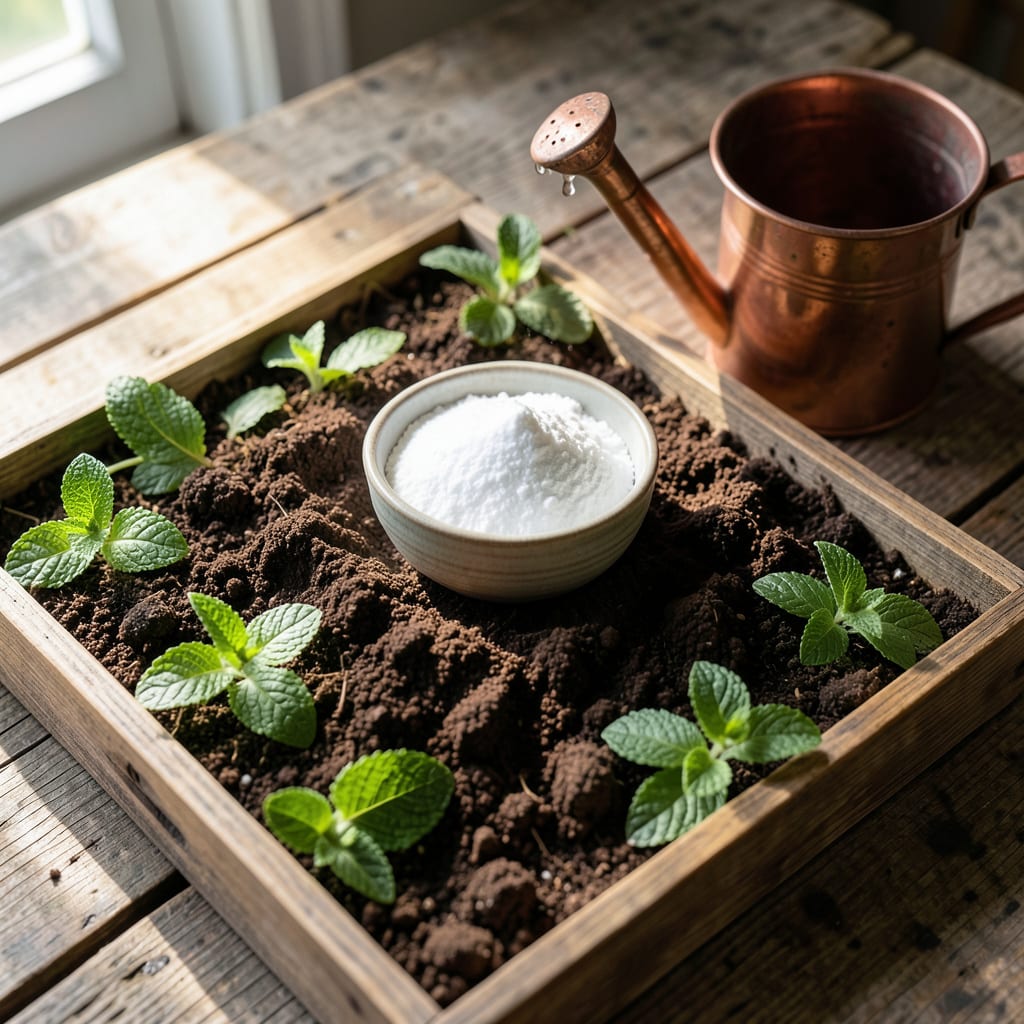
Fungus on your plants doesn’t have to mean the end of the line. ✨ I discovered baking soda as a gentle yet powerful way to fight off powdery mildew and other common issues without harsh chemicals.
It works by changing the pH on leaf surfaces, making them inhospitable to spores. A simple spray can protect your garden—just mix it right and apply at the first sign of trouble. Safe, effective, and always on hand.
📚 In This Guide
This gentle, kitchen-staple solution protects your garden without harsh chemicals.
Look for white powdery mildew on leaves, black spots on roses, or brown patches on tomatoes. Fungal issues often appear after periods of high humidity or overhead watering. I check the undersides of leaves too—some fungi start there before spreading.
Don’t treat healthy plants preventively. Baking soda works best at the first sign of trouble when you can catch the fungus before it spreads to neighboring plants. Early intervention means you’ll need fewer applications overall.
Combine 1 teaspoon baking soda, 1 quart warm water, and 1 teaspoon mild liquid soap (like Castile) in a spray bottle. The soap helps the solution stick to leaves. Shake well until the baking soda fully dissolves—you shouldn’t see any grit at the bottom.
I always test the mix on one leaf first. Wait 24 hours to check for burning or spotting. If the leaf looks normal, the solution is safe for the rest of the plant. This step prevents accidental damage to sensitive varieties.
Spray the solution on both sides of leaves, focusing on areas showing fungal signs. Cover the stems too, as fungi can spread through the entire plant. Do this on a cloudy day or in the early morning—direct sun can cause the baking soda to burn leaves.
Reapply every 7-10 days or after rain, which washes away the protective coating. You’ll see improvement in 1-2 weeks as the fungus stops spreading. For severe cases, I increase frequency to every 5 days until the problem clears.
Before spraying, snip off any leaves or stems with heavy fungal damage using clean pruners. Bag and discard these—don’t compost them, as the fungus can survive and reinfect your garden. I disinfect my pruners with rubbing alcohol between cuts to avoid spreading spores.
This step seems drastic, but it’s crucial. Removing infected material improves air circulation and reduces the fungus’s ability to reproduce. Your plants will recover faster with less disease pressure.
Space plants properly to allow airflow, and water at the base rather than overhead. I also clean up fallen leaves and debris regularly, as they can harbor fungal spores. A 1-inch layer of mulch around plants helps too—it prevents soil-borne fungi from splashing onto leaves.
After a fungal outbreak, I avoid overhead watering for at least 2 weeks to give plants time to recover. Prevention is easier than treatment, so I incorporate these habits into my regular garden routine.
Small adjustments make this natural remedy even more effective for your garden.
Solution Testing Tip: That 24-hour wait in Step 2 isn’t just caution—it’s your safety net. I’ve skipped it before and regretted it when sensitive plants reacted poorly. Always test on one leaf first, even if you’re in a hurry.
Application Timing: The instruction to spray on cloudy days or in the early morning exists for a reason. I learned the hard way that midday sun plus baking soda equals leaf burn. Trust the timing guidance in Step 3.
Reapplication Strategy: For the 7-10 day cycle in Step 3, set a calendar reminder. Fungi spread fast, and missing a treatment window means starting over. For severe cases, that 5-day interval really does make a visible difference faster.
Prevention Hack: That 1-inch mulch layer and 2-week break from overhead watering in Step 5 work together beautifully. After my last fungal outbreak, I followed both precisely and haven’t had a recurrence since.
Mix 1 teaspoon of baking soda with 1 quart of water and a few drops of dish soap. Spray this solution on affected plants every 5-7 days or as a preventive measure. Ensure full coverage, especially on leaves.
Baking soda is generally safe for plants when used correctly. Avoid overuse, as excessive sodium can build up in the soil and harm plant roots. Always test on a small area first.
Apply the spray early in the morning or late in the afternoon to avoid the harsh midday sun, which can cause leaf burn. Reapply after rain or heavy watering.
Yes! Neem oil, copper fungicides, and sulfur-based sprays are effective alternatives. Each has its own benefits, so choose based on your plant’s needs and the type of fungus.
Check the mix ratio—too weak or too strong can reduce effectiveness. Ensure thorough coverage, and reapply regularly. Severe infections may need stronger treatments or professional help.
