
Beautiful Plants For Your Interior
Beautiful Plants For Your Interior
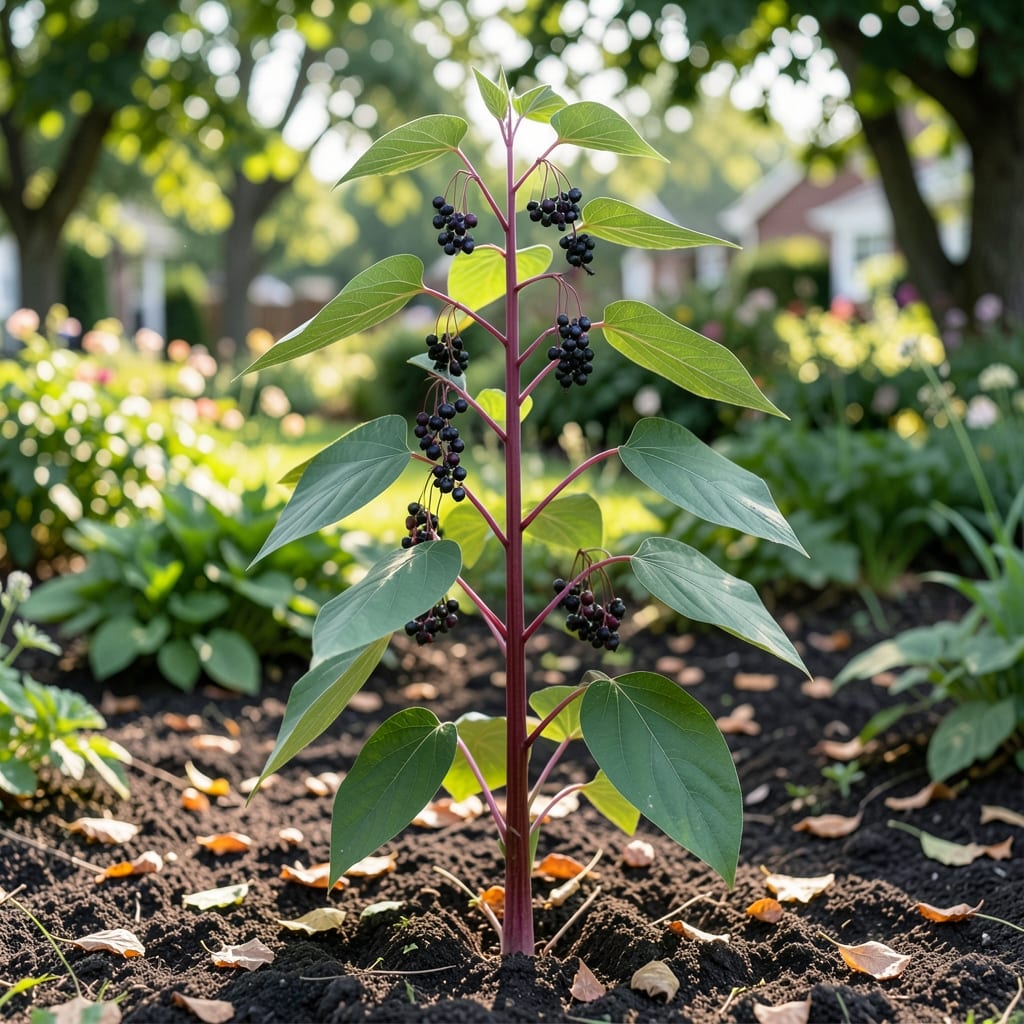
Yes, pokeweed is highly toxic to humans and animals. All parts contain poisonous compounds that can cause severe stomach pain, vomiting, or even respiratory distress if ingested.
I’ve learned through experience that even the berries—which look tempting—carry the same dangerous toxins as the leaves and stems. It’s not just ingestion that poses a risk; skin contact can cause irritation in sensitive individuals. That’s why I always wear gloves when removing it from my garden and dispose of it carefully to avoid accidental exposure. ✨
💡 In This Article
Pokeweed contains powerful saponins called phytolaccatoxin and phytolaccigenin that disrupt cell membranes in the digestive tract. These compounds cause severe irritation, leading to nausea, vomiting, and bloody diarrhea within 2-6 hours of ingestion. The toxins are present in all parts, but berries contain the highest concentration. 🔥
In severe cases, these compounds can enter the bloodstream, causing respiratory distress and potential kidney damage. Children are particularly vulnerable—ingesting just 10-20 berries can trigger dangerous symptoms. The plant remains toxic even after cooking or drying, as heat doesn’t break down these stable saponins. ✨
The toxins work by creating microscopic holes in cell walls, particularly in the stomach and intestines. This explains why victims experience such intense abdominal pain. What’s especially concerning is that symptoms may not appear immediately, sometimes taking up to 24 hours to manifest. 💫
Pokeweed’s toxicity isn’t limited to ingestion. The sap can cause skin irritation and blistering in sensitive individuals. I’ve seen cases where gardeners developed rashes from simply touching the plant while pulling weeds. The toxins are so potent that even dead plants maintain their dangerous properties. ⚡
Wildlife typically avoids pokeweed, but pets may be attracted to the berries. Dog owners should be particularly cautious, as canines are more likely to investigate and consume the plant. The toxins affect animals similarly to humans, though the required dosage for poisoning varies by species and size. 🌟
Skin contact may cause irritation or rashes in sensitive individuals. The sap contains toxins that can create blisters or redness. Always wear gloves when handling.
Yes, birds can eat the berries without harm, unlike humans and pets. The toxins don’t affect avian species the same way. Still, keep pets away from fallen berries.
Mild symptoms may resolve within 24-48 hours, but severe cases can require hospitalization. Persistent vomiting or difficulty breathing needs immediate medical attention.
Yes, if the deep taproot isn’t fully removed. Dig at least 12 inches deep and dispose of all plant parts in sealed bags to prevent regrowth.