
Beautiful Plants For Your Interior
Beautiful Plants For Your Interior
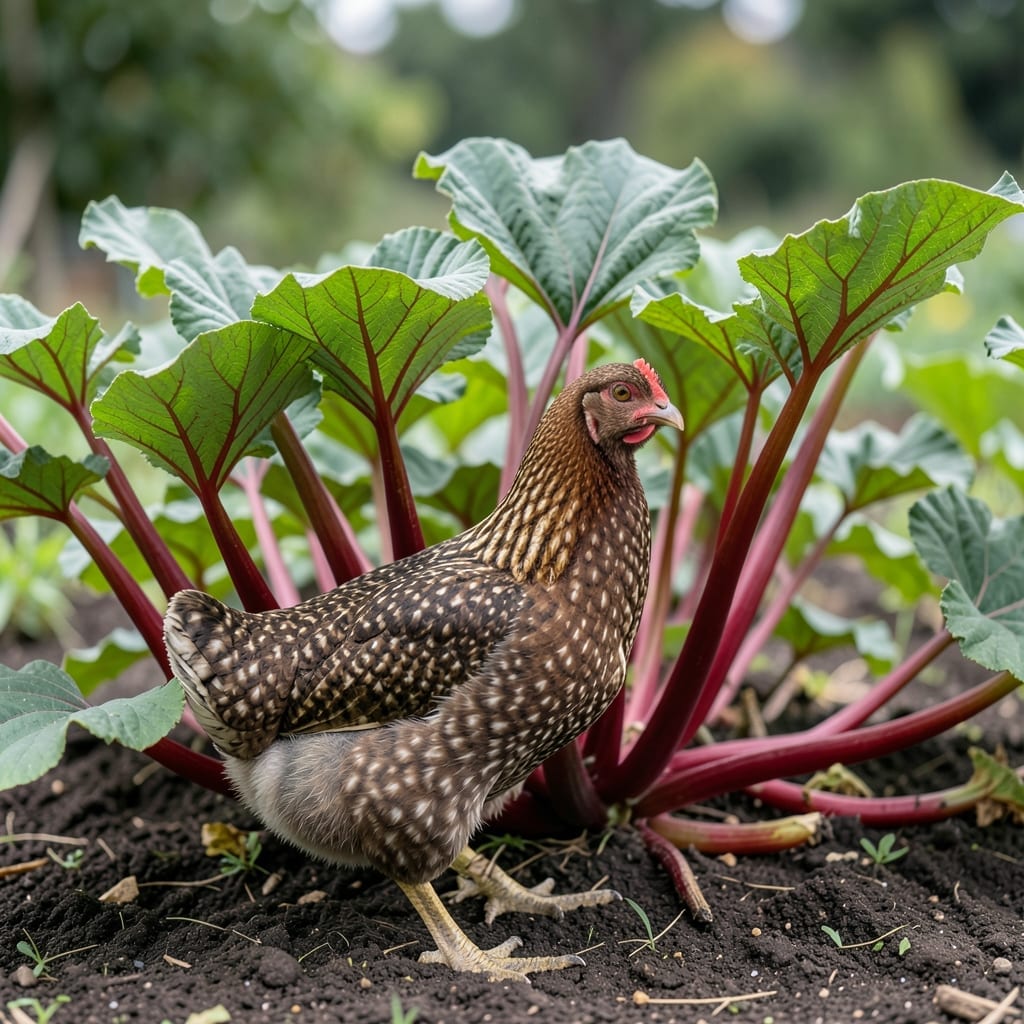
No, chickens should never eat rhubarb leaves or stems as they contain high levels of oxalic acid and anthraquinones, which are toxic and can cause severe poisoning or death.
I always warn fellow chicken keepers about rhubarb because even small amounts can trigger kidney failure in birds. The oxalic acid binds calcium, while anthraquinones act as powerful laxatives that disrupt their delicate systems. 🔥
Your flock will thrive on leafy greens like kale or Swiss chard instead—just wash them thoroughly and introduce slowly to avoid digestive upset. ✨
💡 In This Article
Here’s what’s actually happening when chickens ingest rhubarb: the oxalic acid immediately begins binding calcium in their digestive tract. A chicken’s blood calcium levels can drop dangerously low within 2-4 hours, leading to muscle tremors and weakness.
The kidneys then struggle to filter these calcium oxalate crystals, which can form deposits that block their urinary system. 🔥
Anthraquinones compound the problem by acting as powerful stimulant laxatives. In chickens, this causes severe diarrhea that leads to rapid dehydration. Their small bodies lose fluids faster than larger animals, making even 5-10 grams of rhubarb leaves potentially lethal for a standard hen. The combination creates a perfect storm of metabolic disruption and organ stress.
✨
What most people don’t realize is that cooking doesn’t neutralize these toxins. Boiling rhubarb leaves may reduce oxalic acid by about 30-50%, but the remaining concentration is still deadly. The anthraquinones remain fully active through all cooking methods. This is why compost containing rhubarb leaves can also be dangerous if chickens have access to it.
💫
The biological mechanism is particularly brutal because chickens lack the enzyme to break down oxalates efficiently. While mammals can process small amounts through their more complex digestive systems, a chicken’s simpler physiology makes them especially vulnerable. Their fast metabolism also means toxins spread through their system 3-5 times faster than in humans. ⚡
Symptoms typically appear within 30 minutes to 2 hours after ingestion. Early signs include excessive drinking, lethargy, and loss of appetite. As the poisoning progresses, you’ll notice labored breathing and a distinctive greenish diarrhea. Without immediate veterinary intervention, the mortality rate exceeds 80% in confirmed cases. 🌟
Even small quantities can be deadly. As little as 5-10 grams of leaves may cause severe poisoning due to the high oxalic acid content. Symptoms like lethargy and green diarrhea can appear within 30 minutes.
No, cooking doesn’t remove the toxins. Boiling may reduce oxalic acid by 30-50%, but the remaining amount is still dangerous. The stems contain enough poison to harm your flock.
No, compost containing rhubarb remains toxic. Chickens may peck at it and ingest harmful amounts of oxalates and anthraquinones. Always keep compost piles securely fenced.
Early symptoms include excessive thirst, weakness, and loss of appetite. Within 2 hours, you may see labored breathing and greenish diarrhea. Immediate vet care is critical.