
Beautiful Plants For Your Interior
Beautiful Plants For Your Interior
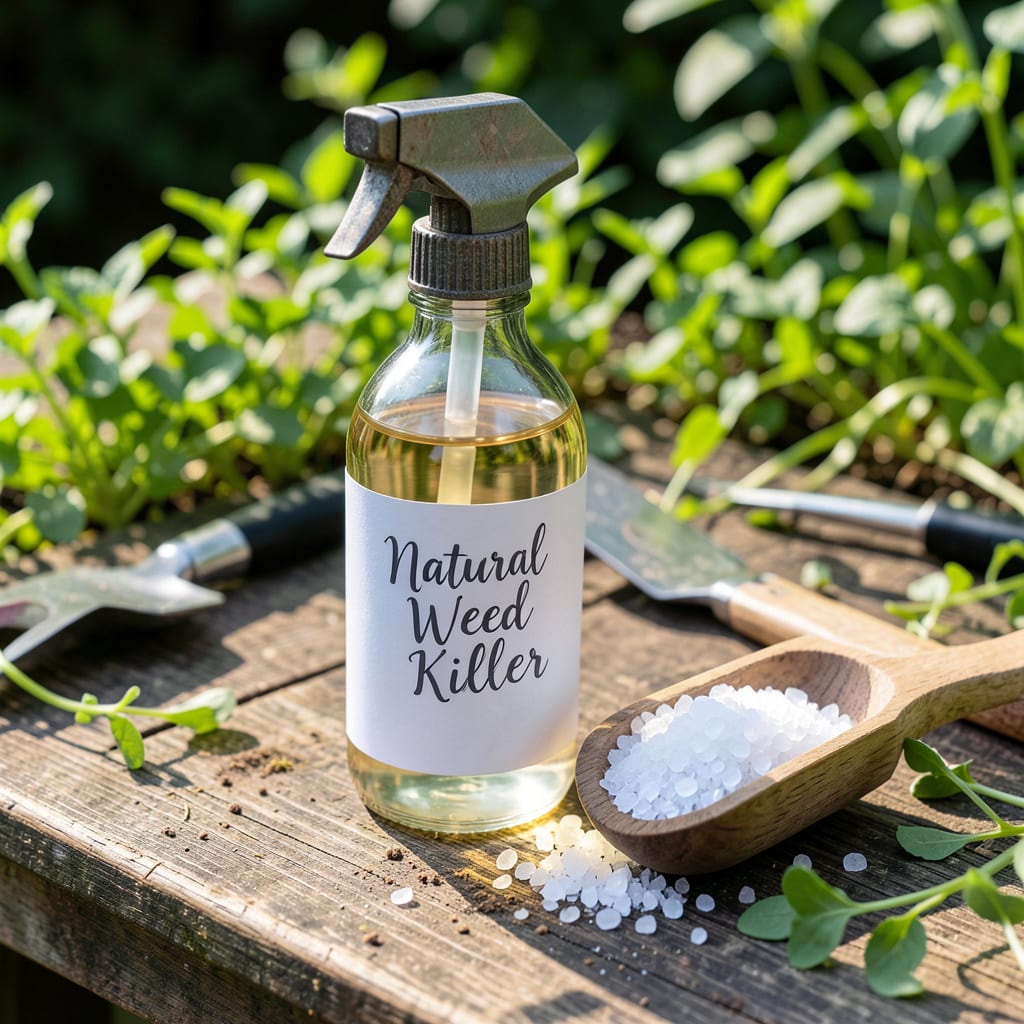
White vinegar can tackle weeds without harsh chemicals. I’ve used this method for years to clear driveways and garden paths, and it works surprisingly well on young, tender growth.
Mix it with a little dish soap to help it stick, apply on a sunny day, and watch weeds wilt within 24-48 hours. Just be careful—it doesn’t discriminate between weeds and your prized plants.
📚 In This Guide
This natural approach eliminates weeds without harsh chemicals, and it works in just a few simple steps.
Choose a sunny day with no rain in the forecast for at least 24-48 hours. The vinegar needs time to dry on the leaves and work its magic without being washed away. I always check the weather app the night before to confirm conditions.
Target weeds that are actively growing, ideally with young, tender leaves. Mature weeds with thick, waxy leaves may resist the solution, so early intervention is key. Avoid windy days—the spray can drift and damage nearby plants you want to keep.
Mix 1 gallon of white vinegar (5% acetic acid) with 1 cup of salt and 1 tablespoon of dish soap in a spray bottle. The salt helps dry out the weeds, while the dish soap breaks down the leaf surface so the vinegar penetrates better. Shake the bottle gently to combine the ingredients without creating too many suds.
I use a gallon-sized sprayer for larger areas, but a standard spray bottle works fine for spot treatment. If you’re tackling a big patch, double the recipe but don’t exceed a 1:8 salt-to-vinegar ratio, as too much salt can harm the soil long-term.
Spray the mixture directly onto the leaves and stems of the weeds, ensuring full coverage. Focus on the foliage rather than the soil, as the vinegar works by drying out the plant tissue. I like to get close to the weeds—about 6-12 inches away—to avoid overspray.
For tougher weeds, you may need a second application after 3-5 days. Watch for the leaves to turn brown and crisp within 24-48 hours of the first treatment—that’s your sign it’s working. If the weeds don’t wilt, they may need another round.
Check the treated area after 24 hours. You’ll see the weeds start to wither, but some deep-rooted types might need a follow-up spray. I mark the spots I’ve treated with small sticks or flags to keep track of what’s been done.
If rain is expected within 6 hours of application, cover the area with a tarp or reapply the solution once the weather clears. Consistency is key—weeds can be stubborn, so don’t be discouraged if it takes a couple of tries.
Once the weeds are dead, pull them out by the roots to prevent regrowth. I find a hand trowel or weeding fork works best for stubborn roots. If the area is prone to weeds, lay down a 2-3 inch layer of mulch to block sunlight and discourage new growth.
For long-term control, reapply the vinegar solution every 4-6 weeks or as soon as you spot new weeds popping up. This method is most effective when used as part of a regular garden maintenance routine.
A few smart moves that’ll make this natural solution work even better for your garden.
The Weather Factor: I learned the hard way that those 24-48 hours of dry weather after application aren’t just a suggestion. If rain hits within 6 hours, the vinegar gets diluted before it can do its job. Always check the extended forecast before starting.
Application Technique: In Step 3, getting 6-12 inches away from the weeds isn’t just about avoiding overspray. This distance gives you better control to coat the leaves thoroughly without wasting solution. Trust me, a light mist won’t cut it—you need full coverage.
Solution Strength: Stick to the 1:8 salt-to-vinegar ratio mentioned in Step 2. I tried adding extra salt once thinking it would work faster, but it just damaged my soil. The 5% acetic acid in regular white vinegar is strong enough when combined with salt and soap.
Follow-Up Timing: Those 3-5 days between applications for tough weeds in Step 3 are crucial. Don’t reapply sooner—the vinegar needs time to work through the plant’s system. You’ll see the leaves turn brown and crisp within 24-48 hours if it’s working properly.
White vinegar (5% acetic acid) kills top growth but may not destroy deep roots. For tough weeds, use horticultural vinegar (20-30% acetic acid) or reapply every few days until the plant wilts completely. It’s most effective on young weeds and sunny days.
You’ll typically see wilting within 24 hours, with full die-off in 3-7 days, depending on the weed’s size and vinegar strength. Warm, dry conditions speed up the process, while rain may require reapplication.
Vinegar is non-selective and will kill grass it touches. For targeted application, use a spray shield or paint it directly onto weed leaves. Avoid overspray, or consider spot-treating with a cotton ball soaked in vinegar.
A 1:1 ratio of white vinegar (5%) and water works for most weeds. For stubborn growth, use undiluted vinegar or mix it with a teaspoon of dish soap (as a surfactant) to help it cling to leaves.
Yes! Boiling water, corn gluten meal (pre-emergent), or a mix of salt and water can work. For eco-friendly options, try mulching or manual removal. Always test small areas first to avoid harming desired plants.
