
Beautiful Plants For Your Interior
Beautiful Plants For Your Interior
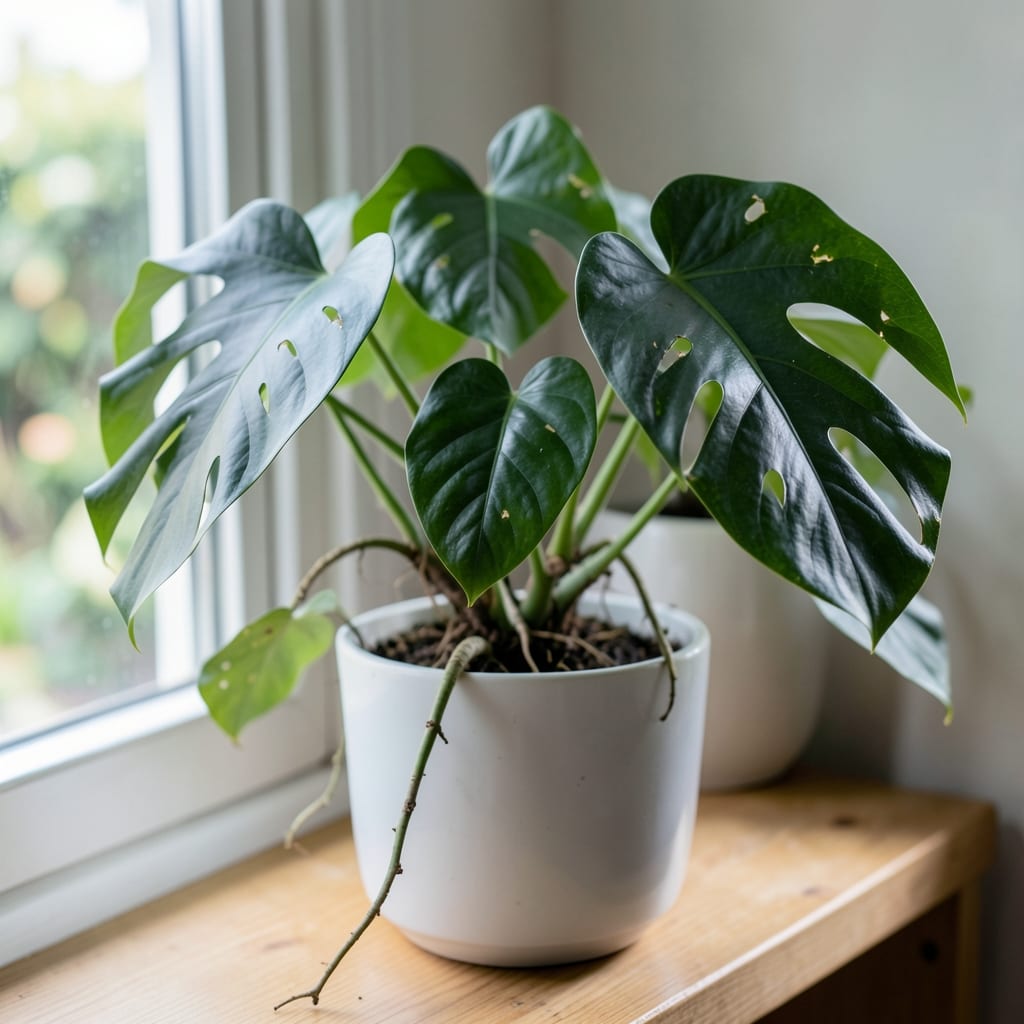
That first tiny leaf with its heart shape is just the beginning. I’ve watched countless immature monsteras transform from shy starters to bold statement plants with the right care.
Bright, indirect light and a consistent watering routine are non-negotiable. Skip the overwatering—root rot is the silent killer. Patience pays off when those iconic splits finally appear.
📚 In This Guide
Here’s how I nurture young Monsteras through their critical early stages for strong, healthy growth.
Place your immature Monstera in bright, indirect light—a few feet away from an east or north-facing window works perfectly. Direct sun scorches the tender leaves, while deep shade causes leggy, weak growth. You’ll know the light is right when the foliage maintains a rich green color without yellowing or brown patches.
Rotate the pot a quarter turn weekly to ensure even exposure. This prevents the plant from growing lopsided as it stretches toward the light source. If you notice the stems elongating with sparse leaves, it’s a sign the plant needs more illumination immediately.
Water when the top 1-2 inches of soil feel dry to the touch. Overwatering is the fastest way to kill an immature Monstera—soggy soil leads to root rot, which manifests as yellowing leaves and a foul odor. Use your finger to check moisture at the root level, not just the surface.
When watering, do so thoroughly until it drains from the bottom, then empty the saucer after 15 minutes. This ensures the roots receive moisture without sitting in standing water. Inconsistent watering causes leaf browning, so aim for once every 7-10 days in typical indoor conditions.
Monsteras thrive in 60-80% humidity. If your home is dry, place the pot on a pebble tray filled with water or use a humidifier nearby. Brown leaf tips often signal low humidity, while crispy edges indicate the air is far too dry for healthy growth.
Keep the temperature between 65-85°F—this tropical plant suffers below 50°F. Avoid placing it near drafty windows, air vents, or frequently opened doors. Sudden temperature fluctuations stress the plant, leading to stunted growth or leaf drop.
Feed your immature Monstera with a balanced liquid fertilizer (diluted to half strength) every 4-6 weeks during the growing season (spring through early fall). Over-fertilizing causes salt buildup in the soil, which burns the roots and leads to yellowing leaves.
Watch for new leaf growth as a sign of healthy development. If the plant isn’t producing new leaves, it may need more nutrients or better light. Wipe the leaves with a damp cloth monthly to remove dust, which blocks light absorption and reduces the plant’s ability to photosynthesize efficiently.
Prune leggy stems or damaged leaves using clean, sharp shears to encourage bushier growth. Cut just above a leaf node, where new growth will emerge. This also helps control the plant’s size and shape, especially if it’s outgrowing its space.
As the plant matures, provide a moss pole or trellis for support. Aerial roots will naturally attach to these structures, promoting larger, more mature foliage. Without support, the plant may become top-heavy and prone to tipping over, which can damage the stems and roots.
Here are the details that make plant care effortless and rewarding.
Light Rotation Tip: That weekly quarter turn in Step 1 isn’t just suggestion—it’s prevention. I noticed my first Monstera developed a dramatic lean toward the window before I started this habit. The consistent rotation ensures even growth and prevents the lopsided appearance that happens when plants stretch unnaturally toward light.
Watering Precision: The 15-minute saucer drain time in Step 2 is non-negotiable. I learned this after losing a plant to root rot when I left standing water overnight. That short window allows roots to absorb what they need while preventing the soggy conditions that invite fungal growth. Always set a timer.
Temperature Strategy: The 65-85°F range mentioned in Step 3 works best with consistency. Keep your Monstera away from air conditioning vents or heating sources, as the 50°F threshold isn’t just a minimum—it’s a survival line. I once placed a plant too close to a drafty window and watched the leaves turn yellow within days.
Fertilizing Insight: That 4-6 week fertilizing schedule in Step 4 is perfect for immature plants. I made the mistake of fertilizing weekly once, thinking more was better. The salt buildup nearly killed my plant, and it took months to recover. Stick to the schedule and always dilute to half strength as specified.
Look for small, heart-shaped leaves without the iconic splits or holes. Young Monsteras have solid green, smooth leaves and a compact growth habit. As they mature, the leaves develop fenestrations (splits) and grow larger.
Water when the top 1-2 inches of soil feel dry. Overwatering can lead to root rot, so ensure good drainage. Typically, watering every 1-2 weeks works, but adjust based on humidity and light conditions.
Immature Monsteras need time and the right conditions (bright, indirect light and proper nutrients) to develop fenestrations. If it’s still small or in low light, splits may take months or even years to appear. Be patient!
Yes! Even young Monsteras can be propagated via stem cuttings in water or soil. Just ensure the cutting has at least one node (where leaves and roots grow). Propagation is a great way to share or expand your collection.