
Beautiful Plants For Your Interior
Beautiful Plants For Your Interior
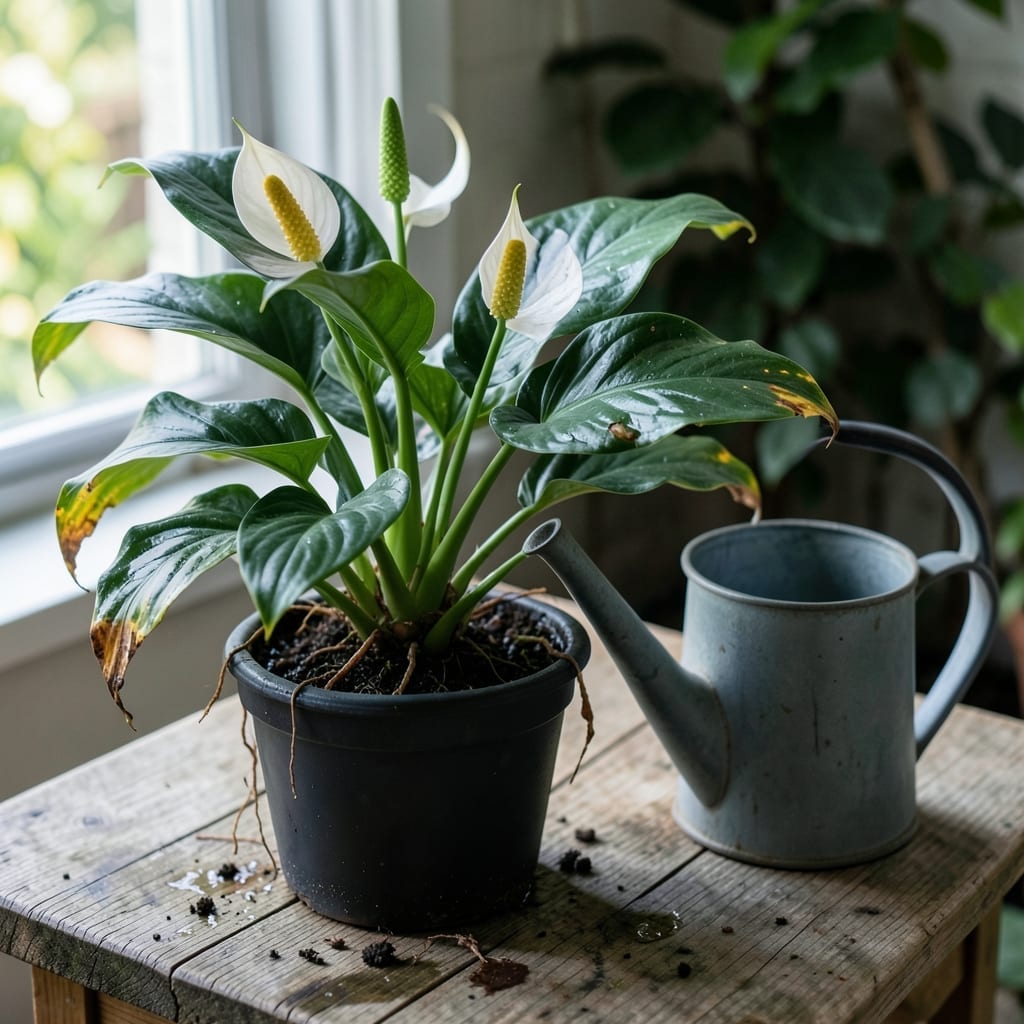
Yellow leaves and soggy soil spelled disaster for my peace lily last week. I watched the droop turn to despair in 48 hours, realizing I’d loved it a little too much with the watering can.
Here’s the thing—peace lilies scream for help through yellowing leaves and mushy stems when their roots can’t breathe. The fix isn’t complicated, but it does require acting fast before rot sets in completely.
What saved mine was a simple rescue routine: stop watering immediately, check the roots, and give it a chance to dry out. Within 5 days, new growth pushed through the soil.
Now it sits in a brighter spot with a strict watering schedule, looking better than ever. Prevention is easier than rescue, and I’ll show you how.
Overwatering your peace lily is often the result of well-meaning but misguided care. Here’s why it happens, broken down into key causes:
Peace lilies thrive in consistently moist but not soggy soil. Their tropical origins lead many to assume they need frequent watering. However, these plants prefer their soil to dry slightly between waterings. Overestimating their need for moisture—especially in cooler or low-light conditions—can drown the roots, leading to yellowing leaves and root rot.
Using pots without drainage holes or soil that retains too much water (like dense, clay-heavy mixes) traps excess moisture around the roots. Without proper drainage, water pools at the bottom, suffocating the roots and promoting fungal growth. Always opt for well-draining pots and aerated soil to prevent this.
Sticking to a rigid watering schedule (e.g., “every Monday”) ignores the plant’s actual needs, which vary with temperature, humidity, and light exposure. In cooler months or shaded spots, peace lilies require less water. Instead of a calendar, use the finger test: water only when the top inch of soil feels dry.
High humidity or low light slows evaporation, meaning soil stays wet longer. If your peace lily sits in a dim, damp room, it’s more prone to overwatering. Adjust your care routine to match its environment—less water in shady, humid spaces and more in bright, dry areas.
Don’t panic—your peace lily can bounce back! Here’s how to fix the most common issues caused by overwatering, step by step.
If the leaves are turning yellow, start by pruning the worst-affected foliage with clean scissors. This redirects energy to healthy growth. Move your plant to a spot with bright, indirect light (no direct sun!) to help it recover. Reduce watering immediately—only water when the top inch of soil feels dry.
Prevention tip: 💡 Use a moisture meter or the finger test to check soil dryness before watering.
For mushy, black roots, repotting is essential. Gently remove the plant from its pot, rinse the roots under lukewarm water, and trim any rotten sections with sterilized shears. Repot in fresh, well-draining soil (a mix with perlite or orchid bark works great) and a clean pot with drainage holes.
Prevention tip: 🎯 Always use pots with drainage holes to avoid waterlogging.
If the soil is soggy but roots aren’t rotted yet, let it dry out completely before watering again. Place the pot in a well-ventilated area away from humidity. You can also tilt the pot to let excess water drain out.
Prevention tip: ✨ Water in small amounts, ensuring the soil absorbs it fully before adding more.
Overwatered peace lilies often wilt from stress. Mist the leaves lightly and group the plant with others to raise humidity. Avoid fertilizing until the plant stabilizes—it’s too vulnerable to handle extra nutrients.
Prevention tip: 🌡️ Keep your peace lily in a room with 40-60% humidity for optimal health.
With proper care, you’ll see improvement in 5-7 days. New growth may take 2-3 weeks to appear after addressing the issue.
Yes! Peace lilies need 50% less water in cooler months. Always check soil moisture first—wait until the top inch is dry.
No, old soil may harbor fungus or bacteria. Use fresh, well-draining mix with perlite or orchid bark for best results.
Transplant shock is normal. Keep it in bright, indirect light and avoid fertilizing for 2 weeks.