
Beautiful Plants For Your Interior
Beautiful Plants For Your Interior
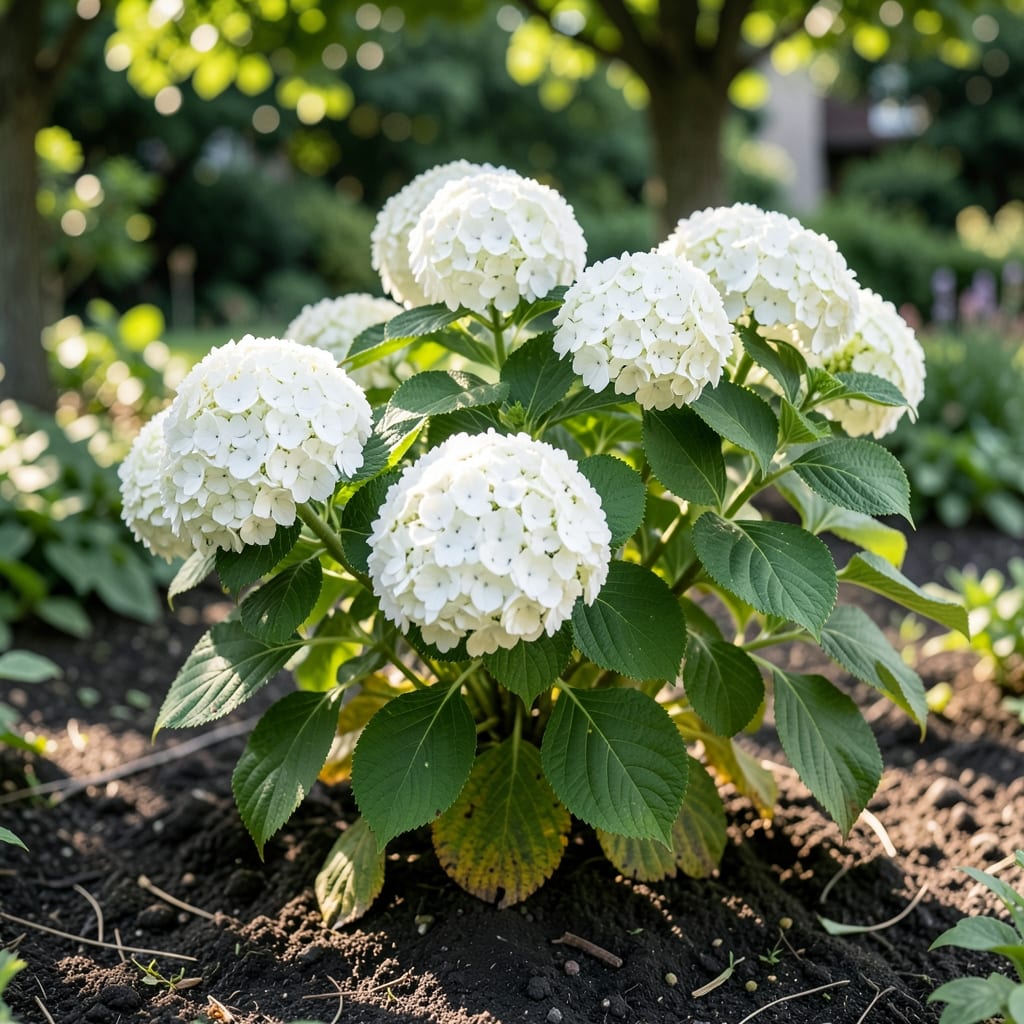
White and green leaves on hydrangeas often indicate variegation, nutrient deficiencies, or sun exposure issues. Variegated varieties naturally display this, while others may need soil testing or shade adjustments.
I’ve seen this pattern often in gardens where the soil lacks iron or magnesium, which are critical for chlorophyll production. Some hydrangea cultivars are bred for this striking two-tone look, but unexpected color changes usually signal stress. Adjusting light conditions or adding a balanced fertilizer can restore vibrant green foliage within weeks. 🌿
💡 In This Article
Natural variegation occurs when plant cells lack chlorophyll in certain areas, creating white patterns. In hydrangeas, this is often a stable genetic trait in cultivars like ‘Silver Variegated’ or ‘Lemon Wave’. These plants maintain their two-tone appearance year after year without intervention. The white sections aren’t sick—they’re simply expressing the plant’s unique DNA. 🌿
When non-variegated hydrangeas develop white patches, it typically signals chlorophyll deficiency. Chlorophyll gives leaves their green color, and its absence appears as white or pale yellow. This often happens when plants can’t absorb enough iron or magnesium from the soil, even if those nutrients are present. The issue becomes visible first on new growth.
Excessive sunlight can bleach leaf pigments, especially in hot climates. Hydrangeas prefer morning sun and afternoon shade—more than 6 hours of direct sun can scorch leaves. The white areas may feel dry or crispy to the touch. Conversely, too little light can cause overall leaf paleness as chlorophyll production slows. ⚡
Soil pH dramatically affects nutrient availability. Hydrangeas growing in alkaline soil (pH above 7.0) often develop iron deficiency, even when iron is abundant. The high pH locks the mineral in a form roots can’t absorb. A simple soil test can reveal if pH adjustment (using sulfur or aluminum sulfate) would restore proper nutrient uptake.
Some diseases, like powdery mildew, can create white patterns on leaves, though these usually appear as powdery coatings rather than solid white patches. Fungal issues thrive in humid conditions with poor air circulation. The white here is actually the fungus itself, not a pigment change in the leaf tissue. ✨
Yes! Cultivars like ‘Silver Variegated’ naturally display this. The white sections lack chlorophyll but are healthy. No treatment is needed for these genetic traits.
Variegation appears as stable patterns year-round. Deficiencies show as random white patches, often on new growth. Test soil pH—above 7.0 may indicate iron lockout.
Apply chelated iron or foliar spray for quick results. Adjust light exposure to 4-6 hours of morning sun. Most plants recover in 2-3 weeks.
More than 6 hours of direct sun can bleach leaves. The white areas may feel dry or crispy. Afternoon shade helps prevent this.
Only if they’re damaged or diseased. For variegated types, leave them—they’re part of the plant’s charm. For deficiencies, treat the cause first.