
Beautiful Plants For Your Interior
Beautiful Plants For Your Interior
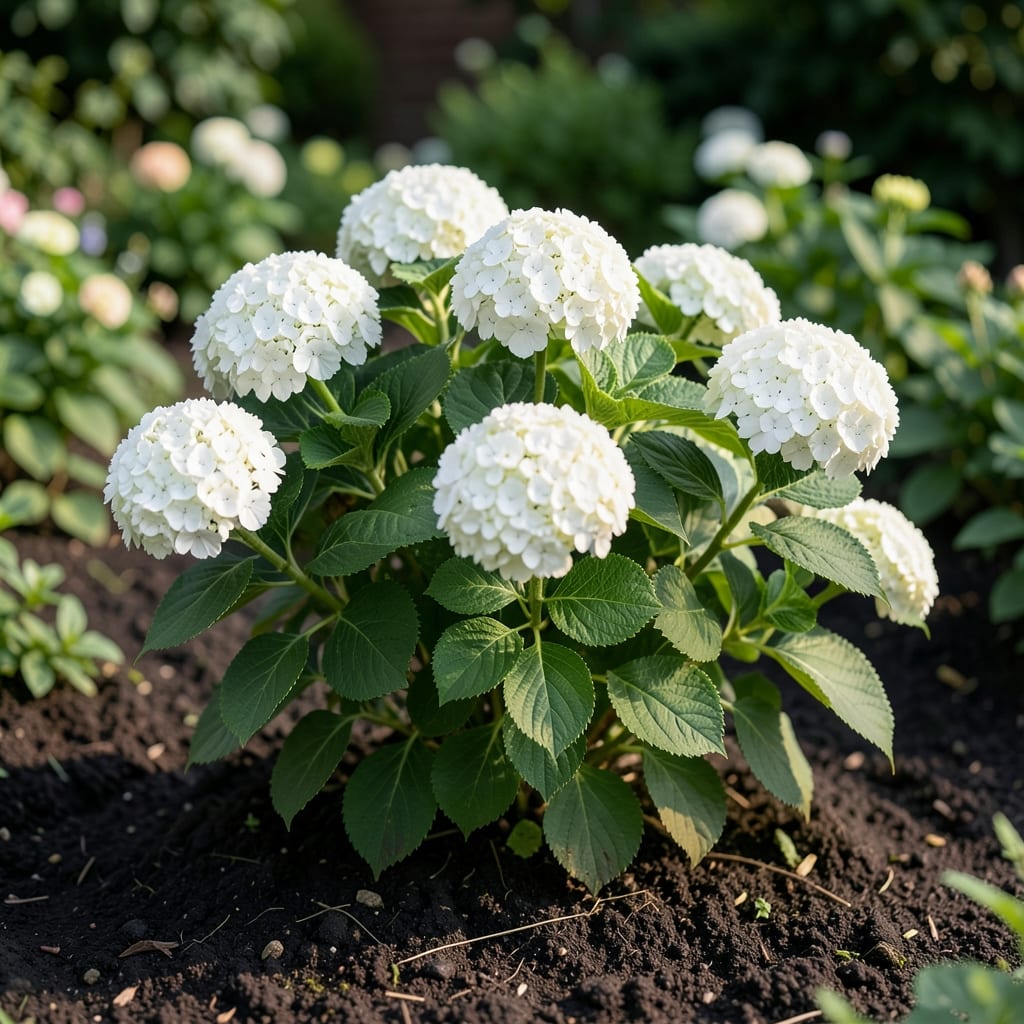
White Wave hydrangeas changed how I think about summer gardens. Their cascading blooms create a waterfall effect that stops visitors in their tracks.
I’ve found they thrive in partial shade with consistent moisture, and the secret is in the soil—slightly acidic for those pure white flowers. Within 2-3 seasons, you’ll have a showstopper that keeps blooming from spring to fall.
📚 In This Guide
Here’s the method I trust to produce those stunning cascading blooms every season.
Choose a site with partial sun—morning sunlight and afternoon shade work best for White Wave hydrangeas. These plants thrive in USDA zones 5-9 and prefer well-drained soil rich in organic matter. I always test the soil pH first; hydrangeas favor a range between 5.2 and 6.2 for optimal flower color.
Dig a hole that’s twice as wide as the root ball but no deeper. This gives the roots room to spread without sinking too low. Avoid planting near large trees or structures that might compete for water or shade the area excessively.
Remove the hydrangea from its container and gently loosen the roots if they’re tightly bound. Place the plant in the hole so the top of the root ball sits 1-2 inches above the surrounding soil—this prevents water from pooling around the base. Backfill with native soil mixed with compost for added nutrients.
Water deeply immediately after planting, ensuring the soil settles around the roots. I use a slow trickle from the hose to avoid disturbing the newly placed soil. Mulch with 2-3 inches of organic mulch to retain moisture and suppress weeds, but keep it away from the stem to prevent rot.
Hydrangeas need consistent moisture, especially during the first growing season. Water 2-3 times per week, adjusting for rainfall, and aim to keep the soil evenly moist but not soggy. A good rule of thumb: if the top inch of soil feels dry, it’s time to water.
Fertilize in early spring with a balanced, slow-release fertilizer (10-10-10 works well). I avoid high-nitrogen formulations, as they can promote leafy growth at the expense of blooms. Reapply fertilizer in early summer to support the second wave of flowers White Wave is known for.
White Wave hydrangeas bloom on both old and new wood, so pruning is flexible. I prune in late winter or early spring, removing dead or weak stems first. Thin out about one-third of the oldest stems at the base to encourage new growth and better air circulation.
Avoid heavy pruning after midsummer, as this can remove flower buds forming for the next season. For shaping, trim back errant branches to maintain the plant’s natural cascading habit. Always use clean, sharp pruners to prevent tearing the stems.
Watch for signs of stress, like wilting or yellowing leaves, which often indicate over- or under-watering. Adjust your care routine as needed—hydrangeas are forgiving but respond quickly to changes. If blooms appear greenish, the soil pH may be too high; amend with aluminum sulfate to lower it slightly.
In colder climates, protect the base with an extra layer of mulch in late fall. This insulates the roots and ensures a strong start in spring. With consistent care, your White Wave hydrangea will reward you with waves of lush, white blooms from summer to fall.
Small adjustments in care can transform your hydrangeas from surviving to thriving.
Planting Depth Precision: In Step 2, when you place the root ball 1-2 inches above the surrounding soil, this isn’t arbitrary. Hydrangeas are prone to root rot, and this elevation creates a slight mound that allows excess water to drain away from the stem. I learned this the hard way after losing two plants to overwatering before adjusting my technique.
The pH Factor: The soil pH range of 5.2 and 6.2 mentioned in Step 1 isn’t just for color—it affects nutrient uptake. If your White Wave blooms start looking greenish, as noted in Step 5, test your soil immediately. Aluminum sulfate works to lower pH quickly, but I’ve found that adding coffee grounds regularly also helps maintain that ideal acidic range naturally.
Mulching Mastery: The 2-3 inches of organic mulch from Step 2 serves double duty. It’s not just about moisture retention—it also regulates soil temperature, which is crucial for root development. Between us, I use shredded bark mulch because it breaks down slowly, adding organic matter to the soil over time without needing frequent replenishment.
Water deeply 2-3 times per week, ensuring the soil stays moist but not soggy. Adjust based on rainfall and temperature—more in extreme heat, less in cool weather.
Yellow leaves often signal overwatering or poor drainage. Check soil moisture and improve drainage if needed. Nutrient deficiencies (like iron) can also cause this—test your soil.
Prune right after blooming (late summer) to avoid cutting off next year’s flowers. White Wave blooms on old wood, so avoid pruning in spring or fall.
Yes! Use a large container with well-draining soil. Keep the soil consistently moist and provide partial shade. Repot every 2-3 years to refresh the soil.
Aim for slightly acidic to neutral soil (pH 6.0–7.0). For bluer flowers, lower the pH with aluminum sulfate. For pinker blooms, raise it with lime—White Wave typically stays white regardless.