
Beautiful Plants For Your Interior
Beautiful Plants For Your Interior
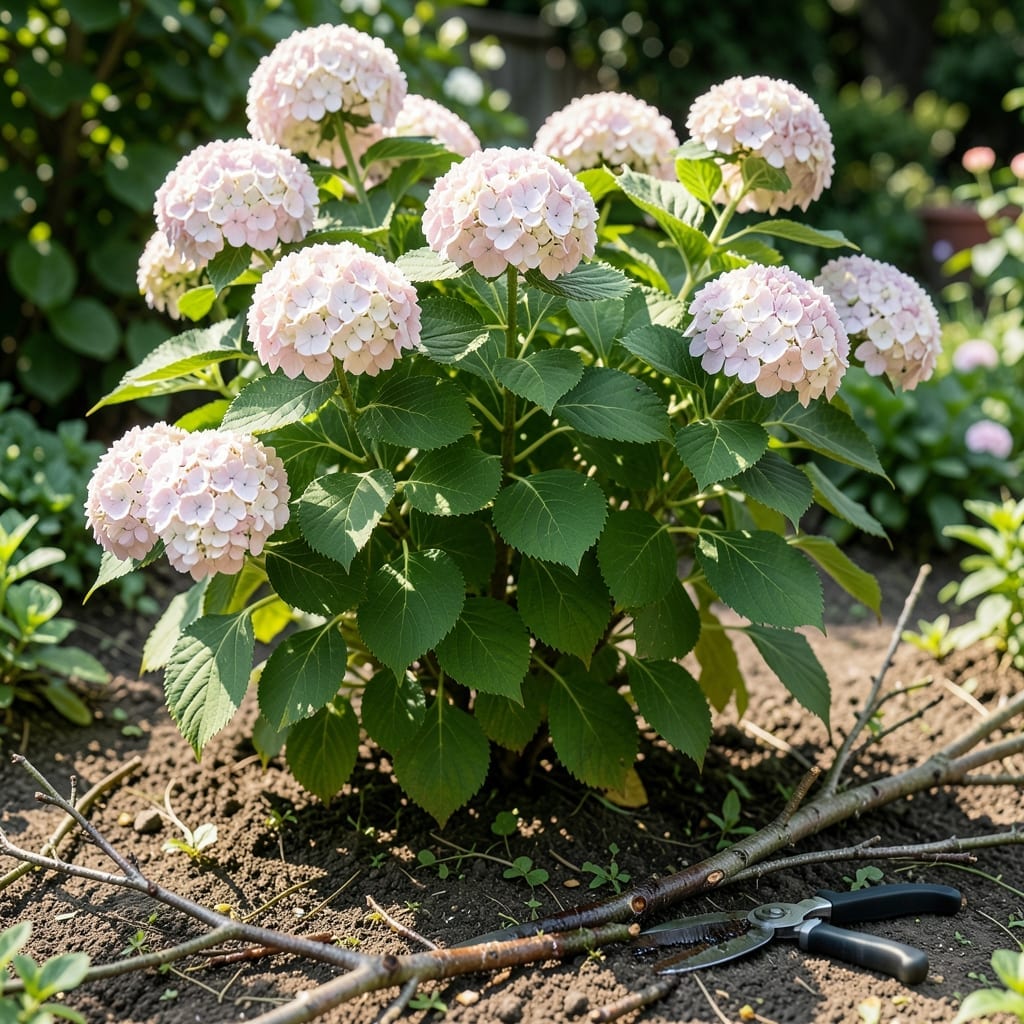
Trimming Hydrangea 🌸 at the wrong time can cost you a season of blooms. I learned this the hard way after accidentally pruning mine in late summer and missing out on those gorgeous flowers.
Timing is everything with these shrubs. Whether you have bigleaf, panicle, or oakleaf varieties, each has its own ideal pruning window to ensure vibrant growth.
Discover the perfect schedule for your Hydrangea type and learn how to make the most of your spring or fall trimming sessions. Let’s get started.
I’ve found that bigleaf hydrangeas (Hydrangea macrophylla) bloom on old wood, meaning they set their flower buds in late summer for the next year. Prune these right after blooming in summer, never in spring or fall.
For panicle hydrangeas (Hydrangea paniculata), the timing is more flexible. These bloom on new wood, so you can prune them in late winter or early spring before new growth starts.
| Hydrangea Type | Bloom Wood | Pruning Time | Key Note |
|---|---|---|---|
| Bigleaf (H. macrophylla) | Old wood | After flowering | Avoid spring pruning |
| Panicle (H. paniculata) | New wood | Late winter/early spring | Before new growth |
| Oakleaf (H. quercifolia) | Old wood | After flowering | Minimal pruning needed |
Oakleaf hydrangeas (Hydrangea quercifolia) also bloom on old wood, so like bigleaf, they should be pruned immediately after flowering. I recommend only light pruning to shape the plant.
The smooth hydrangea (Hydrangea arborescens) is another new wood bloomer. You can prune it hard in late winter to encourage vigorous new growth and larger blooms.
If you’re unsure about your hydrangea type, observe when it blooms. Spring bloomers are typically old wood, while summer bloomers are often new wood varieties.
Late summer pruning is generally safe for most types, but avoid cutting back too hard. I always leave some old growth to ensure next year’s flowers.
For all hydrangeas, remove dead or damaged wood at any time of year. This improves air circulation and reduces disease risk without affecting blooming.
In colder climates, I wait until spring to prune, as winter dieback may not be visible until new growth begins. This is especially true for bigleaf and oakleaf varieties.
Remember, the key to successful pruning is understanding your specific hydrangea type. When in doubt, prune right after flowering to be safe.
I’ve had the best results with my hydrangeas when I mark my calendar right after they finish blooming. This ensures I don’t accidentally remove next year’s flowers.
I always start by identifying my hydrangea type before picking up the pruners. For new wood bloomers like panicle and smooth hydrangeas, I prune in late winter or early spring before buds swell.
For old wood bloomers like bigleaf and oakleaf, I wait until just after flowering in summer. This timing ensures I don’t accidentally remove next year’s flower buds.
I use sharp bypass pruners for clean cuts and always sterilize tools with rubbing alcohol between plants to prevent disease spread. This is especially important for old wood hydrangeas.
When pruning bigleaf hydrangeas, I look for spent flower heads and cut just above the first set of healthy buds. This encourages strong new growth for next year’s blooms.
For panicle hydrangeas, I’m more aggressive, cutting back 1/3 of the oldest stems to the ground to stimulate vigor and larger flowers. I do this before new growth appears in spring.
I always avoid pruning during extreme heat or cold. The best time is on a dry, mild day when the plant isn’t stressed. This helps prevent shock and encourages quick recovery.
After pruning, I give my hydrangeas a deep watering and a light application of balanced fertilizer to support new growth. This simple step makes a noticeable difference in recovery speed.