
Beautiful Plants For Your Interior
Beautiful Plants For Your Interior
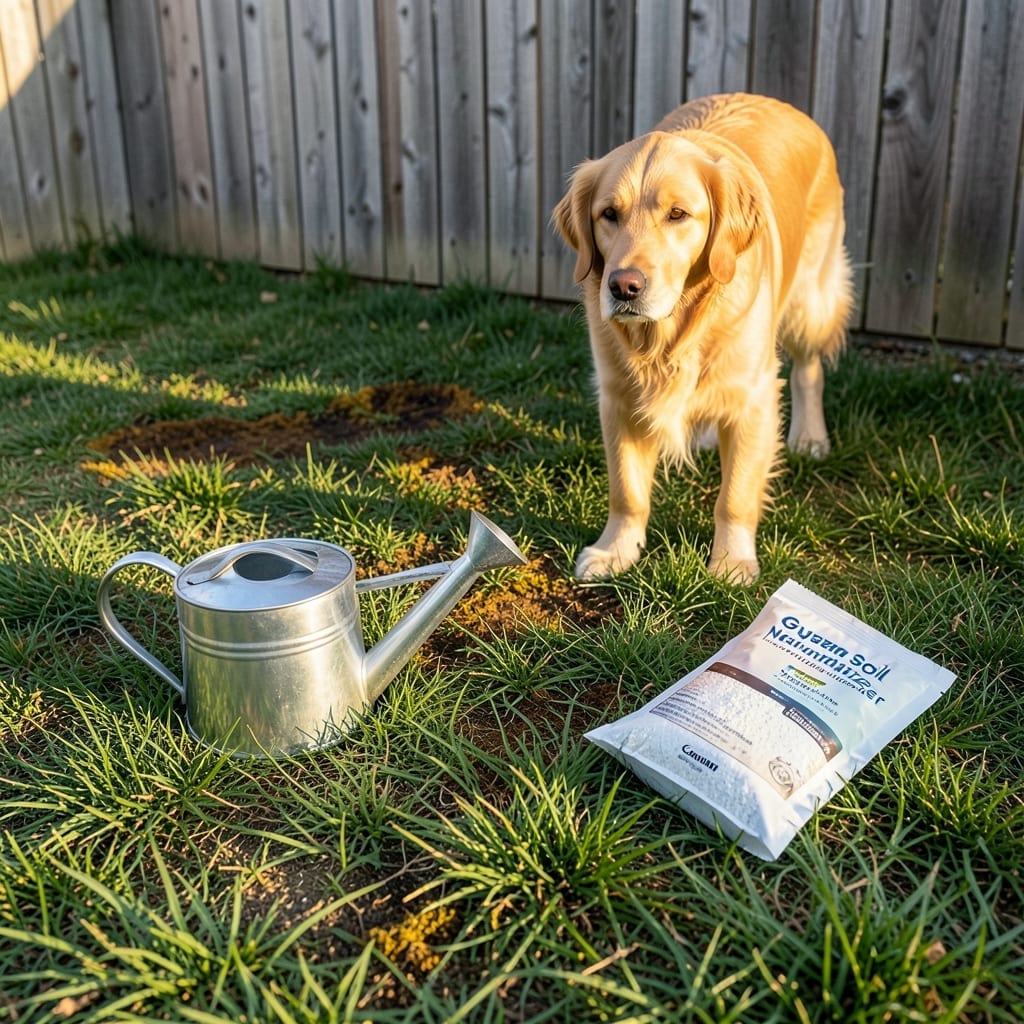
Those yellow patches in your lawn aren’t from drought—they’re from your dog’s daily routine. I’ve rescued more grass from urine burn than I can count, and the solution is simpler than you think.
The problem isn’t the urine itself but its nitrogen concentration. Too much in one spot burns the grass, while just enough acts as fertilizer. My trick? Diluting the area immediately after your dog goes, which washes the nitrogen away before it can cause damage.
You’ll see new growth within 7-10 days if you act fast. For existing spots, a light rake and fresh seed brings them back faster than you’d expect. No fancy products required.
Works for any grass type, any dog size. Here’s how to keep your lawn green and your pup happy.
Dog urine can turn your lush green lawn into a patchy eyesore, but why does this happen? The answer lies in the chemistry of your dog’s waste and how it interacts with your grass. Here’s a breakdown of the science behind the problem.
Dog urine is rich in nitrogen, a key nutrient for plant growth. While nitrogen fertilizes grass in small amounts, concentrated doses from urine can burn the blades. This is because nitrogen in high concentrations draws water out of the grass cells, causing them to dehydrate and die—similar to how over-fertilizing can harm plants.
Urine also contains salts and acidic compounds (like urea, creatinine, and uric acid), which can disrupt the soil’s pH balance. Grass thrives in slightly acidic to neutral soil (pH 6.0–7.0), but dog urine often has a pH of 7.5–8.5, making it alkaline. This shift can stress the grass, leading to yellow or brown patches.
Dogs tend to urinate in the same spots repeatedly, which means those areas receive a localized overload of nitrogen and salts. Unlike rain or sprinklers that distribute water evenly, urine deposits these compounds in one place, intensifying the damage. Smaller dogs with highly concentrated urine (due to less liquid dilution) often cause more noticeable harm.
Dealing with yellow patches from dog urine doesn’t have to be a losing battle. Here’s how to treat and prevent the damage with simple, effective solutions.
Fresh urine is highly acidic, but you can counteract it quickly. Rinse the area with water immediately after your dog goes. For existing spots, mix 1 tablespoon of baking soda in a gallon of water and pour it over the affected grass. This helps neutralize the nitrogen and salts, reducing burn risk.
Encourage your dog to drink more water to dilute their urine naturally. Add a second water bowl or switch to wet food. You can also train them to pee in a designated spot (like a gravel or mulch area) to protect the lawn. Use positive reinforcement—treats and praise work wonders! 💡
For already damaged patches, rake out dead grass and reseed with urine-resistant grass types like tall fescue or perennial ryegrass. Water the area daily until new growth appears. A thin layer of compost can also help rebuild soil health.
High nitrogen and salts in urine over-fertilize and dehydrate grass. Small dogs often cause worse damage due to more concentrated urine.
Use treats and praise to reward them for using a designated gravel or mulch area. Consistency is key for success.
Tall fescue and perennial ryegrass handle nitrogen better than others. These varieties recover faster from burns.
Yes! Rinse the spot with 1 gallon of water immediately to dilute the urine and prevent burns.