
Beautiful Plants For Your Interior
Beautiful Plants For Your Interior
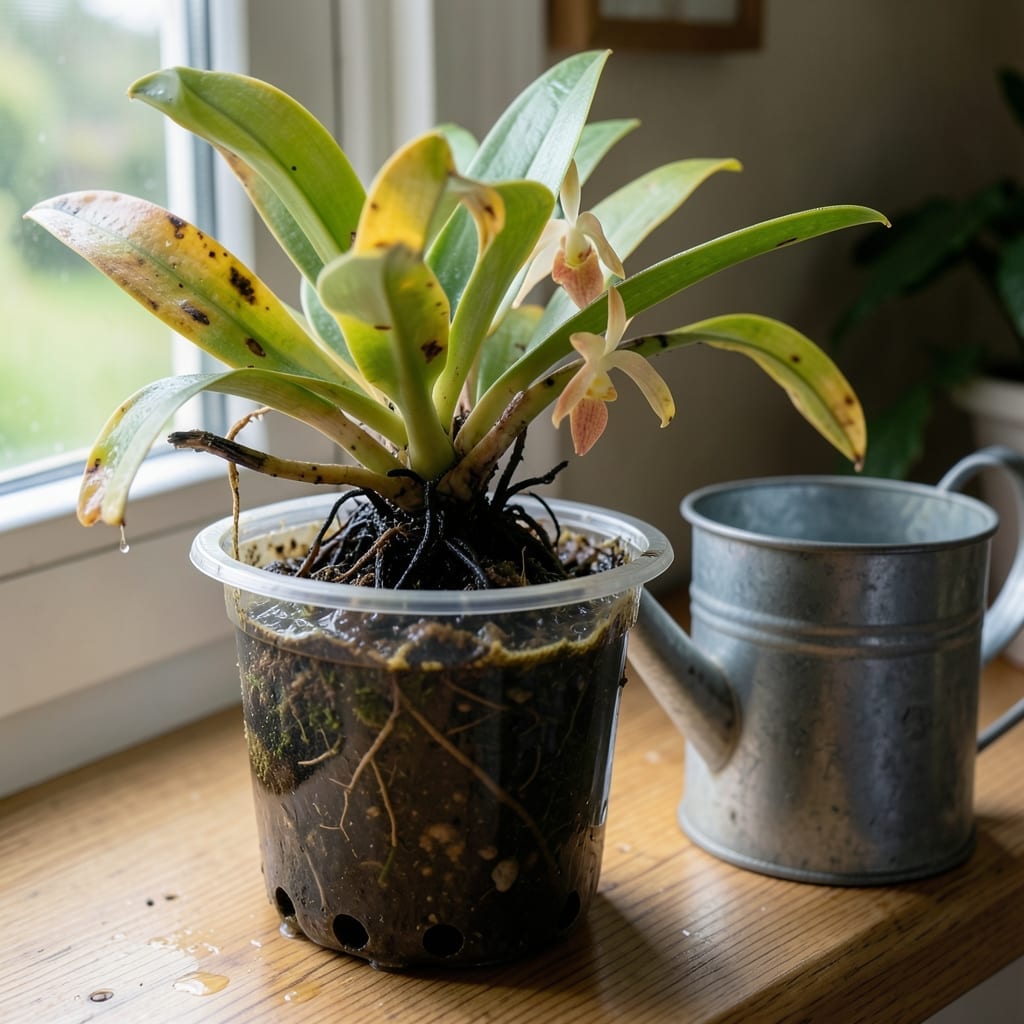
Yellowing leaves or mushy roots mean trouble. I’ve saved countless orchids from overwatering by catching these signs early—before the damage becomes irreversible.
The problem usually starts with well-meaning but excessive care. Orchids need less water than most houseplants, and their roots suffocate when constantly soggy. Soft, black roots and a foul smell are red flags.
With quick action, most orchids bounce back within 2-3 weeks. The fix involves trimming rotten roots, repotting in fresh mix, and adjusting your watering routine. It’s simpler than it sounds.
Prevention is even easier—water only when the mix feels nearly dry. This approach keeps them thriving without the stress.
Overwatering orchids often stems from well-meaning but misguided care. Understanding the root causes helps prevent this common issue. Below are the primary reasons orchids get too much water.
Orchids thrive in airy, well-draining environments. When planted in dense soil or containers without drainage holes, water pools around the roots. This suffocates the plant and promotes root rot, a fungal or bacterial infection caused by prolonged moisture. Always use orchid-specific potting mixes (bark, sphagnum moss, or perlite) and pots with drainage.
Many growers assume orchids need frequent watering, but most varieties (like Phalaenopsis) prefer to dry out slightly between waterings. Overwatering disrupts the osmotic balance in roots, leading to cell damage. Stick to the “finger test“: water only when the top inch of the medium feels dry.
High humidity, low light, or cooler temperatures slow evaporation, leaving the medium soggy. Orchids in such conditions need less frequent watering. Adjust your routine based on the plant’s environment—bright, warm spaces dry out faster than dim, humid ones.
Non-porous pots (e.g., plastic or ceramic without holes) trap moisture. Opt for slatted baskets, clay pots, or mesh containers that allow airflow and prevent waterlogging. Even with good mediums, poor containers can doom your orchid.
If your orchid shows signs of overwatering, act quickly to revive it. Below are targeted solutions for each issue, along with prevention tips to keep your plant thriving. 🌱✨
Stop watering immediately and let the orchid dry out. Remove it from its pot and check the roots—if they’re mushy, trim the damaged parts with sterilized scissors. Repot in fresh, well-draining orchid mix (bark-based works best). Going forward, water only when the top inch of the medium feels dry. Pro tip: Use a moisture meter to avoid guesswork. 💡
Move your orchid to a spot with better ventilation—a gentle fan on low can help. Ensure the pot has drainage holes, and consider switching to a slatted basket for better air circulation. Water less frequently, and always empty the saucer after watering to prevent soggy roots.
Carefully remove the orchid from its pot and rinse the roots under lukewarm water. Trim away black, mushy roots with clean shears, leaving only firm, healthy ones. Soak the remaining roots in a diluted hydrogen peroxide solution (1 part 3% peroxide to 3 parts water) for 10 minutes to disinfect. Repot in fresh medium and avoid watering for 5–7 days to let it recover.
A smelly orchid means bacterial or fungal growth from excess moisture. Discard the old potting mix, clean the pot with a bleach solution (1 part bleach to 9 parts water), and rinse thoroughly. Repot the orchid in new medium, and reduce watering frequency. Prevention tip: Always use sterilized tools and pots to avoid contamination. ✨
Move your orchid to a brighter location (indirect light is best) and improve airflow. Wipe down leaves with a damp cloth to remove mold spores. If algae is growing on the medium, repot the plant and use a chunky, fast-draining mix to discourage moisture buildup. Avoid misting the plant, as this can increase humidity around the leaves.
With these fixes and a little patience, your orchid can bounce back! Consistency in care is key—stick to a routine and observe your plant’s needs closely.
Healthy roots are firm, plump, and silver-green when dry, turning green when watered. Black or mushy roots signal overwatering and potential rot.
Water every 7-10 days in most homes, but always check the medium first. Use the finger test: if the top inch feels dry, it’s time to water.
Yes! Trim rotten roots, repot in fresh mix, and hold off on watering for 5-7 days. Most bounce back within 2-3 weeks.
A foul odor means bacterial growth from soggy medium. Clean the pot with bleach solution, repot in fresh mix, and reduce watering frequency.