
Beautiful Plants For Your Interior
Beautiful Plants For Your Interior
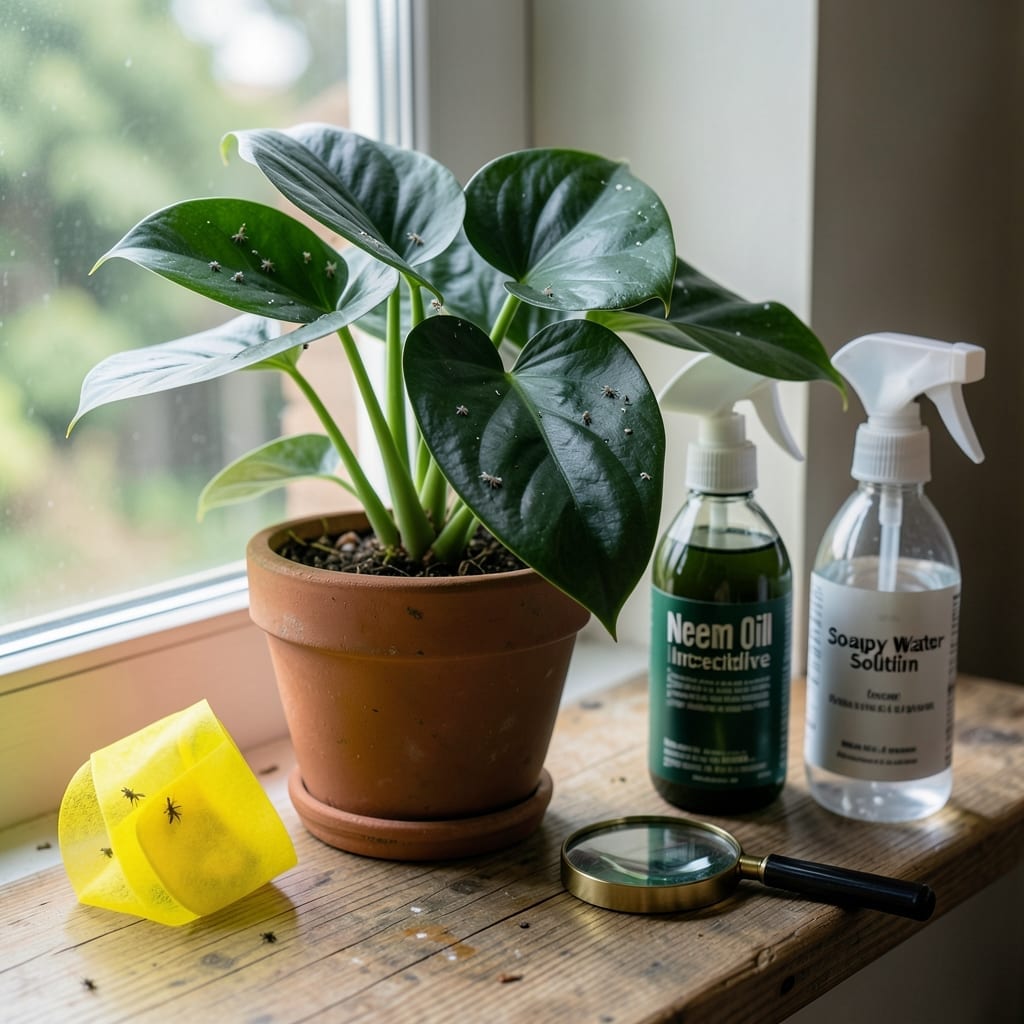
Whiteflies turned my favorite fern into their personal buffet last winter. Tiny white clouds would rise every time I touched the leaves, and the sticky honeydew they left behind was attracting even more pests.
Here’s the thing—these pests thrive in dry indoor conditions. They’re not just annoying; they’ll weaken your plants and spread to others if left unchecked. I tried everything before finding what actually works.
The solution combines yellow sticky traps for adults and neem oil for the larvae. Within 3 days, you’ll see a dramatic drop in their numbers. The traps catch the flying adults, while the oil disrupts their life cycle.
Best part? Both methods are safe for your plants and your home. No harsh chemicals, just consistent application until they’re gone for good.
Whiteflies thrive on indoor plants due to several key factors that create an ideal environment for their rapid multiplication. Understanding these causes helps you prevent future infestations and address current ones more effectively.
Whiteflies are drawn to moist, humid conditions, which are common in overwatered indoor plants. Excess water in the soil and stagnant air promote fungal growth, which indirectly attracts whiteflies. These pests also lay eggs more readily in damp environments, accelerating their life cycle.
Stagnant air in tightly grouped houseplants or poorly ventilated rooms allows whiteflies to settle and reproduce undisturbed. Good airflow disrupts their ability to feed and lay eggs, making circulation fans or open windows a simple deterrent.
Plants weakened by nutrient deficiencies, improper light, or physical damage emit stress signals that attract whiteflies. These pests target vulnerable plants because their sap is easier to extract. Regularly inspect leaves for yellowing or wilting, as these are early signs of stress.
Whiteflies often hitchhike on newly purchased or gifted plants. Even a few eggs or nymphs can start an infestation. Always quarantine new plants for 2–3 weeks and inspect them thoroughly before introducing them to your collection.
Whiteflies can be stubborn, but these targeted fixes will help you reclaim your indoor plants. Address the root cause first, then apply the solution for best results.
Whiteflies thrive in still, humid air. Space out your plants to allow better circulation. Use a small fan on low to keep air moving gently. This disrupts their ability to land and lay eggs.
Prevention tip: 💡 Avoid clustering plants too closely. A little breathing room goes a long way in deterring pests.
Excess moisture creates the perfect breeding ground. Let the top inch of soil dry out between waterings. Use pots with drainage holes to prevent soggy roots.
Prevention tip: 💧 Stick your finger in the soil before watering—if it feels damp, wait another day or two.
If the soil is teeming with larvae, remove the top layer and replace it with fresh, sterile potting mix. For a gentler approach, drench the soil with a neem oil solution (1 tbsp neem oil + 1 tsp dish soap per gallon of water).
Prevention tip: ✨ Always sterilize reused pots and use high-quality potting soil to avoid introducing pests.
For a small infestation, use a handheld vacuum to suck up adult whiteflies from leaves. Alternatively, wipe leaves with a damp cloth or cotton swab dipped in rubbing alcohol (70% isopropyl). Focus on the undersides, where eggs and nymphs hide.
Prevention tip: 🎯 Inspect new plants thoroughly before bringing them indoors to prevent hitchhikers.
Ladybugs, lacewings, and parasitic wasps are natural whitefly predators. Release them near affected plants for a chemical-free solution. This works best in larger indoor gardens.
Prevention tip: 🌱 Encourage biodiversity in your indoor garden to create a balanced ecosystem that deters pests naturally.
Apply a neem oil solution every 5-7 days for 3-4 weeks to break the whitefly life cycle. Always spray in the evening and avoid direct sunlight to prevent leaf burn.
They may be hiding in untreated soil or nearby plants. Check all houseplants and isolate infested ones. Also, ensure you’re targeting both adults (with traps) and larvae (with oil).
Yes! Mix 1 tsp mild dish soap per 1 liter of water and spray leaves, especially undersides. This suffocates adults but won’t kill eggs, so repeat every 2-3 days.
The traps are chemical-free and won’t harm plants. Place them near (but not touching) foliage to catch adults. Replace when covered in pests.