
Beautiful Plants For Your Interior
Beautiful Plants For Your Interior
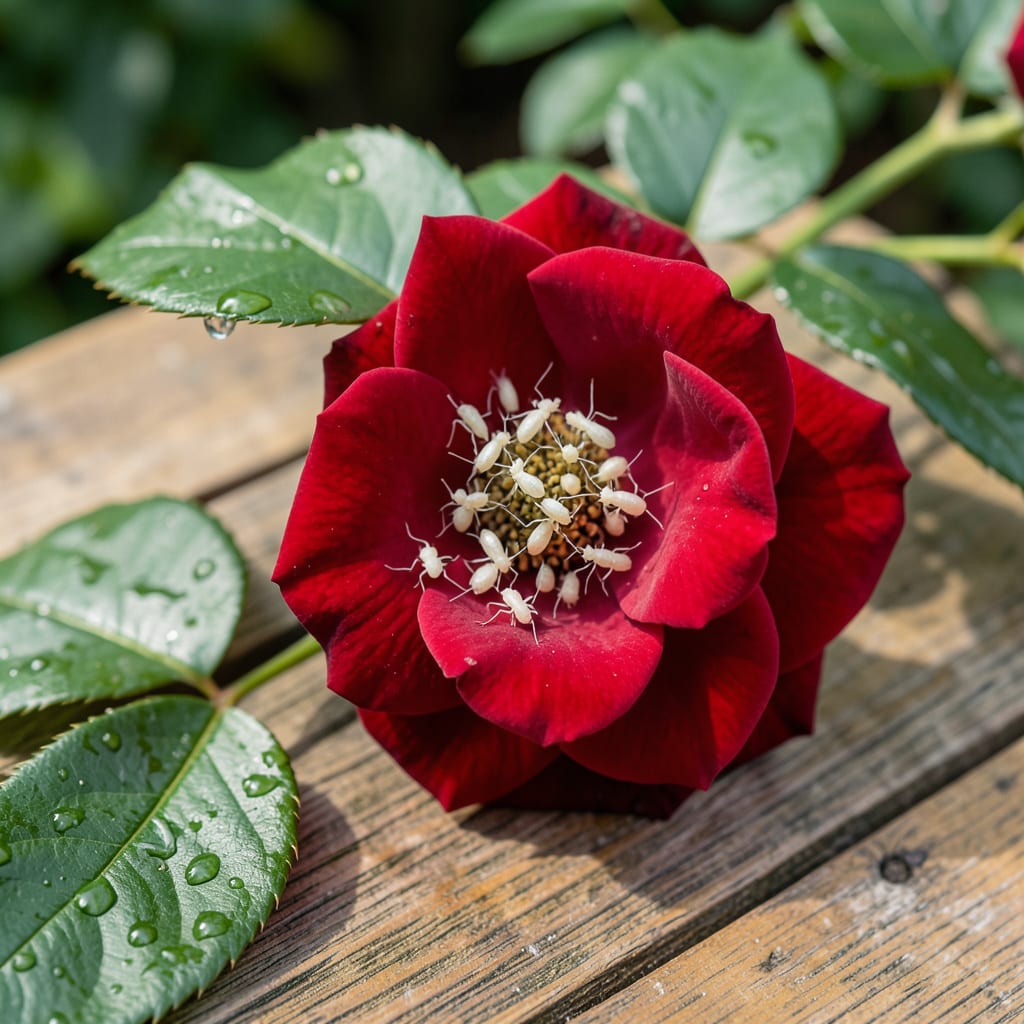
I spotted those tiny white pests on my roses last summer and panicked. Turns out they’re usually aphids or mealybugs, and I learned the hard way that ignoring them means saying goodbye to healthy blooms.
Natural removal methods saved my garden. A strong blast of water, some neem oil spray, and regular inspections keep them from coming back. The roses bounced back in 2-3 weeks with proper care.
📚 In This Guide
Here’s the natural approach I use to rid roses of white insects while keeping plants strong and blooming.
First, confirm you’re dealing with aphids—the most common tiny white insects on roses. They cluster on new growth, buds, and the undersides of leaves. I use a magnifying glass to spot their pear-shaped bodies and two tailpipe-like cornicles. If they’re flying, you might have whiteflies, which require a different approach.
Check for sticky residue on leaves (honeydew) or black sooty mold growing on it—that’s a sure sign aphids have been feeding. Misidentifying the pest wastes time, so take a moment to observe closely before treating.
Early in the morning, use a strong jet of water from a garden hose to knock aphids off the plant. I focus on the undersides of leaves and new growth where they hide. Aphids are fragile, and the force of water will dislodge and kill many of them instantly.
Do this every 2-3 days for a week to break their life cycle. Avoid doing it in the heat of the day, as wet leaves in strong sun can scorch. You’ll see fewer insects within 48 hours if you’re consistent.
Mix 1 tablespoon of mild liquid soap (like Castile) with 1 quart of water in a spray bottle. Spray the solution directly onto the aphids, coating them thoroughly. The soap disrupts their cell membranes, causing them to dehydrate and die. I reapply every 4-5 days until they’re gone.
For a preventive boost, I also use a neem oil spray (1 tablespoon neem oil, 1 teaspoon mild soap, and 1 quart of water). Neem disrupts the insects’ feeding and reproduction. Always spray in the evening to avoid harming beneficial insects like bees.
Ladybugs, lacewings, and parasitic wasps are aphids’ natural enemies. I plant companion flowers like marigolds, yarrow, or dill nearby to attract them. A small dish of water with pebbles (so insects don’t drown) also helps keep them around.
Avoid broad-spectrum pesticides, as they kill these helpful insects too. If you don’t see predators after a week, consider purchasing ladybugs from a garden center. Release them at dusk to prevent them from flying away immediately.
Stressed roses are more susceptible to pests. I ensure mine get 6+ hours of sun daily and water them deeply at the base 1-2 times per week, depending on rainfall. Overhead watering can encourage fungal growth, which attracts aphids.
Fertilize with a balanced organic rose food every 4-6 weeks during the growing season. Strong, vigorous plants resist pests better. Prune out any heavily infested growth and dispose of it in the trash—not the compost—to prevent reinfestation.
Here are the key details that make this method so effective.
Pest Identification: In Step 1, take your time to confirm it’s aphids and not whiteflies. The sticky honeydew residue is a dead giveaway. I learned this the hard way after treating the wrong pest and wasting a week.
Timing Secret: For Step 2, that 2-3 day blasting schedule is crucial. I set phone reminders to stay consistent. You’ll start seeing results within 48 hours, but don’t stop early—completing the full week breaks their life cycle completely.
Spray Application: When using the soap mixture from Step 3, focus on the undersides of leaves where aphids hide. I use a fine mist setting on my spray bottle for better coverage. The 1 tablespoon of soap to 1 quart of water ratio works perfectly—stronger solutions can damage your roses.
Long-Term Prevention: In Step 5, that 6+ hours of daily sun isn’t just good for blooms—it keeps plants strong enough to resist infestations. I mark my calendar for that 4-6 week fertilizing schedule so I never forget.
These are likely aphids, mealybugs, or whiteflies—common pests that suck sap from rose plants, weakening them. Aphids are pear-shaped, mealybugs look cottony, and whiteflies resemble tiny moths. Identify them to choose the best treatment!
Try spraying with a mix of water and mild soap, or introduce beneficial insects like ladybugs. Neem oil is another effective, natural remedy. Apply in the early morning or late evening for best results.
Act at the first sign of infestation, ideally in spring or early summer when pests are most active. Regularly inspect leaves and stems to catch them early.
Yes, but opt for organic or low-toxicity options first to protect pollinators. If chemicals are necessary, apply in the evening when bees are less active and follow label instructions carefully.
Pests thrive in dry, dusty conditions or when natural predators are absent. Improve plant health with proper watering, mulching, and companion planting (like marigolds) to deter them long-term.
