
Beautiful Plants For Your Interior
Beautiful Plants For Your Interior
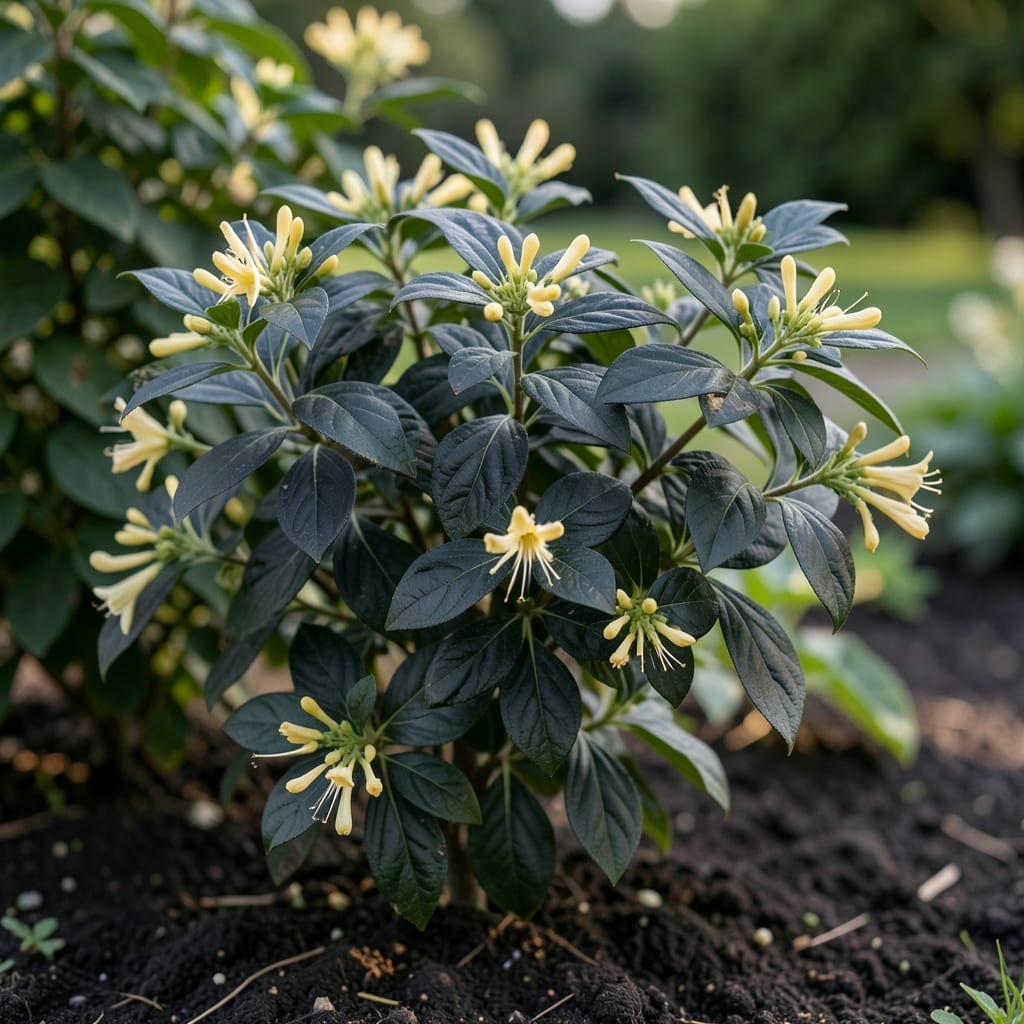
Kodiak Black honeysuckle stopped me in my tracks the first time I saw it. The deep purple-black foliage makes other plants look dull by comparison, and those bright yellow flowers create a contrast that’s hard to ignore.
It’s not fussy—just give it full sun to part shade and well-draining soil, and it rewards you with vibrant blooms all season. Prune it back in early spring to keep it looking sharp.
📚 In This Guide
This method ensures vigorous growth and abundant blooms from your vines every season.
Select a spot with full sun to partial shade, as Kodiak Black thrives with at least 6-8 hours of direct sunlight daily. The more sun it receives, the more prolific the blooms will be. I always test the location by observing sunlight patterns throughout the day.
Avoid low-lying areas where cold air settles, as this can damage tender new growth in spring. The ideal site also has well-draining soil—stand in a puddle test after rain to confirm water doesn’t pool for more than 1 hour.
Kodiak Black prefers slightly acidic to neutral soil (pH 6.0-7.0). I recommend testing your soil first—kits are inexpensive and take the guesswork out. Amend heavy clay or sandy soil with 2-3 inches of compost worked into the top 12 inches of soil.
This variety appreciates rich, organic matter. Mix in a balanced slow-release fertilizer at planting time to give it a strong start. The soil should feel loose and crumbly in your hands, not compacted or waterlogged.
Dig a hole twice as wide and just as deep as the root ball. For container-grown plants, gently loosen the roots if they’re circling the pot. Position the plant so the top of the root ball sits 1 inch above the surrounding soil level to allow for settling.
Space multiple plants 3-4 feet apart to ensure good air circulation, which prevents foliar diseases. Backfill with native soil, tampering lightly to remove air pockets. Water thoroughly after planting to settle the soil around the roots.
Kodiak Black is a vigorous climber that needs support from day one. Install a sturdy trellis, arbor, or fence at planting time—waiting until the vine grows makes it harder to train. I use 4-6 foot tall structures for mature plants, as this variety can reach 10-15 feet in height.
Gently tie the main stems to the support with soft plant ties, leaving room for growth. As new shoots emerge, weave them through the structure to encourage upward growth. This early training prevents a tangled mess later.
Water deeply 1-2 times per week during the first growing season, ensuring the soil stays evenly moist but not soggy. Once established, Kodiak Black is moderately drought-tolerant but blooms best with consistent moisture. I check soil by inserting my finger 2 inches deep—if it feels dry, it’s time to water.
Prune in late winter or early spring before new growth begins. Remove dead or weak stems first, then shape the plant by cutting back about one-third of the previous year’s growth. This encourages fresh, flower-bearing wood and maintains the vine’s vigor.
Small adjustments in planting and care make a world of difference for these vines.
Sunlight Strategy: The 6-8 hours of direct sunlight mentioned in Step 1 isn’t just a suggestion—it’s the difference between sparse blooms and a cascade of flowers. I’ve found that morning sun with some afternoon shade works particularly well in hotter climates. Don’t underestimate how much the sun angle changes throughout the season.
Soil Preparation Insight: When amending soil in Step 2, working that 2-3 inches of compost into the full 12 inches of soil creates a root-friendly environment that retains moisture without becoming waterlogged. The puddle test from Step 1 is your best friend—if water pools for more than 1 hour, you’ll need to improve drainage before planting.
Planting Depth Nuance: That 1 inch above soil level mentioned in Step 3 might seem counterintuitive, but it accounts for settling that always happens after planting. I learned this the hard way when my first plant ended up too deep, which led to stem rot. The wider hole (twice as wide as the root ball) gives roots room to spread without circling.
Support System Timing: Step 4 emphasizes installing support at planting time for a reason. I once waited until the vine was 3 feet tall before adding a trellis, and spent weeks untangling stems. The 4-6 foot tall structures work perfectly for mature plants, but start with what you can manage—you can always extend upward as the vine grows toward its 10-15 feet potential.
Yes, like many honeysuckles, Kodiak Black can face issues like powdery mildew or aphid infestations. Ensure good airflow, avoid overhead watering, and treat with neem oil or fungicides if needed.
Plant in early spring or fall for the best results. This allows the roots to establish before extreme heat or cold, giving your honeysuckle a strong start.
Yes, but choose a large pot (at least 12-16 inches in diameter) with drainage holes. Use well-draining soil and water regularly, as container plants dry out faster.
Yellowing leaves often indicate overwatering, poor drainage, or nutrient deficiencies. Check soil moisture, ensure proper drainage, and consider fertilizing with a balanced feed.
Consider Lonicera ‘Scentsation’ for fragrance or Lonicera sempervirens for native appeal. Both offer vibrant blooms and similar care needs.