
Beautiful Plants For Your Interior
Beautiful Plants For Your Interior
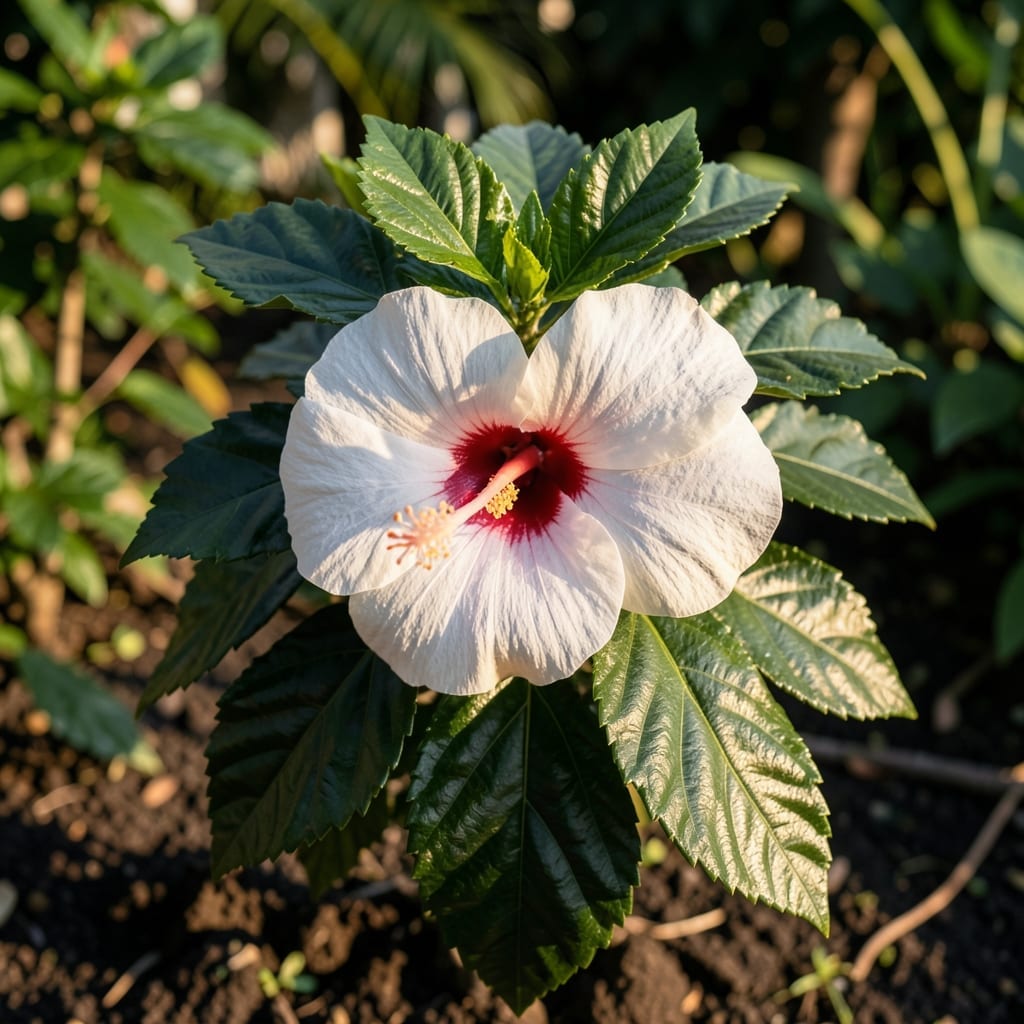
This variety changed my summer garden forever. Dainty White hibiscus produces massive, paper-thin blooms that look delicate but laugh at heat waves.
Plant in full sun with well-draining soil, and you’ll get flowers the size of dinner plates from July through September. The glossy leaves stay pristine with minimal care, and hummingbirds treat it like a diner.
📚 In This Guide
Here’s the method I rely on for establishing healthy, blooming specimens in your outdoor space.
Choose a spot with full sun to partial shade, as this variety thrives with at least 6-8 hours of direct sunlight daily. The more sun it receives, the more abundant and vibrant the blooms will be. I’ve found that morning sun with afternoon shade works particularly well in hotter climates to prevent leaf scorch.
Avoid low-lying areas where water pools or cold air settles. The soil should be well-draining to prevent root rot, which is a common issue with these plants. If your garden has heavy clay soil, consider amending it with organic matter or planting in raised beds.
Before planting, loosen the soil to a depth of 12-18 inches to encourage deep root growth. This variety prefers slightly acidic to neutral soil with a pH between 6.0 and 7.0. If you’re unsure about your soil’s pH, a simple test kit can provide clarity.
Mix in a generous amount of compost or well-rotted manure to improve fertility and drainage. I always add a layer of organic mulch after planting to retain moisture and suppress weeds, which can compete for nutrients.
Dig a hole that is twice as wide and just as deep as the root ball of your plant. Gently remove it from its container, loosening any tightly bound roots to encourage outward growth. Place the plant in the hole so that the top of the root ball is level with the surrounding soil.
Backfill the hole with the amended soil, pressing down lightly to remove air pockets. Water thoroughly after planting to help settle the soil and hydrate the roots. You’ll want to keep the soil consistently moist but not waterlogged during the first 2-3 weeks as it establishes.
Once established, this plant is moderately drought-tolerant but performs best with regular watering. Aim to provide 1-2 inches of water per week, either through rainfall or manual irrigation. Water deeply at the base to encourage strong root development rather than shallow, frequent watering.
Fertilize lightly in early spring with a balanced, slow-release fertilizer to promote healthy growth and abundant blooms. I’ve found that a second application in mid-summer can extend the blooming period well into fall. Watch for yellowing leaves as a sign of nutrient deficiency.
Prune in late winter or early spring before new growth begins. Remove any dead, damaged, or crossing branches to improve air circulation and shape. This variety blooms on new wood, so pruning encourages more flowers.
Throughout the growing season, deadhead spent blooms to promote continuous flowering. If the plant becomes leggy or overgrown, a light trim after the first flush of blooms can rejuvenate it. Always use clean, sharp pruners to make precise cuts just above a leaf node or branching point.
Small adjustments in planting and care will help your hibiscus thrive.
Sunlight Strategy: In Step 1, the 6-8 hours of direct sunlight is non-negotiable for vibrant blooms. Morning sun with afternoon shade is ideal in hotter climates, but don’t cheat on the minimum—less than 6 hours results in sparse, weak flowers. I learned this the hard way after a season of disappointing blooms.
Soil Preparation Insight: For Step 2, loosening soil to that 12-18 inch depth isn’t just about depth—it’s about breaking up compacted layers that restrict root growth. If your soil is heavy clay, consider raised beds; I’ve seen plants struggle in unamended clay despite perfect sunlight.
Watering Wisdom: During the first 2-3 weeks mentioned in Step 3, consistency is key. Water deeply every 2-3 days rather than daily light sprinkles. The goal is to encourage roots to grow downward, not stay shallow. A moisture meter can help avoid the common mistake of overwatering.
Pruning Precision: Step 5’s timing—late winter or early spring—is critical because this variety blooms on new wood. Pruning later in the season means you’ll sacrifice flowers. Also, always sterilize your pruners with rubbing alcohol between cuts to prevent disease spread.
Keep the soil moist but well-drained, and place it in full sun to partial shade. Prune regularly to encourage blooming and remove dead flowers. Fertilize every 2-3 weeks during the growing season for vibrant blooms.
This variety typically blooms from late spring to early fall, producing delicate white flowers. Ensure it gets enough sunlight and warmth to maximize its flowering period.
Watch for aphids, whiteflies, or spider mites. Common diseases include leaf spot and root rot, often caused by overwatering. Treat with neem oil or fungicides as needed.
Yes! Use a well-draining potting mix and a container with drainage holes. Ensure it receives at least 6 hours of sunlight daily and water when the top inch of soil feels dry.
Consider other white-flowering hibiscus varieties like ‘White Witch’ or ‘Snow Queen.’ Alternatively, opt for similar-looking plants like gardenias or jasmine for fragrant white blooms.