
Beautiful Plants For Your Interior
Beautiful Plants For Your Interior
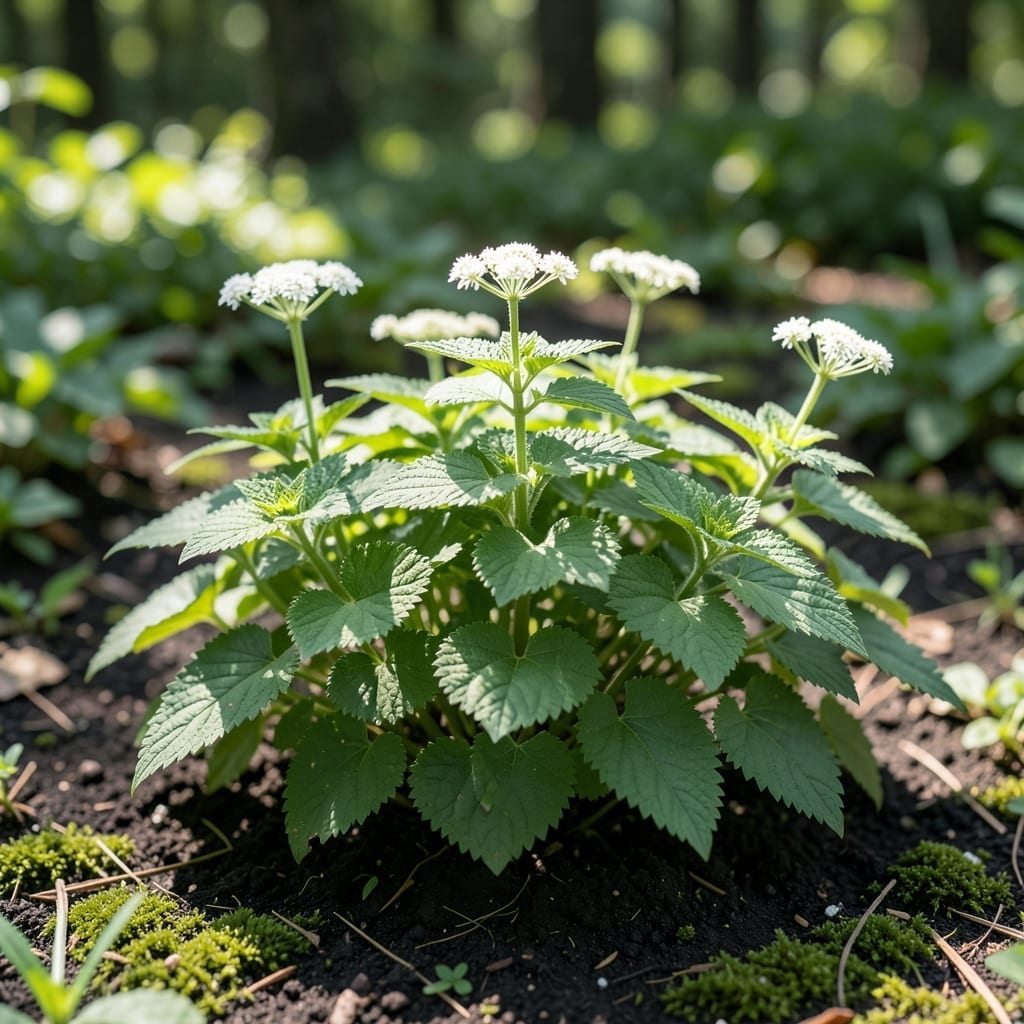
Goutweed is a fast-spreading perennial herb with triangular leaves and small white flowers, often found in shaded gardens. It thrives in moist soil and can quickly overtake other plants.
I’ve battled this invasive plant in my own garden and learned it’s a member of the carrot family, which explains its umbrella-shaped flower clusters. It’s often called bishop’s weed and spreads aggressively through underground rhizomes, making it a common nuisance for gardeners. 🔥
What surprises many is how it can dominate wooded areas and garden borders, choking out less hearty plants if left unchecked.
💡 In This Article
The leaves are the first giveaway—each has 3 distinct lobes forming a broad triangle, with toothed edges and a glossy green finish. They grow in groups of 3 from a single stem node, creating a dense ground cover that can reach 12-18 inches tall. This pattern is a dead ringer for goutweed. 🔥
Come spring, it produces clusters of tiny white flowers in flat-topped umbels, resembling miniature Queen Anne’s lace. These blooms appear from May to June and attract pollinators, but don’t be fooled—they’re part of what makes this plant so aggressive. The flowers also release seeds that can spread the plant further.
You’ll often find goutweed in shady, moist areas where other plants struggle. It thrives under trees, along fence lines, or in garden beds with rich, well-draining soil. Its ability to grow in low light gives it an edge over many native plants. This is why it’s a common invader in wooded landscapes. ✨
Another telltale sign is its growth habit. Goutweed spreads via underground rhizomes, forming a thick mat that can choke out nearby vegetation. If you see a patch of triangular leaves expanding rapidly in a shaded spot, chances are you’ve found goutweed. It’s not just the leaves—it’s the way it takes over.
For confirmation, crush a leaf between your fingers. Goutweed emits a mild, carrot-like scent—a clue to its membership in the Apiaceae family. This aroma is subtle but distinct, especially when the leaves are fresh. It’s a sensory detail that can help you ID it with confidence. 💫
It spreads aggressively through underground rhizomes that can extend several feet in all directions. Even small root fragments left in the soil can regrow into new plants.
No, avoid composting goutweed as the rhizomes can survive and regrow. Seal removed plants in a bag and dispose of them with household waste to prevent reinfestation.
Early spring is ideal, before new growth appears and the plant has stored less energy in its roots. This makes removal less labor-intensive and more effective.
Regularly inspect shaded areas and remove new shoots immediately. Create barriers with landscape fabric or dense plantings of native species to block its spread.