
Beautiful Plants For Your Interior
Beautiful Plants For Your Interior
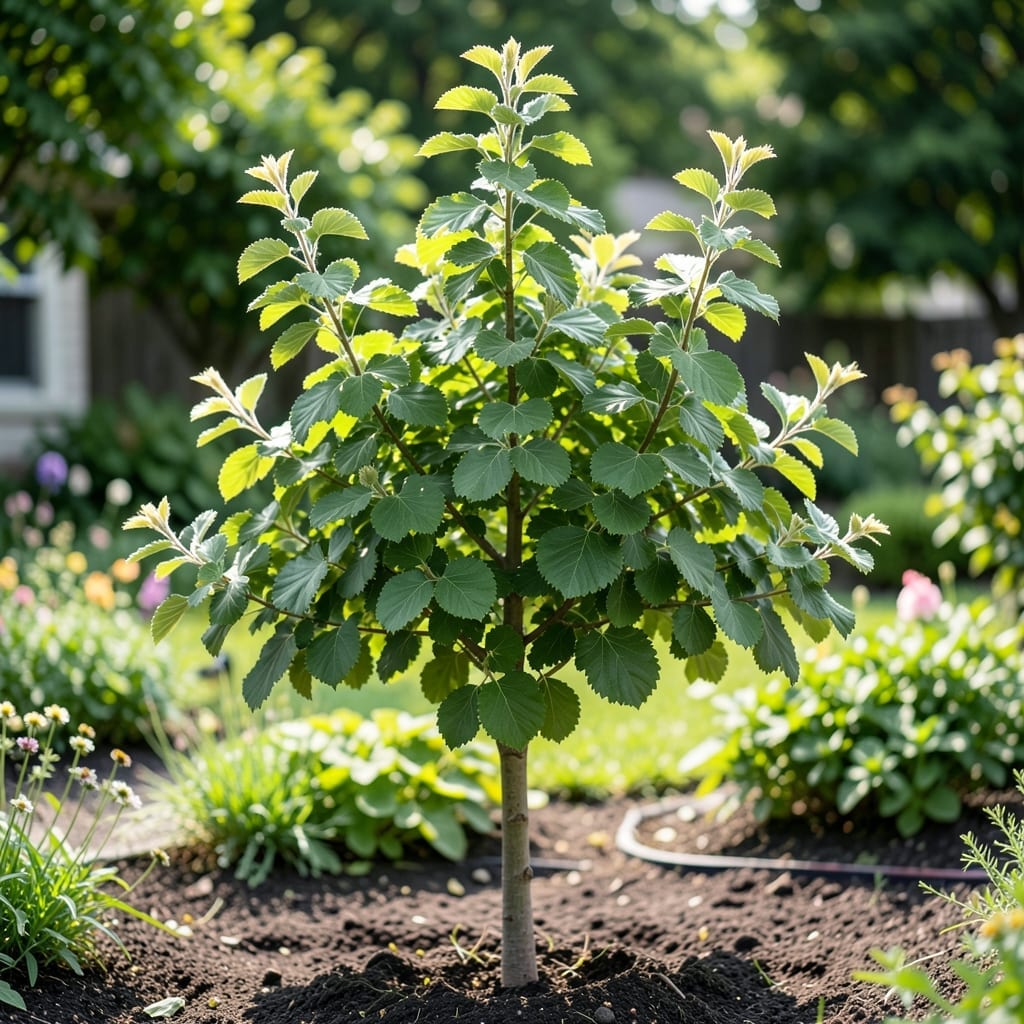
Spotting healthy hazelnut leaves means knowing what to look for. I check for that rich green color, smooth edges, and a slight sheen that means the tree’s thriving.
Yellowing, spots, or curled edges signal trouble—usually water, nutrients, or pests. Catching issues early keeps your tree producing for years. Simple checks now prevent big problems later.
📚 In This Guide
Use this method to confidently recognize vibrant foliage in your garden or landscape.
Healthy hazelnut leaves display a distinct double-serrated edge with a rounded base and pointed tip. I always check for this classic ovate shape first—it’s the most reliable identifier. The leaf should measure between 2.5 to 5 inches long and 2 to 4 inches wide at maturity.
Look for a slightly asymmetrical base where the leaf meets the stem. This subtle detail separates hazelnut from look-alike species like birch or elm. Hold the leaf up to the light to confirm the serrations are sharp and consistent along the margin.
Vibrant hazelnut foliage presents in a deep, rich green on the upper surface, with a slightly lighter, matte underside. I notice the color intensifies in full sun exposure, while shaded leaves may appear a bit paler but still maintain that healthy glow.
The texture should feel smooth to the touch with a slight leathery quality, not brittle or sticky. Run your fingers along the surface—healthy leaves have a subtle sheen but no signs of powdery mildew or oily residue that indicate disease.
Hazelnut leaves grow in an alternate arrangement along the stem, meaning they spiral upward rather than pairing directly across from each other. I trace the stem with my eye to confirm this pattern, which is consistent in healthy specimens.
Inspect the petiole (the small stem attaching the leaf to the branch). It should be sturdy and ½ to 1 inch long, with no signs of cracking or discoloration. A healthy connection ensures proper nutrient flow and supports the leaf’s weight.
Turn the leaf over to examine the venation. Hazelnut leaves feature a pinnate vein pattern, where a central midrib runs down the middle with smaller veins branching off like a feather. I count 8 to 12 pairs of lateral veins in a healthy leaf.
The veins should be slightly raised on the underside and clearly visible but not overly pronounced. If the veins appear sunken or the tissue between them looks yellowed or translucent, the leaf may be struggling with nutrient deficiencies or pest damage.
Finally, step back and assess the leaf in the context of the whole tree. Healthy hazelnut foliage should appear uniformly lush, with no curling, spotting, or premature browning. I look for a dense canopy where leaves overlap slightly but don’t crowd each other.
Check for signs of vitality like new growth at the tips of branches—these emerging leaves should be a brighter green and slightly softer than mature ones. If 70-80% of the tree’s leaves meet these criteria, your hazelnut is in excellent health.
These observations will help you confidently identify healthy foliage and spot potential issues early.
Shape Precision: When examining leaf shape in Step 1, focus on the double-serrated edge—this is the most distinctive feature of hazelnut leaves. The ovate to broadly elliptical shape should measure between 2-5 inches long and 1.5-3 inches wide. I’ve found that leaves from the same tree can vary slightly, so comparing multiple samples gives you the most accurate baseline.
Color Clues: In Step 2, the medium to dark green color is a strong indicator of health, but don’t overlook the texture. That slightly rough feel comes from tiny hairs on young growth, which is normal. If you notice yellowing between the veins, that’s a classic sign of iron deficiency—something I’ve seen often in poorly drained soil.
Vein and Petiole Inspection: For Step 3, the 6-8 pairs of lateral veins should form a clear pinnate pattern. If the veins appear sunken or raised, it’s often a sign of water stress, which can be corrected with consistent watering. A firm petiole with no swelling or discoloration is key—this is where I check first for signs of bacterial infection or physical damage.
Density and Arrangement: Step 4’s alternate leaf arrangement is non-negotiable for hazelnuts—opposite leaves are a red flag. Healthy trees should have 60-70% light filtration at midday. If you’re seeing gaps larger than 2-3 inches between leaves, the tree may be under stress and shedding foliage too early.
Yellowing leaves often signal nutrient deficiencies (like nitrogen or iron) or overwatering. Check soil drainage and consider a balanced fertilizer. If spots appear, it may indicate fungal issues like leaf blight.
Hazelnut trees are deciduous, so leaves typically drop in late fall (October–November). Premature shedding may indicate stress from pests, drought, or disease—inspect leaves for unusual patterns or holes.
Yes! Hazelnut leaves decompose well in compost, adding organic matter. Avoid composting diseased leaves, as this can spread pathogens. Shred them first to speed up the process.
Brown spots often point to fungal infections (e.g., anthracnose or bacterial leaf spot). Remove affected leaves, improve airflow, and apply a copper-based fungicide if severe. Avoid overhead watering.
Absolutely! Try neem oil or baking soda sprays for mild fungal issues. Prune infected branches, sanitize tools, and ensure good air circulation to prevent recurrence naturally.