
Beautiful Plants For Your Interior
Beautiful Plants For Your Interior
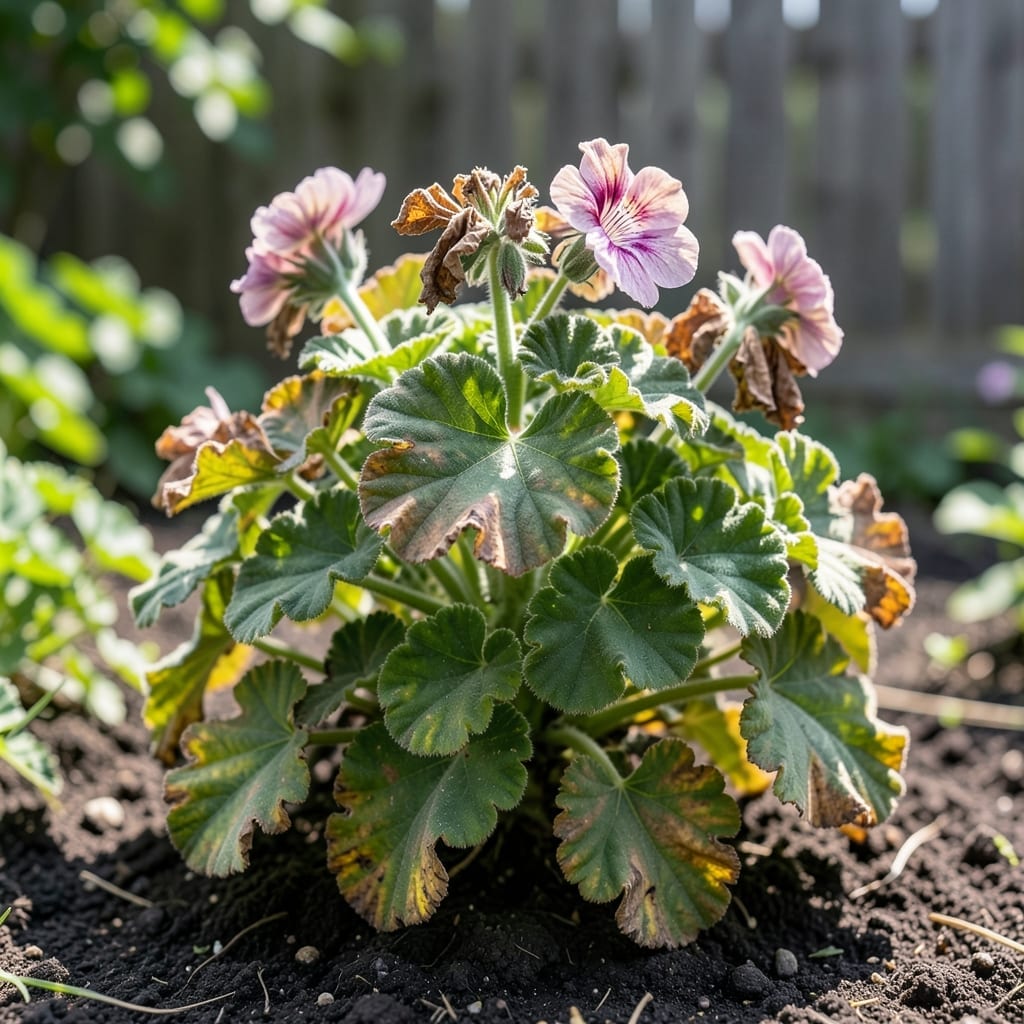
Brown leaves on geraniums don’t mean the end. I’ve saved dozens from the brink with simple adjustments to water, light, and care routines.
Most cases come down to overwatering, dry air, or the wrong soil mix. The fix often takes less than a week once you pinpoint the issue. No fancy tools required—just observation and a few tweaks.
You’ll see new growth replace crispy edges within 10-14 days of correcting the problem. The key is acting fast before the stress spreads to healthy foliage.
Works for potted plants indoors or garden beds outside. Here’s what to check first.
Understanding why your geraniums develop brown leaves starts with identifying the root causes. Here are the most common culprits behind this issue:
Geraniums thrive in moderate temperatures (65–75°F). Exposure to extreme heat or cold can disrupt their cellular processes, leading to leaf scorching or frost damage. Prolonged temperatures above 90°F cause moisture loss and browning at leaf edges, while drops below 50°F may trigger leaf necrosis.
Overwatering drowns roots, reducing oxygen uptake and promoting fungal rot, which manifests as brown, mushy leaves. Conversely, underwatering causes dehydration, leading to crisp, brown edges. Geraniums prefer soil that’s moist but well-draining—water only when the top inch of soil is dry.
Pathogens like Alternaria or Botrytis thrive in humid conditions, causing brown spots or patches. Bacterial leaf spot (Xanthomonas) creates water-soaked lesions that turn brown. Remove infected leaves immediately and improve air circulation to prevent spread.
Too much direct sunlight (especially in hot climates) can scorch leaves, while insufficient light weakens plants, making them susceptible to browning. Aim for 4–6 hours of morning sun and partial afternoon shade in intense heat.
Lack of essential nutrients like magnesium (interveinal browning) or potassium (edge scorching) can cause discoloration. Use a balanced, water-soluble fertilizer (e.g., 10-10-10) every 2–4 weeks during the growing season.
Brown leaves on your geraniums don’t have to be the end of the story. Here’s how to diagnose and fix the most common issues, with simple steps to bring your plants back to life.
If the soil feels dry and crumbly, your geraniums are likely thirsty. Fix: Water deeply until it drains from the bottom of the pot or soaks 6-8 inches into garden soil. Do this in the early morning to reduce evaporation. Prevention tip: 💡 Stick your finger an inch into the soil—if it’s dry, it’s time to water. Aim for consistent moisture, but avoid soggy conditions.
Yellowing leaves with brown edges or mushy stems signal too much water. Fix: Stop watering immediately and move the plant to a sunny spot with good airflow. If root rot is suspected, trim affected roots and repot in fresh, well-draining soil. Prevention tip: 🌡️ Use pots with drainage holes and a soil mix containing perlite or sand to improve drainage.
Crispy, brown leaf edges often mean sunburn. Fix: Move potted geraniums to a spot with morning sun and afternoon shade. For garden plants, use shade cloth during peak sunlight hours (10 AM–4 PM). Prevention tip: ✨ Acclimate plants gradually to direct sunlight over 7–10 days to avoid shock.
Brown, dry leaf tips can result from dry air, especially indoors. Fix: Place a tray of water with pebbles near the plant, or group plants together to create a microclimate. Mist leaves lightly in the morning. Prevention tip: 🎯 Keep geraniums away from heaters, vents, or drafty windows.
If lower leaves turn brown and brittle, your geraniums may lack nitrogen or potassium. Fix: Use a balanced, water-soluble fertilizer (10-10-10) every 4–6 weeks during the growing season. For potassium deficiency, add a banana peel or wood ash to the soil. Prevention tip: 🌿 Avoid over-fertilizing—it can burn roots and cause browning.
Water when the top 1 inch of soil feels dry, typically every 3-5 days in warm weather. Always check soil moisture first to avoid overwatering.
No, once leaves brown they won’t recover. Remove them to redirect energy to healthy growth. Focus on fixing the underlying issue to prevent new browning.
Use a well-draining mix with 50% potting soil and 50% perlite/sand. This prevents waterlogging while retaining enough moisture.
Only mist in the morning to avoid fungal issues. For dry air problems, a pebble tray with water works better than direct misting.