
Beautiful Plants For Your Interior
Beautiful Plants For Your Interior
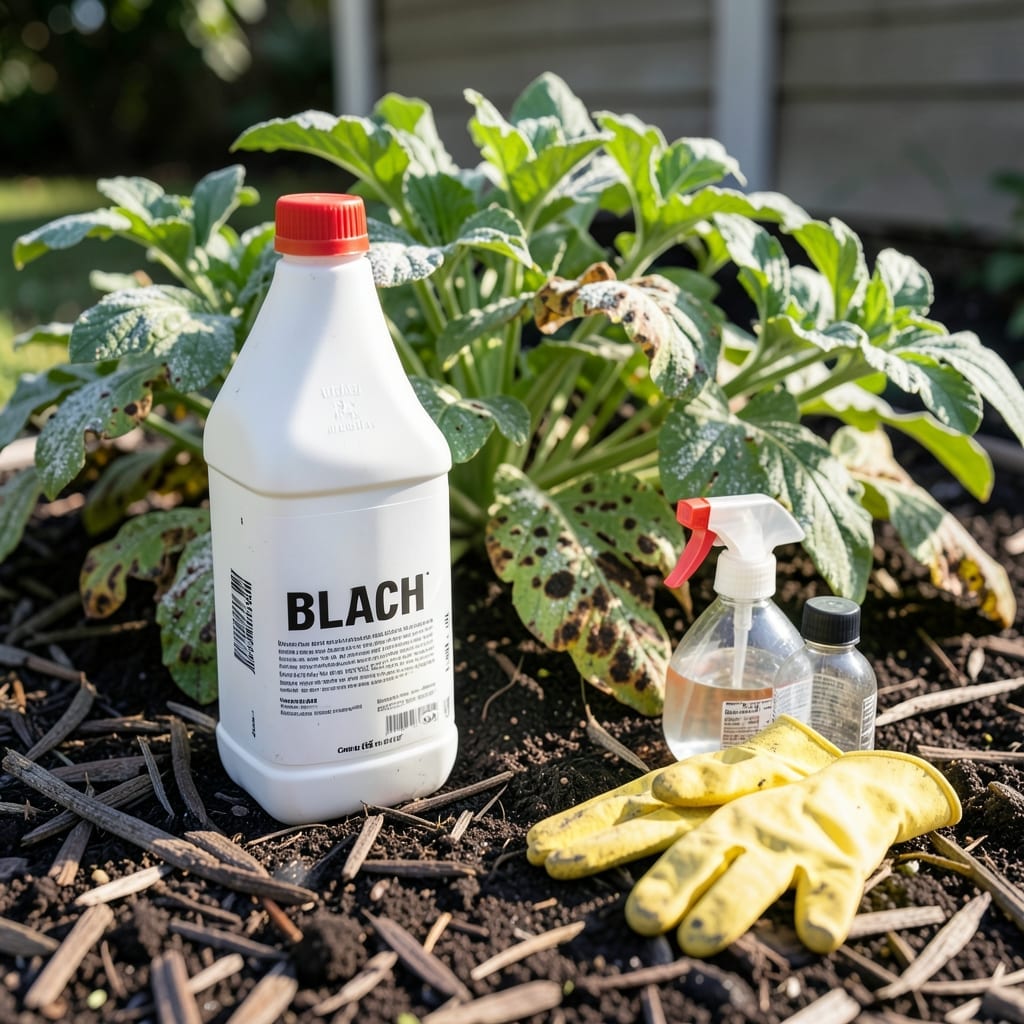
Bleach can kill fungus by breaking down its cellular structure, but it must be used carefully as it can also harm plants and soil. Diluted solutions work best for disinfecting tools and surfaces.
I’ve seen bleach work wonders against stubborn fungal growth on patio furniture and garden equipment. 🔥 The key is using a 1:10 bleach-to-water ratio to avoid damaging materials while still achieving effective disinfection. This approach is particularly useful for non-porous surfaces where fungus tends to cling stubbornly.
What many don’t realize is that bleach’s oxidizing properties make it especially effective against a wide range of fungal species. ✨
💡 In This Article
Bleach contains sodium hypochlorite, a powerful oxidizing agent that attacks the proteins and lipids in fungal cell walls. This chemical reaction disrupts the structural integrity, causing the cells to lyse or burst open. The process is most effective against actively growing fungus rather than dormant spores, which often require longer exposure times or higher concentrations.
For maximum efficacy, a 1:10 bleach-to-water solution is ideal. This dilution provides enough active chlorine (500-600 ppm) to kill most common fungi without being overly corrosive. Non-porous surfaces like glass, metal, or plastic respond best because bleach can’t penetrate porous materials like wood or fabric deeply enough to reach embedded spores. ✨
The contact time matters significantly. Studies show that 10-15 minutes of exposure is typically needed to achieve a 99.9% reduction in fungal populations. Temperature also plays a role—warm solutions (70-80°F) work faster than cold ones, as the chemical reactions are more active at higher temperatures. 🔥
What makes bleach particularly effective is its ability to denature proteins. Fungal cell walls contain chitin, a tough polysaccharide that most cleaners can’t break down. Hypochlorite ions, however, can oxidize the bonds in chitin, effectively dissolving the protective barrier that normally shields fungal cells from environmental threats.
This process works best in neutral to slightly alkaline conditions (pH 7-8). In acidic environments, bleach decomposes into chlorine gas, reducing its effectiveness. For stubborn fungal growth, some experts recommend pre-cleaning with detergent to remove organic matter that might protect the fungus from direct contact with the bleach solution. ⚡
A 1:10 bleach-to-water solution needs 10-15 minutes of contact time to eliminate most fungal spores. For stubborn cases, extend to 20 minutes but don’t exceed this as it may damage surfaces.
Avoid using bleach on wood as it can’t penetrate deeply enough to kill embedded spores and may weaken the material. Instead, use vinegar or hydrogen peroxide for wooden surfaces.
A 1:9 or 1:10 bleach-to-water ratio is most effective. This provides 500-600 ppm active chlorine, strong enough to kill fungus without being overly corrosive.
Never apply bleach directly to plants or soil as it will kill beneficial microorganisms and damage roots. Always rinse treated tools thoroughly before using them near plants.