
Beautiful Plants For Your Interior
Beautiful Plants For Your Interior
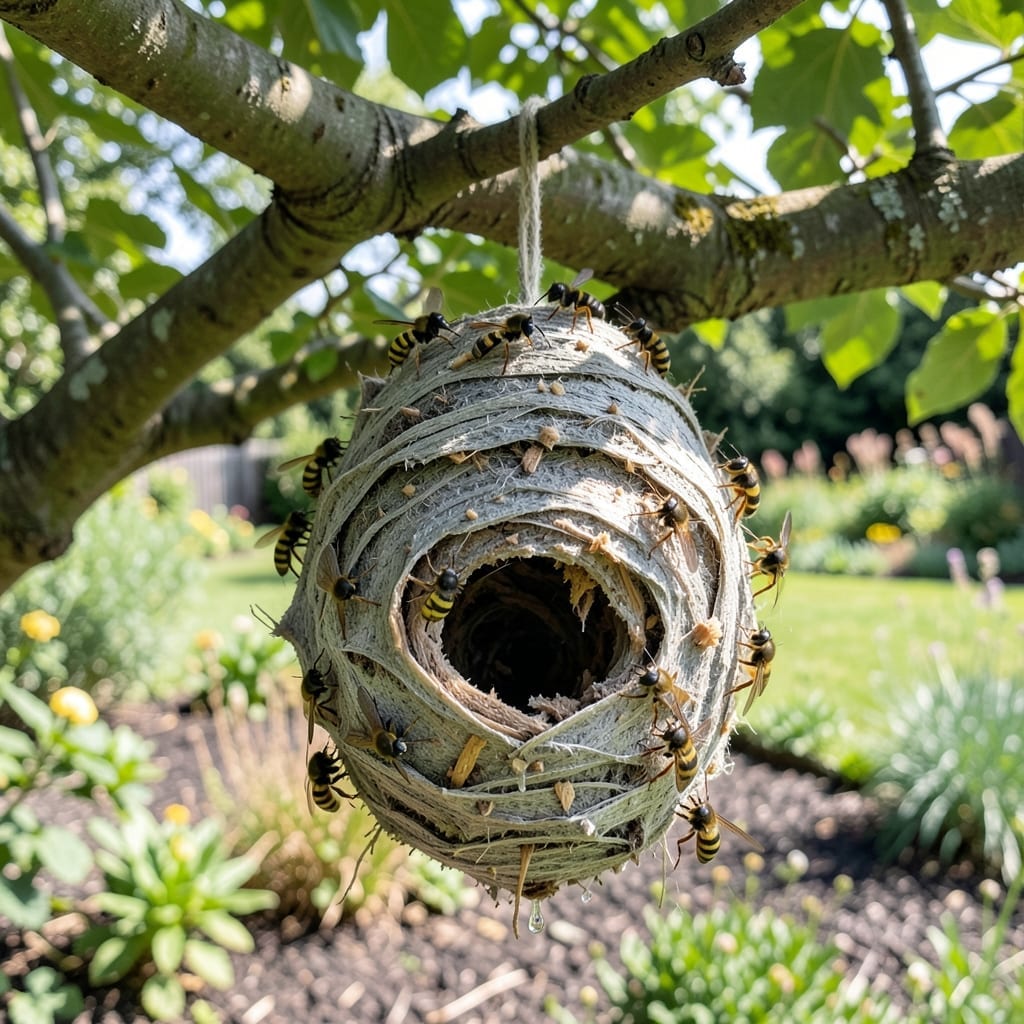
Yellow jackets build nests by chewing wood fibers into a papery pulp, mixing it with saliva to form hexagonal cells. The queen starts construction in spring, and workers expand it throughout summer.
I find it fascinating how these insects use their mandibles to scrape wood from fences, trees, or even buildings. 🔥 They mix the chewed fibers with their saliva to create a water-resistant paper, then shape it into the iconic honeycomb structure. This process allows them to build durable nests that can house thousands of individuals by summer’s end.
💡 In This Article
Yellow jackets use their powerful mandibles to scrape and shred wood fibers from sources like fences, decks, or dead trees. This raw material gets chewed into a fine pulp, similar to how we process paper in mills.
The insects then mix this pulp with their saliva, which contains proteins that act as a natural adhesive, binding the fibers together. 🔥
The resulting substance is a durable, water-resistant paper that hardens as it dries. This material is strong enough to support multiple layers of comb, with each hexagonal cell measuring about 0.2 inches across. The precision of these cells ensures maximum storage efficiency for eggs and larvae, with walls just 0.01 inches thick. ✨
Construction begins with the queen in early spring, who creates the first few cells to lay her eggs. Once the first workers emerge after 30 days, they take over the building process, expanding the nest outward and downward. A mature nest can contain 10,000-15,000 cells arranged in horizontal combs stacked in tiers. 💫
The paper’s gray or tan color comes from the wood source and the insects’ saliva chemistry. Nests built from pine often appear lighter, while those made from oak or decaying wood may look darker. The outer envelope, made of multiple paper layers, provides insulation and protection from predators and weather. ⚡
What’s remarkable is how the nest grows with the colony. In peak summer, workers add new combs daily, with some nests reaching the size of a basketball. The paper’s water-resistant properties mean the nest can survive light rain, though heavy downpours can damage exposed sections. 🌟
The queen starts a new nest in spring and creates the first cells in just a few days. Workers then expand it continuously, with a mature nest containing 10,000-15,000 cells by late summer.
They scrape wood from fences, trees, or buildings, chew it into pulp, and mix it with saliva. This creates a water-resistant paper-like material that hardens as it dries.
Aerial nests resemble gray paper footballs, while ground nests may only show a small entrance hole. The color varies based on wood source, with pine creating lighter nests and oak producing darker ones.
This shape provides the most efficient use of space and materials. Each cell measures about 0.2 inches across with walls just 0.01 inches thick, maximizing storage for eggs and larvae.