
Beautiful Plants For Your Interior
Beautiful Plants For Your Interior
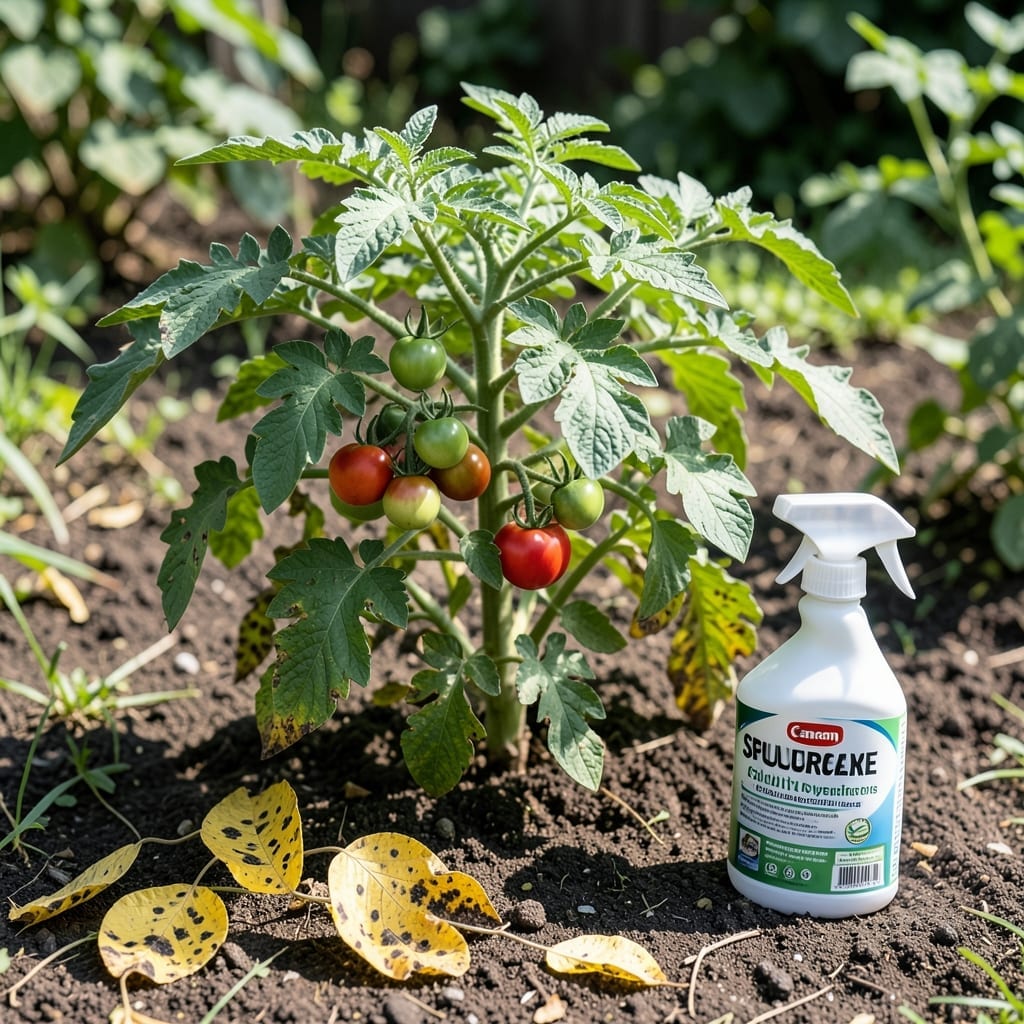
Powdery mildew ruined my zucchini last summer. This year, I’m using sulfur-based fungicide to stop fungal diseases before they start.
It works by preventing spores from germinating, and it’s organic and safe for edible plants. You’ll see results within a week of the first application, and your plants stay protected through the growing season.
📚 In This Guide
Here’s the method I rely on to mix and apply sulfur-based fungicide effectively for disease prevention.
Choose a dusting sulfur or wettable sulfur product depending on your application method. Dusting sulfur works well for dry conditions, while wettable sulfur is ideal for liquid sprays that adhere better to plant surfaces. I prefer wettable sulfur for most garden applications because it provides more even coverage.
Check the label to ensure it’s specifically formulated for fungicidal use. Some sulfur products are designed for soil acidification and won’t be as effective against fungal diseases. The concentration should be at least 80% sulfur for optimal results.
For liquid applications, mix 1-2 tablespoons of wettable sulfur per gallon of water in a clean sprayer. Use warm water to help the sulfur dissolve more completely. I always add a few drops of mild liquid soap to help the solution adhere to plant surfaces.
Stir thoroughly until fully dissolved. You’ll know it’s ready when the mixture looks uniformly cloudy with no visible particles settling at the bottom. For dust applications, simply load your duster with the powdered sulfur as-is.
Timing is crucial for sulfur fungicide effectiveness. Apply in the early morning or late evening when temperatures are below 85°F to prevent plant damage. Sulfur can cause phytotoxicity if applied during the heat of the day.
I treat plants when they’re dry to allow better adhesion of the fungicide. Cover both upper and lower leaf surfaces completely, as many fungal spores land and germinate on the undersides of leaves. Reapply every 7-10 days or after rain for continuous protection.
Watch for signs of effectiveness within 3-5 days of application. You should see a reduction in new fungal growth on treated plants. If the disease continues spreading, you may need to increase the frequency of applications.
Be aware that sulfur works best as a preventive rather than a curative treatment. Once a plant is heavily infected, it’s often too late for sulfur alone to save it. I always remove and destroy severely infected plant material to prevent further spread.
Also take care not to apply sulfur within 2 weeks of oil-based sprays, as this combination can damage plants.
These advanced techniques will help you maximize effectiveness while avoiding common pitfalls with sulfur fungicide.
The Product Factor: For Step 1, always verify your sulfur product is labeled for fungicidal use with at least 80% concentration. I learned this the hard way—products designed for soil acidification simply won’t provide the same disease prevention, no matter how carefully you apply them.
Application Timing: In Step 3, the below 85°F temperature requirement isn’t arbitrary. Sulfur can cause phytotoxicity above this threshold, especially during peak sunlight hours. I treat my plants at dawn or dusk when temperatures are coolest and leaves are dry for best adhesion.
Solution Preparation: When mixing your solution in Step 2, use warm water to fully dissolve the 1-2 tablespoons of wettable sulfur per gallon. The few drops of mild liquid soap aren’t just for adhesion—they help create a uniform suspension that won’t clog your sprayer.
Monitoring Strategy: For Step 4, don’t expect immediate results. The 3-5 day monitoring window is crucial because sulfur works preventively. If you see new growth appearing beyond this period, it’s time to adjust your application frequency rather than increasing concentration.
Apply sulfur fungicide every 7–14 days as a preventative, or every 5–7 days if treating an active fungal infection. Always follow the product label, and avoid applying in extreme heat to prevent plant burn.
Most plants tolerate sulfur, but avoid using it on sulfur-sensitive crops like cucumbers, melons, or some berries. Test on a small area first, and never apply to stressed or waterlogged plants.
Apply in the early morning or late afternoon to avoid heat stress and ensure the product dries properly. Avoid midday sun, as high temperatures can cause phytotoxicity.
Yes! Copper fungicides, neem oil, or baking soda sprays can be effective alternatives. Rotate treatments to prevent resistance, and always prioritize cultural practices like crop rotation and proper spacing.
A white residue is normal with sulfur dust or wettable powders. It’s harmless and will wash off with rain or watering. If excessive, reduce the application rate or switch to a liquid sulfur formulation.