
Beautiful Plants For Your Interior
Beautiful Plants For Your Interior
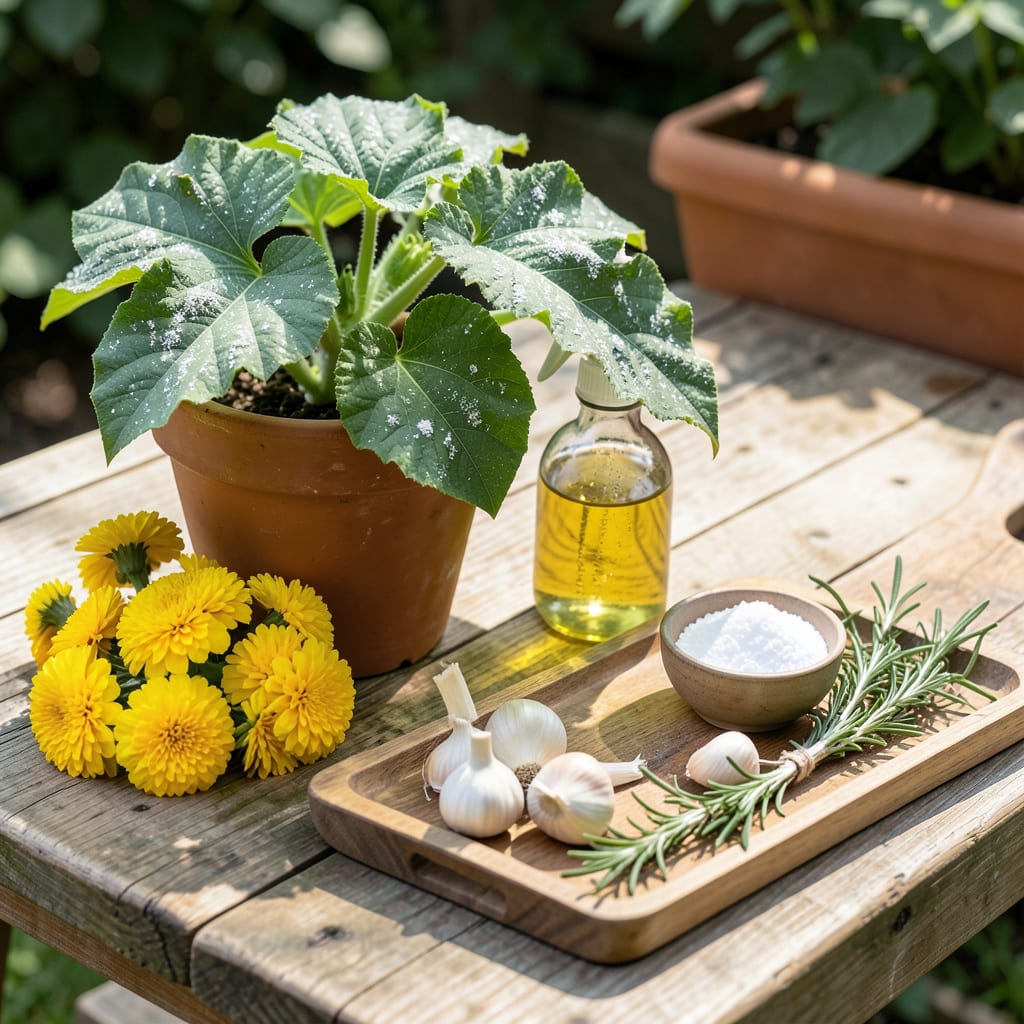
White powder on your zucchini leaves isn’t snow—it’s trouble. 🌿 I lost half my crop to powdery mildew before learning this simple fix: a neem oil and baking soda spray that stops it in its tracks.
This treatment works in 24-48 hours and prevents new spores from spreading. The best part? It’s organic, safe for pollinators, and costs pennies per application. No fancy equipment needed—just a spray bottle and consistency.
You’ll see leaves clearing up within a week, and your plants will bounce back stronger. The key is catching it early and treating the undersides of leaves too, where spores love to hide.
Works for squash, cucumbers, and melons as well. Here’s exactly how to mix and apply the solution.
Powdery mildew on zucchini is a common fungal disease caused by Podosphaera xanthii or Erysiphe cichoracearum. It thrives under specific environmental and cultural conditions. Here’s why it happens:
This fungus flourishes in 60–80°F (15–27°C) with high humidity (70–90%). Unlike many fungi, powdery mildew doesn’t require free water to grow—dry leaves with humid air are enough. Crowded plantings or poor airflow exacerbate the problem by trapping moisture around foliage.
Zucchini plants spaced too closely or grown in shaded areas suffer from stagnant air. This creates a microclimate ideal for spore germination. Pruning overgrown leaves and thinning plants can disrupt this cycle.
Some zucchini cultivars lack genetic resistance to powdery mildew. Heirloom or older varieties are often more vulnerable than modern, disease-resistant hybrids. Check seed labels for powdery mildew-resistant (PM) strains.
Wetting the leaves during watering—especially in the evening—prolongs leaf moisture, encouraging fungal spores to settle and infect. Drip irrigation or soaker hoses deliver water directly to the soil, keeping foliage dry.
Excess nitrogen promotes lush, soft growth that’s more susceptible to infection. Meanwhile, low phosphorus or potassium weakens plant defenses. A balanced fertilizer (e.g., 5-5-5) supports healthier, more resistant plants.
Powdery mildew on your zucchini doesn’t have to spell disaster. Here’s how to tackle it head-on, based on the root cause, plus ways to keep it from coming back.
Crowded plants trap moisture, creating a perfect breeding ground for mildew. Fix it: Thin out dense foliage with clean pruners to improve airflow. Space zucchini plants at least 2–3 feet apart. Remove heavily infected leaves and dispose of them in the trash (not compost) to prevent spores from spreading.
Wet leaves invite fungal growth. Fix it: Water at the base of the plant in the morning, so foliage dries quickly in the sun. Avoid overhead watering, especially in the evening. If humidity is high, consider drip irrigation to keep leaves dry.
Already see white spots? Act fast with DIY treatments. Fix it: Mix 1 tablespoon of baking soda, 1 teaspoon of mild liquid soap, and 1 gallon of water. Spray affected leaves weekly. Alternatively, use neem oil (follow label instructions) as both a treatment and preventative. Apply in the evening to avoid sunburn on leaves.
🎯 Pro tip: Rotate crops yearly to disrupt fungal life cycles and reduce recurrence.
Baking soda helps by changing leaf pH, but it works best mixed with 1 tsp soap and 1 gallon water. This combo disrupts fungal spores more effectively. Reapply every 5-7 days for best results.
Yes! The mildew only affects leaves, not the fruit. Just wash zucchini thoroughly before eating. Remove severely infected leaves to improve plant health and future harvests.
Spores hide on leaf undersides and in plant debris. Always treat both sides of leaves and clean up fallen foliage. Improve airflow by spacing plants 2-3 feet apart.
Yes when used correctly. Spray in the evening when bees are less active, and avoid applying to open flowers. Neem breaks down quickly in sunlight, reducing risk.
