
Beautiful Plants For Your Interior
Beautiful Plants For Your Interior
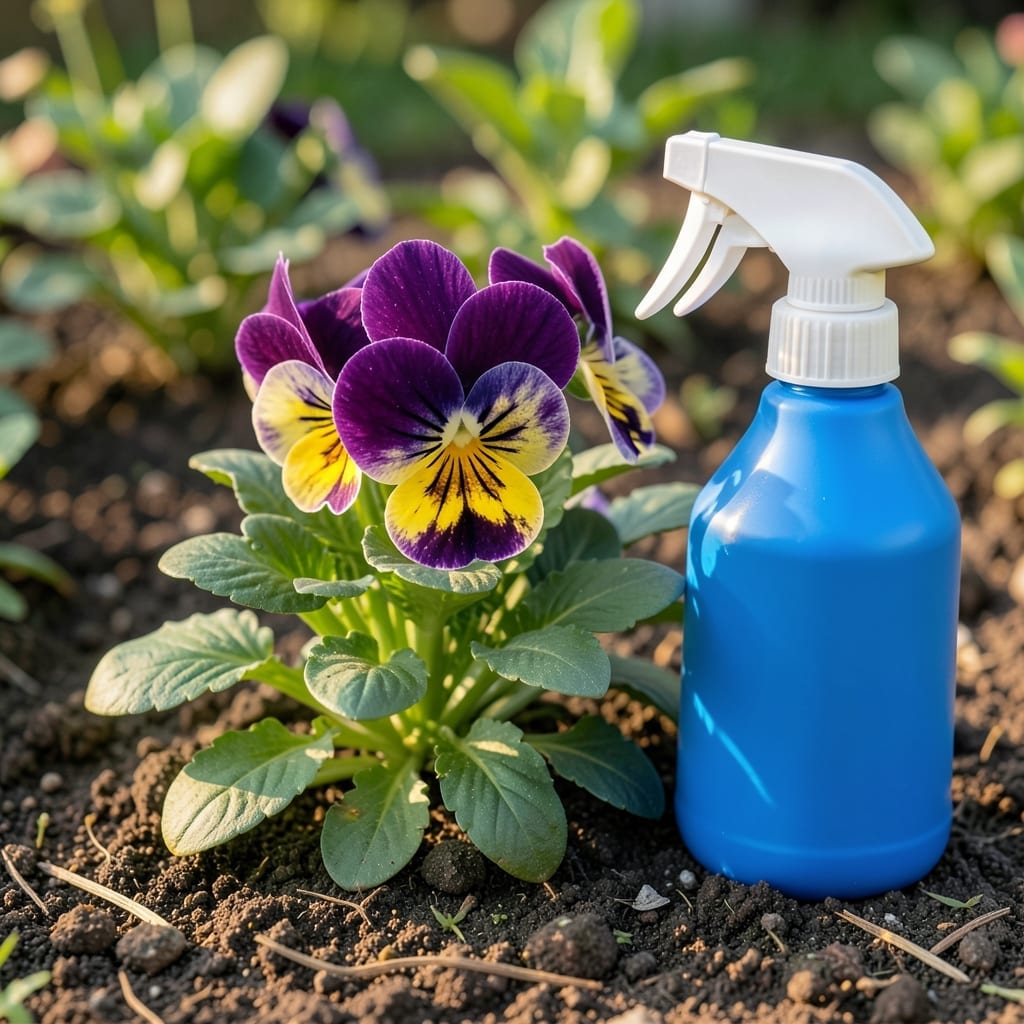
Pansies should be the bright stars of your garden, not sad, spotted casualties. I’ve lost too many to fungal diseases before figuring out the right approach.
Spot the early signs—yellowing leaves or powdery coatings—and act with natural solutions that protect without harsh chemicals. Your pansies can bounce back fast with the right care, and stay vibrant all season long.
📚 In This Guide
Here’s my trusted method for protecting pansies without harsh chemicals—simple, effective, and garden-safe.
Start by examining your pansies for common fungal symptoms. Look for powdery white coatings on leaves (powdery mildew), dark spots with yellow halos (leaf spot), or gray, fuzzy growth on stems and flowers (botrytis blight). I always check the undersides of leaves first—that’s where many fungal problems begin.
Note the weather conditions, too. Pansies are especially vulnerable after prolonged dampness or cool, humid nights. If you’ve had rainy weeks or poor air circulation around the plants, fungi are likely the culprit. Proper diagnosis ensures you target the right issue.
Prevention is your first line of defense. Space your pansies 8-10 inches apart to allow airflow between plants. Thin out dense foliage by trimming back one-third of the growth if needed—this reduces humidity trapped in the canopy where fungi thrive.
Water at the base of the plant in the morning so foliage dries quickly. I use a soaker hose to keep leaves dry entirely. Avoid overhead watering, especially in the evening, as wet leaves overnight practically invite fungal spores to take hold.
Mix 1 tablespoon of baking soda, 1 teaspoon of mild liquid soap, and 1 gallon of water in a spray bottle. This solution disrupts fungal cell membranes without harming plants. Spray it evenly over all leaf surfaces, including the undersides, until the foliage is lightly coated but not dripping.
Apply this in the early morning or late afternoon to avoid leaf burn from the sun. Reapply every 7-10 days or after rain, as the protective layer washes off. I’ve found this works best as a preventive measure, but it also slows the spread of existing infections.
Compost tea strengthens pansies’ natural defenses by introducing beneficial microorganisms. Fill a bucket with 1 gallon of dechlorinated water and add 1 cup of well-aged compost in a mesh bag. Let it steep for 24-48 hours, stirring occasionally to aerate.
Strain the liquid and spray it onto the leaves and soil. Use this every 2-3 weeks during the growing season. The microbes in compost tea compete with harmful fungi, creating a balanced soil environment. I use this in rotation with the baking soda spray for comprehensive protection.
If you spot severely infected leaves or flowers, remove them immediately using clean, sharp shears. Dispose of the material in the trash—do not compost it, as this can spread the fungus back to your garden. Sterilize your tools afterward with rubbing alcohol to prevent contaminating other plants.
After pruning, monitor the plants closely for new signs of infection. Sometimes, removing the worst of the damage allows the remaining plant to recover, especially if you’ve also improved airflow and applied fungicides. This step is critical for stopping the spread early.
Small adjustments in your approach can prevent most fungal problems before they start.
Diagnosis First: In Step 1, don’t just glance at the leaves—examine them systematically. Powdery mildew often starts on the undersides, while botrytis blight appears as gray fuzz on stems. I’ve missed early signs before by not checking thoroughly, and it always costs more time later.
Airflow is Everything: The 8-10 inch spacing in Step 2 isn’t arbitrary. Crowded pansies create a humid microclimate that fungi love. If your plants are already too close, thin them aggressively. I learned this the hard way after losing a whole bed to leaf spot.
Timing Matters: For the compost tea in Step 4, that 24-48 hour steep is critical. Less time, and the beneficial microbes won’t multiply enough. More than 48 hours without aeration, and anaerobic bacteria can take over. Stir occasionally to keep oxygen flowing through the mixture.
Tool Hygiene: After pruning infected material in Step 5, sterilizing with rubbing alcohol isn’t optional. I once skipped this step, and the fungus spread to three other plants within a week. Clean tools between cuts if you’re removing multiple infected parts.
Neem oil or copper-based fungicides work well for pansies. For organic options, try baking soda sprays (1 tsp baking soda + 1 quart water + a few drops of soap). Always apply in the early morning or late evening.
Apply fungicide at the first sign of disease (e.g., powdery mildew or leaf spots). For prevention, treat every 7–10 days during wet, humid weather. Avoid spraying in direct sunlight to prevent leaf burn.
Yes! A mix of 1 part milk to 9 parts water can combat powdery mildew. Garlic or chamomile tea sprays also have antifungal properties. Test on a small area first to ensure no damage.
Fungi may resist treatment if the environment stays damp. Improve airflow, avoid overhead watering, and remove infected leaves. Reapply fungicide after rain or heavy dew.