
Beautiful Plants For Your Interior
Beautiful Plants For Your Interior
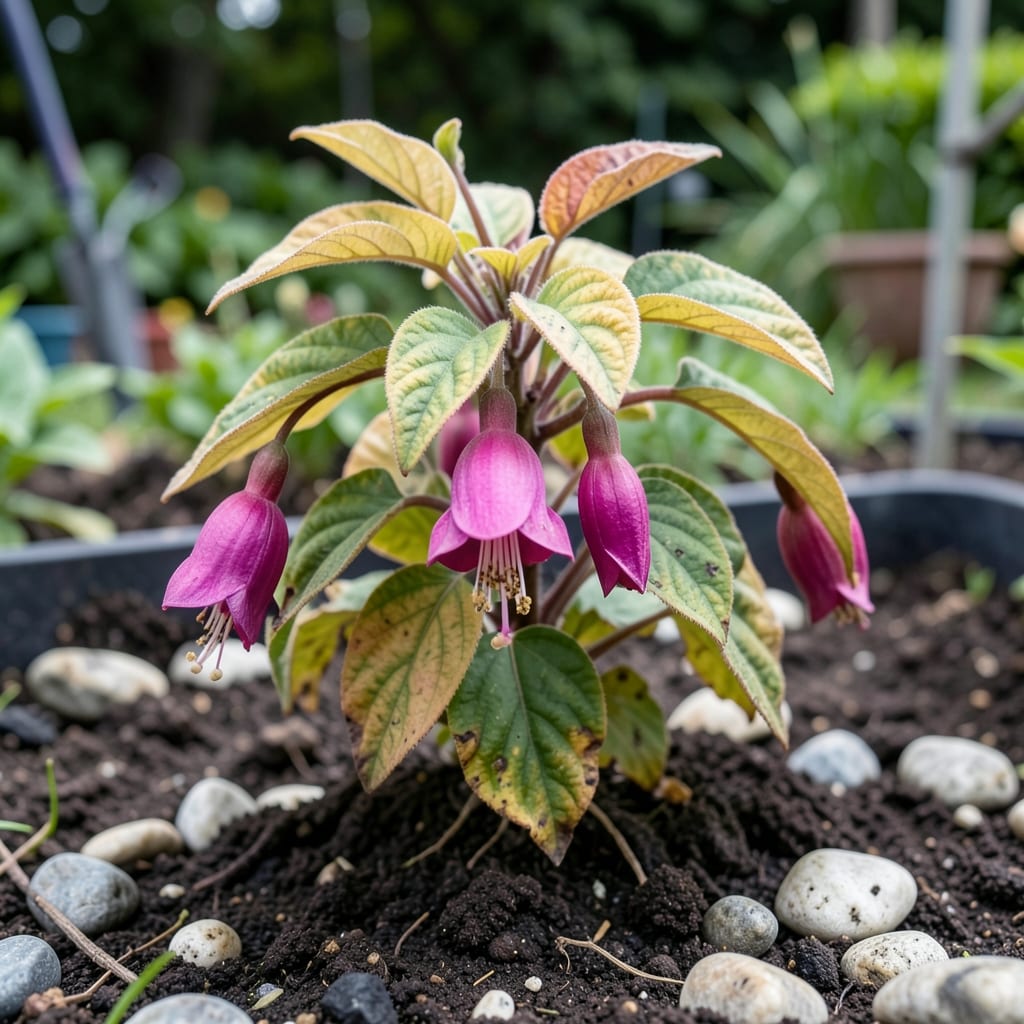
Yellow leaves on your fuchsia aren’t just ugly—they’re a distress signal. I’ve seen this happen to my own plants, and the fix always starts with figuring out why it’s happening.
Too much water, not enough nutrients, or sneaky pests could be the culprit. The good news? Each cause has a simple organic solution that brings plants back to life fast.
You’ll learn to spot the difference between drought stress and overwatering, or between nutrient deficiencies and pest damage. No guesswork, just clear signs and fixes.
Works for hanging baskets, containers, or garden beds. Here’s how to diagnose and treat it for good.
Yellow leaves on your fuchsia often signal an underlying issue, but the cause isn’t always obvious. Below are the most common triggers, explained with actionable insights to help you diagnose and address the problem.
Fuchsias are heavy feeders, and a lack of key nutrients can lead to chlorosis (yellowing). Nitrogen deficiency typically causes uniform yellowing of older leaves, while iron or magnesium deficiency often appears as interveinal chlorosis—yellowing between the veins, with the veins staying green. Test your soil (pH 6.0–6.5 is ideal) and amend with compost or a balanced organic fertilizer.
Root rot from soggy soil is a top culprit. Fuchsias prefer consistently moist but well-draining soil. If leaves turn yellow and wilt despite wet soil, roots may be suffocating. Check for mushy, dark roots—trim affected ones and repot in fresh, perlite-rich mix. Water only when the top inch of soil feels dry.
Too much direct sunlight can scorch leaves, causing yellow or brown patches. Fuchsias thrive in bright, indirect light (4–6 hours of morning sun max). If your plant is baking in a south-facing window or outdoor exposure, move it to a shadier spot or use a sheer curtain to diffuse light.
Sap-sucking pests like spider mites, aphids, or whiteflies drain nutrients, leading to stippled yellowing or curled leaves. Inspect the undersides of leaves for tiny bugs or webbing. Blast them off with water or apply neem oil weekly until gone.
Fuchsias are sensitive to extremes. Yellow leaves can appear if exposed to cold drafts (below 50°F/10°C) or hot, dry air (above 80°F/27°C). Keep plants indoors near a stable-temperature window, away from AC vents or heaters.
Addressing yellow leaves on fuchsia plants starts with identifying the root cause. Below are targeted fixes for common issues, along with prevention tips to keep your plant thriving.
If soggy soil is the culprit, let the top 1-2 inches of soil dry out before watering again. Ensure pots have drainage holes, and use a well-draining potting mix. Prevention tip: Stick your finger in the soil—if it feels damp, wait a day or two. 🌱
Move your fuchsia to a spot with bright, indirect sunlight (east or west-facing windows are ideal). If growing outdoors, provide afternoon shade in hot climates. Prevention tip: Rotate the plant weekly for even light exposure. 💡
Use a balanced, water-soluble fertilizer (10-10-10) every 2-4 weeks during the growing season. For iron or magnesium deficiencies, apply chelated iron or Epsom salt (1 tbsp per gallon of water) as a foliar spray. Prevention tip: Flush the soil with water every 2-3 months to prevent salt buildup. ✨
For aphids, whiteflies, or spider mites, spray leaves with a mix of 1 tsp neem oil and 1 quart of water. Repeat every 5-7 days until pests are gone. Prevention tip: Wipe leaves regularly with a damp cloth to deter pests. 🎯
Keep fuchsias in temperatures between 60–75°F (15–24°C). Avoid drafts, heaters, or AC vents. If outdoors, bring potted plants inside when temps drop below 50°F (10°C). Prevention tip: Use a pebble tray with water to maintain humidity. 🌡️
With these adjustments, your fuchsia’s vibrant green leaves should return in no time!
Check the soil—if it’s soggy and leaves are yellow and wilting, it’s likely overwatering. Roots may appear mushy or dark.
Unfortunately, no. Once leaves turn yellow, they won’t recover. Focus on correcting the problem to prevent new leaves from yellowing.
A balanced 10-10-10 water-soluble fertilizer works well. For iron deficiency, use chelated iron or Epsom salt as a foliar spray.
Yes! Check undersides of leaves for tiny pests or webbing. Spider mites and aphids are often invisible to the naked eye at first.