
Beautiful Plants For Your Interior
Beautiful Plants For Your Interior
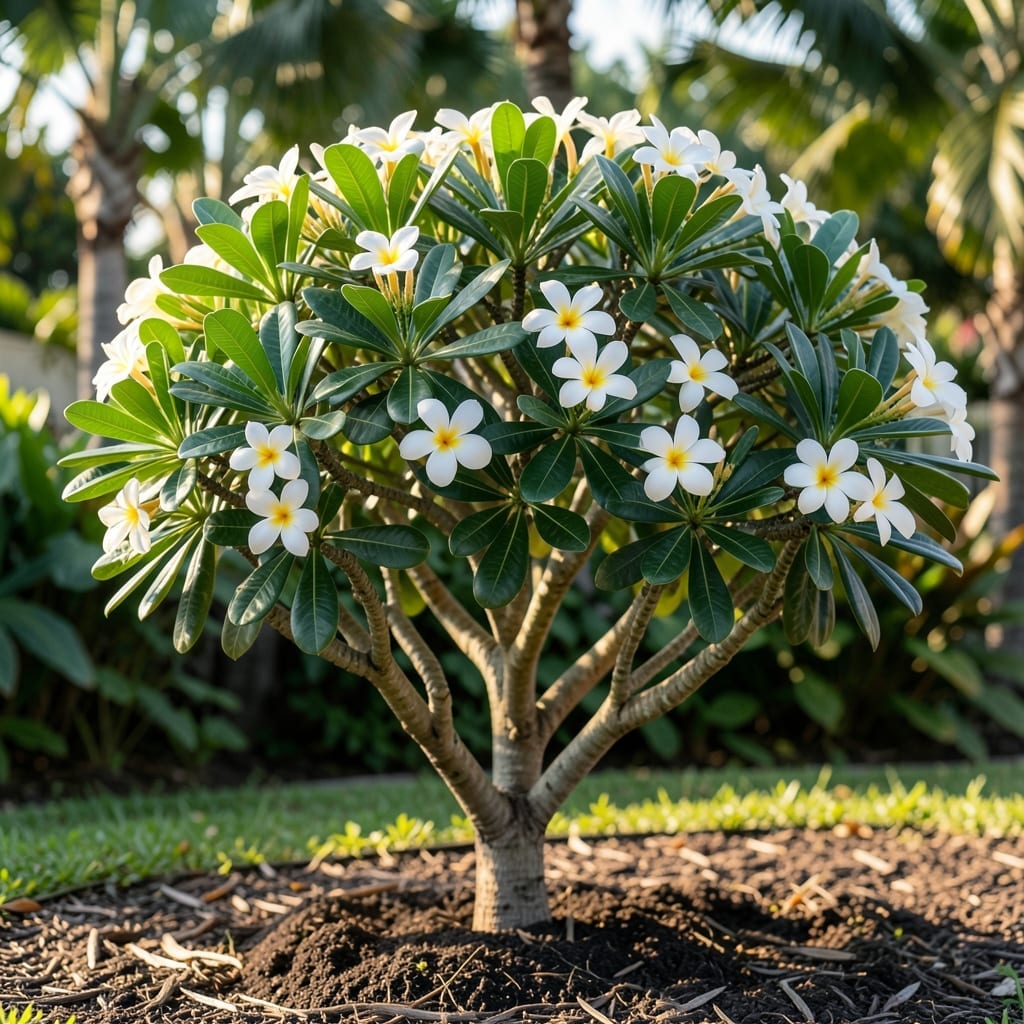
That first whiff of plumeria in summer stops me every time. These tropical beauties bring exotic fragrance and stunning white blooms to any garden with surprisingly little effort.
I’ve grown frangipani for years in both ground and pots. They thrive on neglect once established, rewarding you with months of blossoms and that unforgettable scent that carries on the breeze.
📚 In This Guide
Here’s my proven method for cultivating these fragrant tropical beauties with confidence.
Choose a spot with full sun exposure—at least 6-8 hours of direct sunlight daily. Frangipani thrives in heat and bright light, which encourages abundant blooming. In cooler climates, a south-facing wall or patio can help trap additional warmth.
Ensure the location has well-draining soil to prevent root rot. These plants despise soggy conditions, so avoid low-lying areas where water pools. If planting in containers, verify there are sufficient drainage holes at the base.
For in-ground planting, dig a hole twice as wide as the root ball but no deeper. Loosen the soil at the sides to encourage outward root growth. Mix in a handful of coarse sand or perlite to improve drainage if your native soil is heavy clay.
For container growing, select a pot that’s 12-18 inches in diameter with multiple drainage holes. Use a well-draining potting mix formulated for tropical plants. I add 30% perlite or pumice to standard mix for better aeration.
Remove the plant from its nursery container and gently loosen any circling roots. Place it in the hole so the top of the root ball sits slightly above ground level—this prevents water from pooling around the trunk. Backfill with native soil, pressing lightly to remove air pockets.
Water deeply immediately after planting until the soil is saturated and water runs out the drainage holes. Then, resist the urge to water again for 3-5 days—this encourages roots to grow outward in search of moisture. You’ll know it’s time to water again when the top 1-2 inches of soil feel dry.
Once established, water only when the soil is completely dry—these drought-tolerant plants prefer neglect over too much attention. During the active growing season (spring through fall), fertilize every 2-3 weeks with a balanced 10-10-10 or high-phosphorus fertilizer to promote blooming.
Prune in early spring to shape the plant and remove any dead or crossing branches. Use clean, sharp pruners and make cuts at a 45-degree angle just above a leaf node. This plant blooms on new wood, so don’t hesitate to cut back aggressively if needed.
In zones below 9-11, frangipani must be overwintered indoors. When night temperatures drop below 50°F, move potted plants inside to a bright, cool location. Reduce watering significantly—only moisten the soil when it’s completely dry.
For in-ground plants, dig up the root ball after the first frost, trim back the branches to 12-18 inches, and store bare-root in a cool, dark place. Check monthly for dryness and mist roots lightly if they appear shriveled. Replant in spring after all danger of frost has passed.
Small adjustments in care can make a big difference in your plumeria’s health and blooming.
Sunlight Strategy: The 6-8 hours of direct sunlight mentioned in Step 1 isn’t just a suggestion—it’s essential for abundant blooms. I learned this the hard way when my first frangipani produced only a handful of flowers in partial shade. If your garden doesn’t get that much sun, consider planting in a container so you can move it to follow the sunlight throughout the day.
Drainage is Non-Negotiable: In Step 2, when planting at 1-2 inches above the soil line, this elevation isn’t just about aesthetics—it’s your plant’s lifeline against root rot. I’ve seen more frangipani die from soggy roots than from drought. If you’re working with heavy clay soil, don’t skip the 30% perlite or coarse sand amendment; your plant will thank you with vigorous growth.
Watering Wisdom: The 2-3 times per week watering schedule for new plants in Step 3 might seem excessive, but it’s crucial during that first month while roots establish. Here’s what nobody tells you—check the soil 1-2 inches down with your finger. If it feels dry at that depth, it’s time to water. Yellow leaves often mean you’re being too generous with water, not too stingy.
Cold Protection: That 40°F threshold in Step 5 is the magic number where damage begins. Don’t wait for frost warnings—start monitoring temperatures in early fall. If you’re growing in a container, begin acclimating your plant to indoor conditions gradually by bringing it inside for increasing periods before the temperature drops below 60°F at night.
White frangipani thrives in full sun and well-draining soil. Water moderately, allowing the soil to dry between waterings. Fertilize with a high-phosphorus formula during the growing season for vibrant blooms.
Lack of blooms often means insufficient sunlight, overwatering, or nutrient deficiency. Ensure 6+ hours of direct sun daily, reduce watering, and use a bloom-boosting fertilizer to encourage flowers.
Yes! Use a large, well-draining container with cactus/succulent mix. Repot every 2–3 years or when roots outgrow the pot. Potted plants need more frequent watering but less than in-ground ones.
Watch for spider mites, mealybugs, or fungal issues like rust. Treat pests with neem oil and improve airflow to prevent disease. Prune affected leaves promptly.