
Beautiful Plants For Your Interior
Beautiful Plants For Your Interior
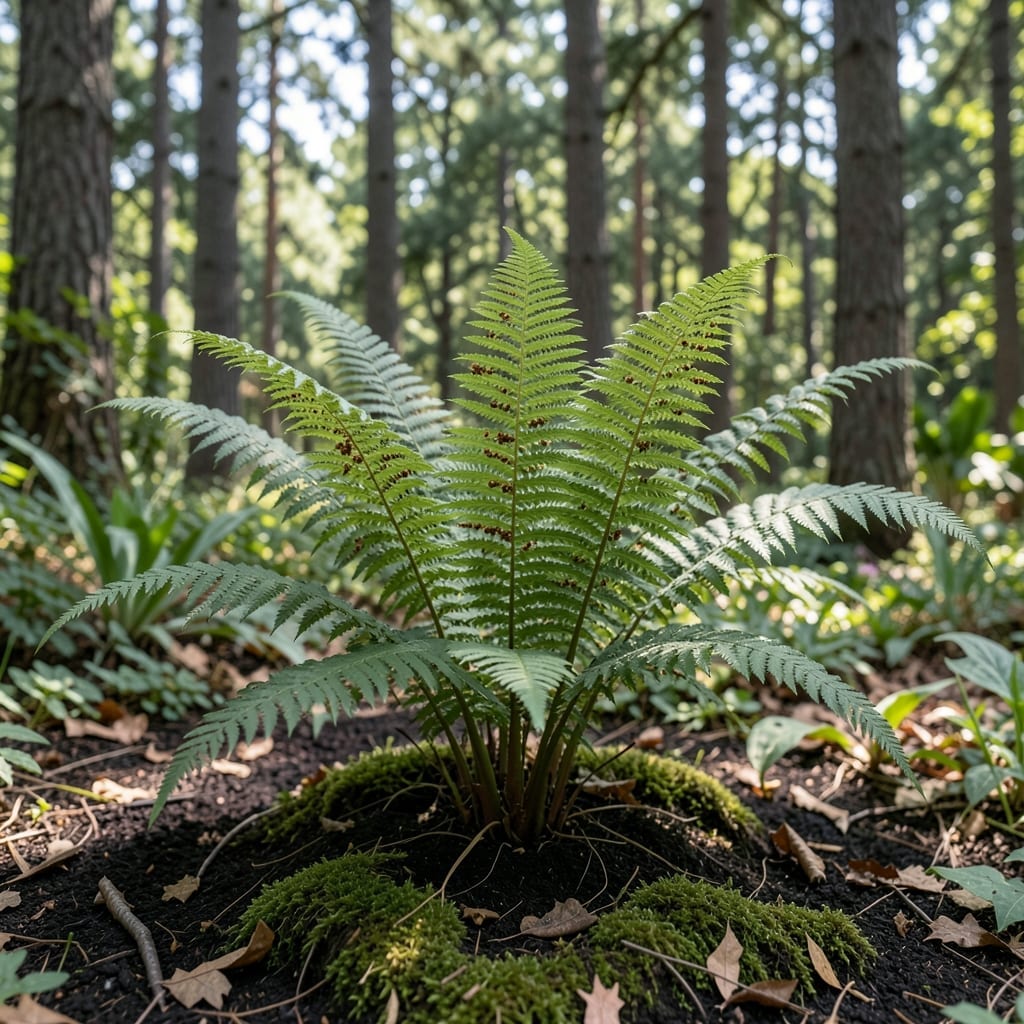
Fern sori are clusters of spore-producing structures called sporangia, typically found on the underside of fronds. They appear as small dots or patches and play a crucial role in the fern’s reproductive cycle.
I find these tiny structures fascinating because they represent a primitive yet highly effective reproductive strategy. Sporangia within each sorus produce and release spores, which can develop into new ferns under the right conditions. In my experience, they’re easiest to spot in mature ferns during the growing season, often forming distinct patterns that help with identification. ✨
💡 In This Article
Each sorus contains dozens of sporangia, microscopic capsules where meiosis occurs to produce haploid spores. This process begins when sporangium walls develop specialized cells called annulus that create tension as they dry. 🌟
The annulus acts like a tiny catapult—when humidity drops, these cells contract violently, flinging spores up to 30 feet away from the parent plant. This adaptation ensures spores disperse beyond the immediate area, reducing competition.
Timing matters too: spore maturation typically peaks during warm, dry periods when air currents are strongest. I’ve observed that ferns like the Boston fern (Nephrolepis exaltata) release spores most actively in late summer when conditions are optimal for germination. ✨
What’s remarkable is how efficiently this works without flowers or seeds. A single mature frond can produce thousands of spores, each capable of growing into a new gametophyte under moist, shaded conditions. This is why ferns thrive in forest understories.
The gametophyte stage—often overlooked—is a small, heart-shaped structure that produces both eggs and sperm. This dual capability allows ferns to complete their life cycle without needing separate male and female plants, a trait that’s been evolutionarily successful for over 360 million years. 💫
Sori appear as small dots or patches, often in neat rows along the underside of fronds. Their color can range from green to brown or black depending on maturity and species.
This placement protects developing spores from rain and direct sunlight. It also positions them for optimal release when humidity drops, using the annulus to fling spores outward.
With a 10x hand lens, you can spot individual sporangia within each sorus. They look like tiny round capsules clustered together, especially visible in mature sori.
Yes, all true ferns reproduce via sori, though their size, shape, and arrangement vary by species. Some primitive ferns have different spore-bearing structures, but sori are standard.