
Beautiful Plants For Your Interior
Beautiful Plants For Your Interior
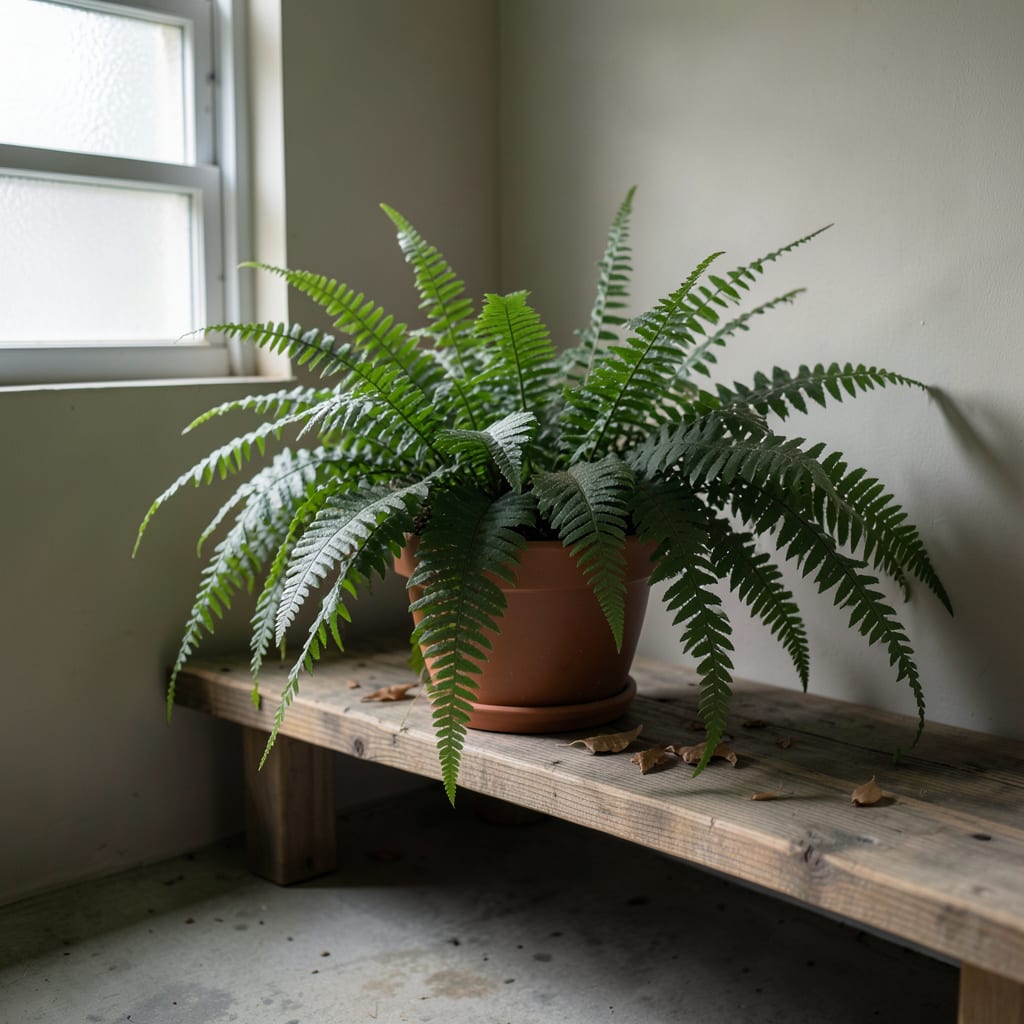
My garage saved my Boston fern last winter. This method keeps those lush fronds green when temperatures drop, without fancy equipment or constant attention.
You’ll need to watch humidity and light levels, but the setup is simple. By spring, your fern will bounce back ready for another season of vibrant growth.
📚 In This Guide
Here’s my reliable method for keeping Boston ferns lush and healthy in a garage all winter long.
Choose a spot in the garage where temperatures stay between 50-60°F. Avoid areas near drafty doors or heaters, as sudden temperature swings stress the fern. I place mine on a sturdy shelf or bench where it won’t be disturbed by foot traffic or cold concrete floors.
Check for indirect light—Boston ferns need some brightness even in winter. A garage window or a nearby grow light can supplement if the space is too dark. You’ll know the light is adequate if the fronds maintain their deep green color.
Cut back on watering significantly. Ferns need less moisture in cooler temperatures, so water only when the top inch of soil feels dry to the touch. Overwatering in winter leads to root rot, which is a death sentence for ferns.
I stop fertilizing entirely during winter. The fern’s growth slows, and extra nutrients can burn the roots or encourage weak, leggy growth. Resume feeding in early spring when you see new fronds unfurling.
Mist the fronds lightly 2-3 times a week if the garage air is dry. This mimics the humidity ferns love and prevents the tips from turning brown and crispy.
Before moving the fern into the garage, trim off any yellow or damaged fronds with clean, sharp scissors. This redirects the plant’s energy to healthy growth and prevents pests from hitching a ride indoors.
Inspect the undersides of fronds for spider mites or scale—these pests thrive in dry, indoor conditions. If you spot any, wipe the fronds with a damp cloth or use an organic insecticidal soap. I check mine weekly throughout winter to catch issues early.
Check the fern every 2-3 weeks for signs of stress: wilting, yellowing, or leaf drop. If the garage gets too cold, move the plant closer to a heat source (but not directly next to it). If it’s too dry, group it with other plants to raise humidity.
In early spring, when nighttime temperatures stay above 45°F, begin acclimating the fern to outdoor conditions. Move it outside for 1-2 hours a day in a shaded spot, gradually increasing time and sun exposure over 10-14 days. This prevents shock and ensures a smooth transition.
Here’s how to keep your fern thriving through winter with minimal effort.
Temperature Control: Maintain that 50-60°F range religiously in Step 1. Sudden drops below this can shock the plant, while anything warmer may cause it to break dormancy too early. A digital thermometer in the garage helps monitor this precisely.
Watering Wisdom: The top inch of soil rule in Step 2 is non-negotiable. Stick your finger in—if it comes out clean and dry, it’s time to water. Overwatering is the #1 killer of overwintering ferns, so when in doubt, wait another day.
Humidity Hack: For the 2-3 times a week misting in Step 2, use room-temperature water. Cold water can shock the fronds, and warm water may encourage fungal growth. Grouping plants together also boosts humidity naturally.
Transition Timing: When spring arrives, don’t rush the 10-14 days acclimation period in Step 4. Start with the 1-2 hours in shade, and only increase exposure if the fern shows no signs of stress. Patience here prevents leaf burn.
Yes, but ensure temperatures stay between 40–50°F (4–10°C). Avoid freezing drafts or heat sources like furnaces, and provide indirect light if possible. A garage with stable temps works well for dormancy.
Water sparingly—only when the top inch of soil feels dry. Overwatering in cool, dark conditions can cause root rot. Reduce frequency compared to summer, as growth slows in winter.
If temps drop below 40°F (4°C), move the fern indoors to a cool, bright spot like a basement or sunroom. Alternatively, insulate the garage or use a space heater (safely) to maintain warmth.
No, skip fertilizer until spring. Ferns enter dormancy in winter and don’t need extra nutrients. Resume feeding when you see new growth, usually in early spring.
Brown fronds often mean low humidity or cold drafts. Mist lightly or place the pot on a pebble tray with water. Trim dead fronds to encourage healthy regrowth.
