
Beautiful Plants For Your Interior
Beautiful Plants For Your Interior
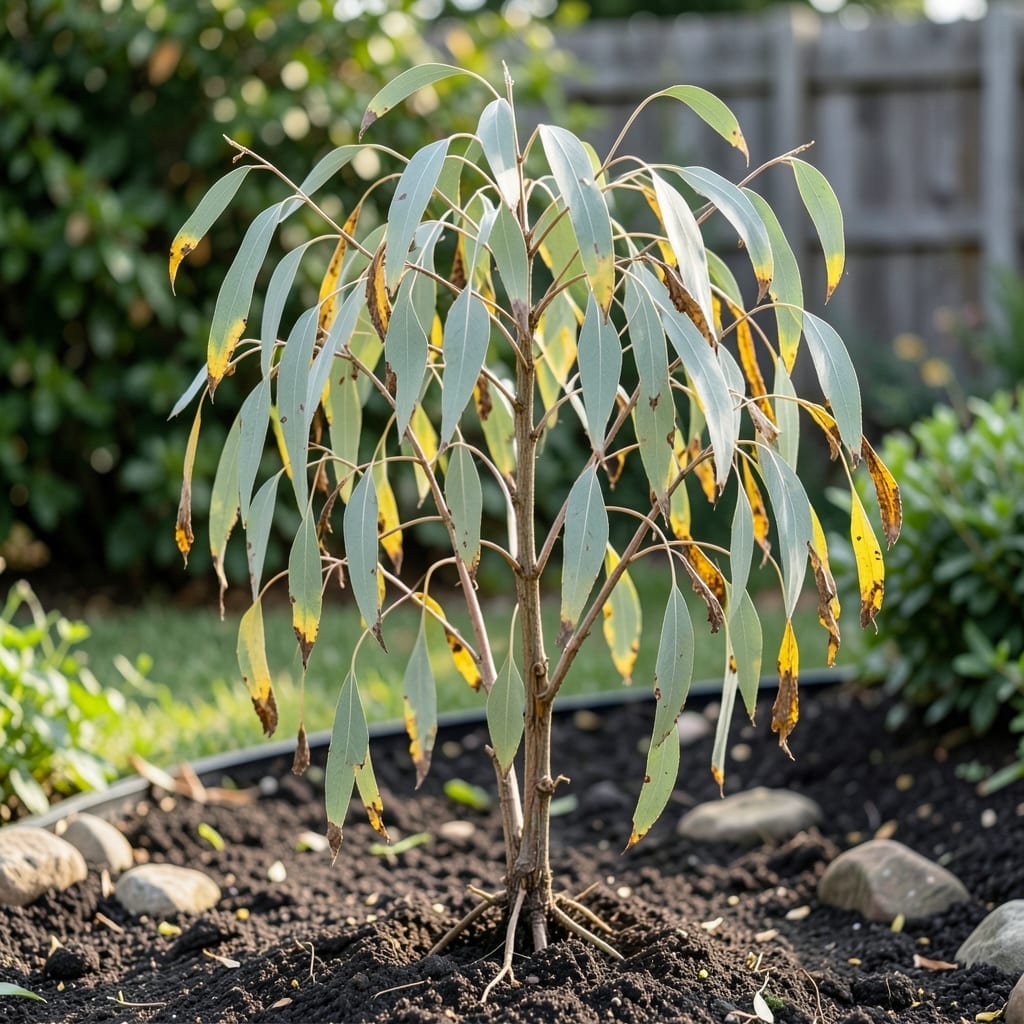
My eucalyptus looked fine yesterday, and now the leaves are dropping. This plant doesn’t die overnight, so there’s still time to turn it around.
The usual culprits are overwatering, low humidity, or a sudden temperature change. I’ve revived more than a few by fixing just one of these issues within a few days.
You’ll start seeing new growth within 2-3 weeks once the conditions stabilize. Catching it early makes all the difference.
Even a nearly bare stem can bounce back with the right care. Here’s what to check first.
Understanding why your eucalyptus plant is struggling starts with identifying the root causes. Here are the most common culprits behind its decline:
Eucalyptus plants hate soggy roots. Overwatering or poorly draining soil suffocates the roots, preventing oxygen uptake and leading to root rot. These plants thrive in well-draining, slightly dry conditions. If the soil stays waterlogged, the roots drown, and the plant wilts or yellows as a distress signal.
Native to sun-drenched Australia, eucalyptus requires full sun (6+ hours of direct light daily). Inadequate light weakens the plant, causing sparse foliage, leggy growth, or leaf drop. Without enough sunlight, photosynthesis slows, starving the plant of energy to sustain itself.
Eucalyptus is sensitive to extreme temperatures. While mature trees tolerate brief cold snaps, potted or young plants can suffer frost damage below 25°F (-4°C). Conversely, heatwaves paired with low humidity can scorch leaves. Sudden temperature swings (e.g., moving from indoors to outdoors) also trigger shock.
Poor soil quality, especially a lack of iron or nitrogen, leads to chlorosis (yellowing leaves with green veins) or stunted growth. Eucalyptus prefers slightly acidic to neutral soil (pH 6.0–7.5). Over-fertilizing, particularly with high-phosphorus mixes, can also harm the plant by disrupting nutrient balance.
Common pests like eucalyptus gall wasps, spider mites, or psyllids sap the plant’s vitality. These insects pierce leaves or stems, causing deformities, leaf curl, or premature drop. A stressed plant (e.g., from drought or poor soil) is more vulnerable to infestations.
Bringing your eucalyptus back to life starts with matching the fix to the problem. Below are targeted solutions for the most common issues, along with prevention tips to keep your plant thriving long-term.
Fix: Stop watering immediately and let the soil dry out completely. If root rot is suspected, gently remove the plant from its pot, trim any black or mushy roots with sterilized scissors, and repot in fresh, well-draining soil. Use a pot with drainage holes to prevent waterlogging.
Prevent it: Water only when the top 1-2 inches of soil are dry. Use a moisture meter 🌡️ for precision, and ensure your pot has drainage holes.
Fix: Move your eucalyptus to a bright, sunny spot where it can get at least 6-8 hours of direct sunlight daily. If indoors, place it near a south-facing window. For outdoor plants, ensure it’s not shaded by larger plants or structures.
Prevent it: Rotate the pot weekly to ensure even light distribution and prevent lopsided growth.
Fix: Eucalyptus thrives in warm climates (60-85°F). If exposed to frost or cold drafts, move it indoors or to a sheltered area. Use a heat lamp or grow lights if indoor temperatures drop too low.
Prevent it: Keep your plant away from air conditioning vents, heaters, or drafty windows. Monitor temperature fluctuations with a simple thermometer 🌡️.
Fix: Inspect leaves and stems for pests like spider mites or aphids. Wipe down leaves with a mild soapy water solution or use neem oil as a natural pesticide. For severe infestations, isolate the plant and treat with insecticidal soap.
Prevent it: Regularly mist leaves to deter pests and keep the surrounding area clean. Introduce beneficial insects like ladybugs 🐞 for outdoor plants.
Fix: Yellowing leaves may signal a lack of nutrients. Use a balanced, slow-release fertilizer (10-10-10 or 20-20-20) every 4-6 weeks during the growing season. Avoid over-fertilizing, as this can burn roots.
Prevent it: Test your soil annually and amend as needed. Organic matter like compost can improve soil fertility naturally.
Water when the top 1-2 inches of soil are dry. Typically, this means watering every 7-10 days in moderate conditions. Always check soil moisture first to avoid overwatering.
Yellow leaves often signal overwatering or nutrient deficiency. Check for soggy soil first, then consider a balanced fertilizer if soil is dry. Iron deficiency can also cause this.
Yes, but it needs bright light. Place near a south-facing window for at least 6-8 hours of sun daily. Rotate the pot weekly for even growth.
Temperatures below 25°F (-4°C) can damage young plants. Mature trees tolerate brief cold, but potted specimens need protection. Move indoors if frost is forecast.