
Beautiful Plants For Your Interior
Beautiful Plants For Your Interior
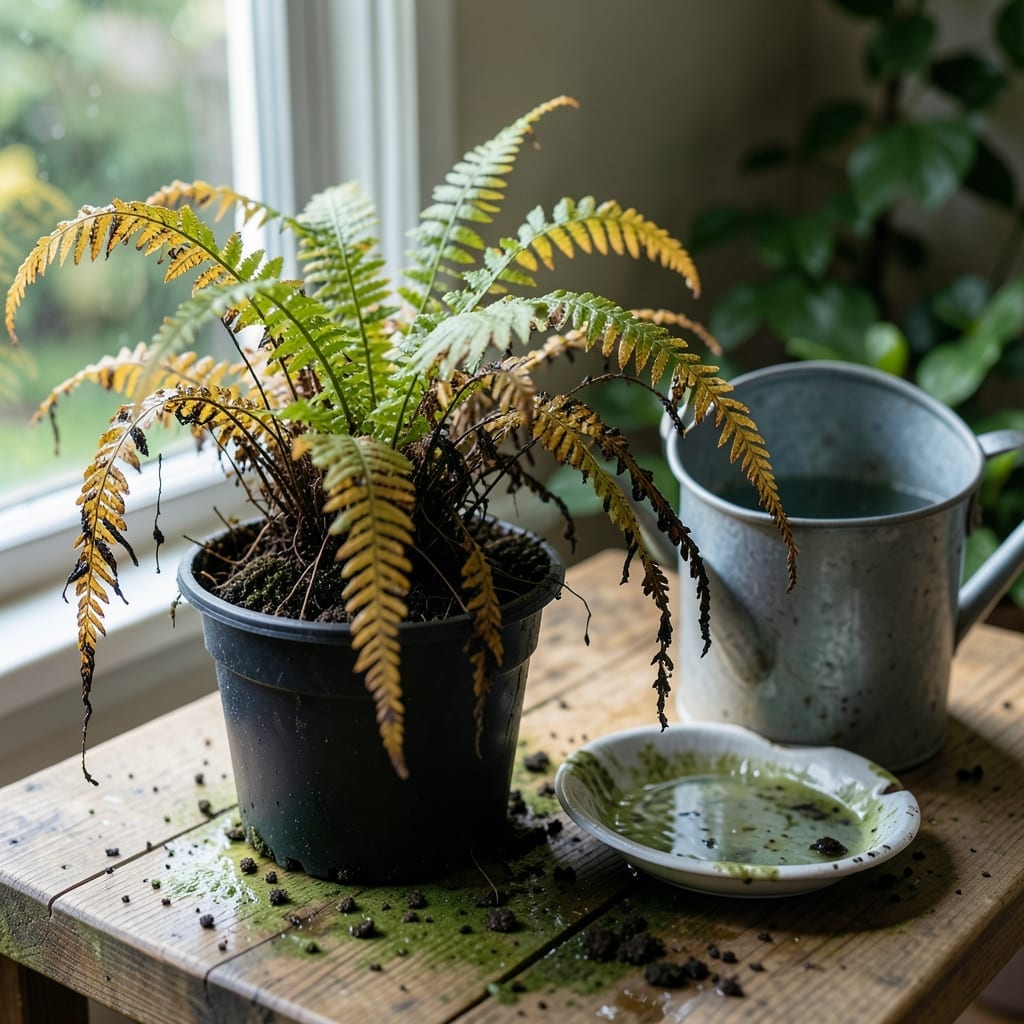
My fern looked fine yesterday. Today? Drooping fronds and soggy soil. Classic overwatering—more ferns die from kindness than neglect, honestly.
The yellowing leaves and mushy stems scream for help. I’ve killed my share this way, but the fix is simpler than you think: stop watering immediately and let it breathe.
With a few adjustments to your routine, you’ll see new bright green growth within 2-3 weeks. The key is matching water to what ferns actually need, not what we assume they want.
Works for Boston, maidenhair, or any fern that’s seen better days. Here’s how to bring it back.
Overwatering disrupts the delicate balance ferns need to thrive. Here’s why it leads to decline:
Excess water fills soil pores, pushing out oxygen. Fern roots require airflow to respire and absorb nutrients. Without it, root cells die, rotting from the inside out. Action: Ensure pots have drainage holes and use well-aerating soil mixes with perlite or orchid bark.
Soggy soil creates a breeding ground for pathogens like Phytophthora and Pythium. These microbes attack weakened roots, turning them mushy and black. Action: Reduce watering frequency and repot in sterile, fresh soil if rot is suspected.
Waterlogged soil leaches essential minerals (nitrogen, potassium) and prevents roots from absorbing what remains. Ferns starve even if fertilizer is present. Action: Flush soil with clean water to reset mineral balance, then resume a moderate watering schedule.
Overwatering causes cells in leaves and stems to absorb excess water, swelling until they rupture. This creates blisters, yellowing, or necrotic spots. Action: Improve humidity control and water only when the top inch of soil is dry.
Don’t panic—your fern can bounce back with the right fixes. Start by tackling the root of the problem (literally!) with these targeted solutions.
If the soil feels soggy, pause all watering. Let the top 1-2 inches dry out completely. Overwatered ferns need a break to prevent further root rot. Use a wooden skewer to test moisture deep in the pot—if it comes out damp, wait longer.
Prevention: Water only when the topsoil is dry to the touch. Stick to a schedule (e.g., once a week) and adjust for humidity.
Gently remove the fern from its pot and inspect the roots. Trim any black, mushy roots with sterilized scissors. Repot in a clean container with well-draining potting mix (add perlite or orchid bark for airflow). A terracotta pot helps wick away excess moisture.
Prevention: Always use pots with drainage holes. Avoid decorative outer pots that trap water.
Place your fern in a spot with gentle airflow (near an open window or a fan on low). This speeds up drying and discourages fungal growth. Avoid direct sunlight, which can stress the plant further.
Prevention: Group ferns loosely to allow air movement between them.
Snip off yellow or brown fronds at the base to redirect energy to healthy growth. Use clean, sharp shears to avoid tearing the stems.
Prevention: Regularly remove dead leaves to keep the plant vibrant and reduce disease risk.
💡 Pro Tip: Mist the leaves lightly (not the soil) to maintain humidity without overwatering. Ferns love moisture in the air, not at their roots!
Water when the top 1-2 inches of soil feel dry. For most ferns, this means once a week in moderate conditions. Always check soil moisture first to avoid overdoing it.
Look for yellowing fronds, mushy stems, or soil that stays soggy for days. A foul odor from the pot is another red flag that roots may be rotting.
Yes, if caught early! Trim affected roots, repot in fresh, dry soil, and reduce watering. New growth should appear in 2-3 weeks if conditions improve.
Misting leaves is fine, but focus on the foliage—not the soil. Daily misting can work in dry climates, but avoid it if humidity is already high.