
Beautiful Plants For Your Interior
Beautiful Plants For Your Interior
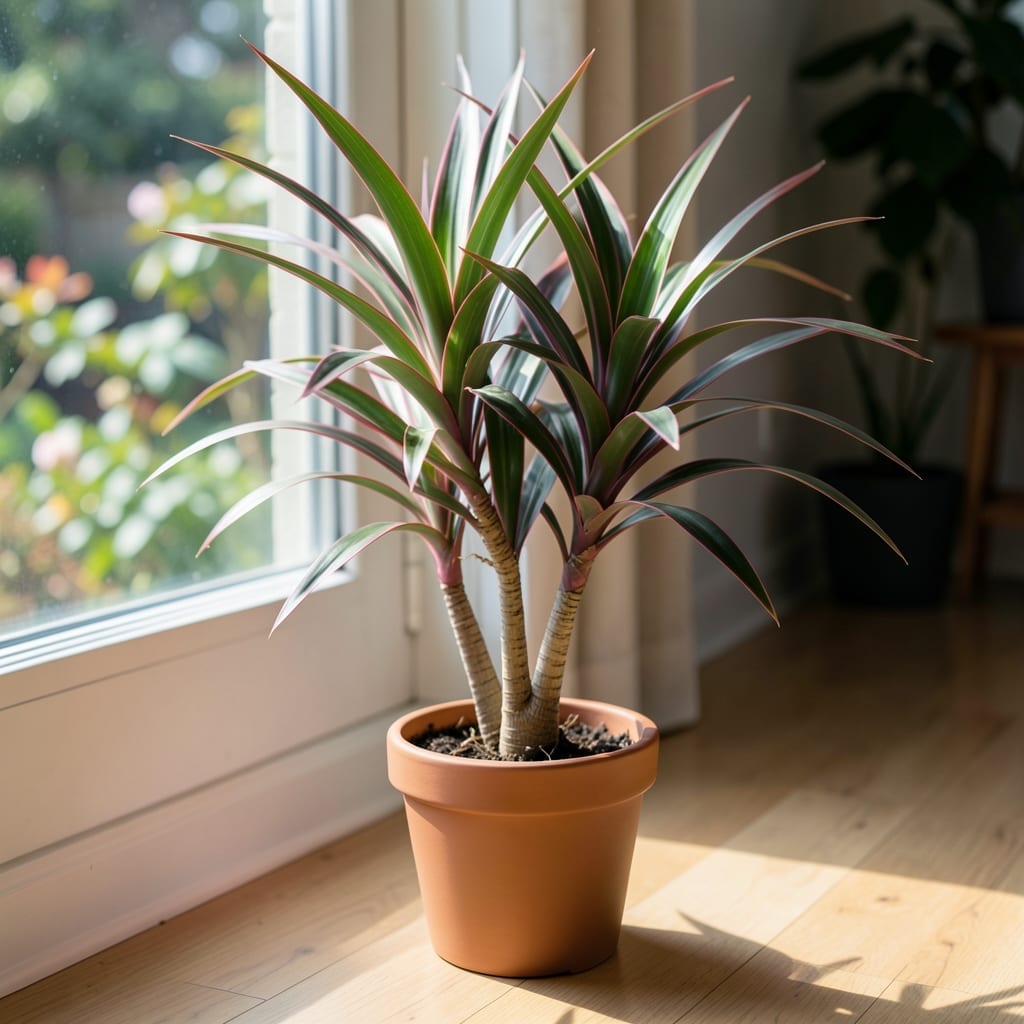
Your dracaena marginata shouldn’t look like it’s giving up. I’ve nursed mine back from the brink more times than I care to admit—usually after ignoring the early warning signs for too long.
The fix is often simpler than you think. Most drooping comes down to water issues or a sudden change in environment. Too much water, not enough, or even just a chilly draft can send those long leaves sagging overnight.
Within 24-48 hours of correcting the problem, you’ll often see the stems perk up. The leaves follow, though it might take a week for them to fully recover their upright posture.
Works for plants in any size pot, any light condition. Here’s how to play detective and bring it back to life.
Dracaena marginata leaves droop when their basic needs aren’t met. Here are the most common causes, explained scientifically and practically:
Underwatering causes cell turgor pressure to drop, making leaves limp as water content in vacuoles decreases. Overwatering, however, suffocates roots by reducing soil oxygen (O2), leading to root rot and impaired water uptake—ironically also causing drooping.
Action: Check soil moisture 1–2 inches deep. Water only when dry (underwatering) or repot in fresh, well-draining mix if roots are mushy (overwatering).
Dracaena marginata thrives at 65–80°F (18–27°C). Exposure to cold drafts (<55°F/13°C) or heat sources disrupts enzymatic activity, slowing water transport through the xylem. This results in wilting or drooping foliage.
Action: Move the plant away from AC vents, windows in winter, or radiators. Maintain stable ambient temperature.
Soil that retains too much water (e.g., clay-heavy mixes) prevents root respiration. Anaerobic conditions promote Pythium and Phytophthora fungi, which damage root cells, reducing their ability to absorb water and nutrients.
Action: Use a chunky, aerated mix (e.g., 50% perlite/pumice + 50% potting soil) and ensure pots have drainage holes.
While dracaena marginata tolerates low light, prolonged shade weakens stems (etiolation), causing them to bend. Conversely, sudden bright light (e.g., moving from a dark corner to direct sun) can scorch leaves, leading to stress-induced drooping.
Action: Provide bright, indirect light. Acclimate gradually to new light conditions over 1–2 weeks.
A lack of magnesium (Mg) or potassium (K) impairs photosynthesis and water regulation. Mg is central to chlorophyll production, while K maintains cell turgor. Deficiencies manifest as yellowing edges and weak, drooping leaves.
Action: Fertilize monthly in spring/summer with a balanced liquid feed (e.g., 10-10-10 NPK) or use a slow-release granular option.
Don’t panic if your Dracaena marginata looks sad—most causes are fixable! Below are targeted solutions for common issues, paired with prevention tips to keep your plant thriving long-term.
If the soil is bone-dry and leaves are crispy, your plant is thirsty. Fix it: Give it a deep watering until water drains from the pot’s bottom. Let the top 1-2 inches of soil dry out between waterings. Prevent it: Check soil moisture weekly with your finger—dracaenas prefer slightly dry conditions over soggy roots.
Yellowing leaves and mushy stems signal overwatering. Fix it: Stop watering immediately, remove the plant from its pot, and trim any black, soft roots. Repot in fresh, well-draining soil. Prevent it: Use a pot with drainage holes and a chunky potting mix (add perlite or sand). Water only when the top 50% of soil is dry.
Leggy growth or pale leaves? Your plant needs more light. Fix it: Move it to a bright spot with indirect sunlight (east or west-facing windows are ideal). Prevent it: Rotate the pot quarterly to ensure even growth. Avoid harsh direct sun, which can scorch leaves.
Drooping from cold drafts or heat shock? Fix it: Move the plant away from AC vents, heaters, or drafty windows. Keep temperatures between 65–80°F (18–27°C). Prevent it: Avoid sudden temperature swings—dracaenas hate surprises!
Check for spider mites, mealybugs, or scale (sticky residue or webbing are clues). Fix it: Wipe leaves with a damp cloth or spray with neem oil. For severe cases, use insecticidal soap. Prevent it: Inspect new plants before bringing them home and mist leaves occasionally to deter pests.
💡 Pro Tip: After fixing the issue, give your plant time to recover—it may take a few weeks to perking up!
Water when the top 1-2 inches of soil are dry. Typically, this means watering every 7-10 days, but adjust based on your home’s humidity and light conditions.
Yes! With proper care, stems often perk up within 24-48 hours. Leaves may take up to a week to fully regain their upright posture.
Bright, indirect light is ideal. East or west-facing windows work well. Avoid harsh direct sun, which can scorch the leaves.
Check the soil: if it’s bone-dry, it’s underwatered. If it’s soggy and roots are mushy, it’s overwatered. Yellow leaves often signal overwatering.