
Beautiful Plants For Your Interior
Beautiful Plants For Your Interior
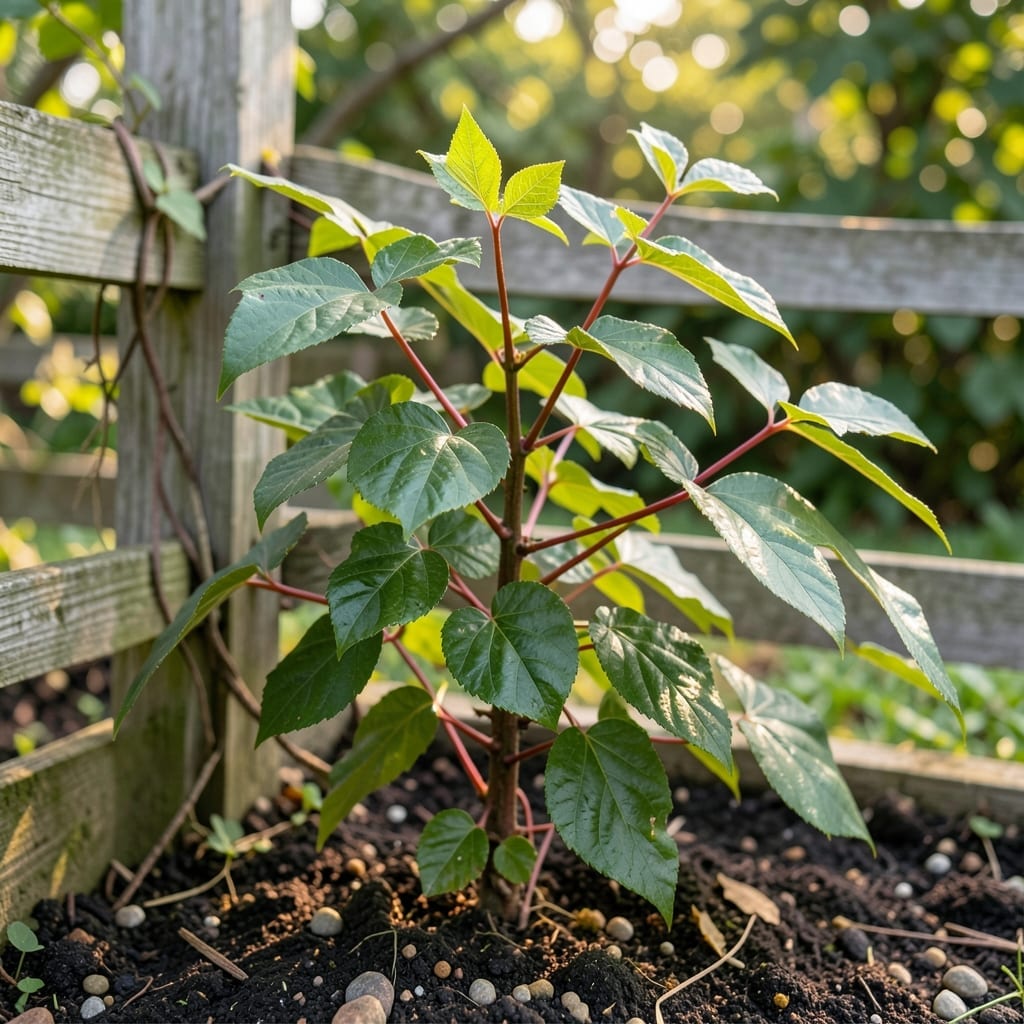
No, poison ivy always has three leaflets per stem, never five. The old saying ‘leaves of three, let it be’ is the most reliable way to identify this plant.
I often see people confuse poison ivy with Virginia creeper, which does have five leaflets in its groupings. This mix-up is why the myth persists, but the three-leaf cluster is a defining characteristic of poison ivy. The middle leaflet typically has a longer stem than the two side ones, which can help with proper identification in the wild. ✨
💡 In This Article
Poison ivy’s three-leaf pattern, called a trifoliate arrangement, is hardwired into its DNA. This botanical trait is consistent across Toxicodendron radicans because it’s an evolutionary adaptation for efficient photosynthesis. Each cluster of three leaflets maximizes sunlight exposure while conserving energy, a survival advantage in dense forests.
The middle leaflet often appears slightly larger, with a longer stem connecting it to the main vine. 🌿
The myth of five leaves likely stems from misidentifying similar plants. Virginia creeper, for example, has five leaflets per stem and often grows alongside poison ivy in the same wooded areas. Boxelder saplings also have compound leaves with three to five leaflets.
Confusion arises when people assume all climbing vines follow the same pattern, but poison ivy’s three-leaf structure remains unchanging regardless of location or maturity. ✨
This consistent pattern makes identification reliable. Unlike plants that may vary their leaf count based on environmental conditions, poison ivy maintains its trifoliate structure from spring through fall. Even when the plant is stressed or damaged, it will never produce five leaflets.
The edges of the leaves may appear smooth or toothed, but the cluster count stays fixed at three. 💫
The three-leaf rule is so dependable that botanists use it as a primary identifier. While the plant’s appearance can change with the seasons—turning bright red in autumn—the leaf arrangement never does.
This stability is why the adage “leaves of three, let it be” has stood the test of time as the simplest and most accurate way to spot poison ivy in the wild. ⚡
Understanding this botanical consistency empowers you to avoid the plant confidently. Whether you’re hiking, gardening, or simply walking through a park, knowing that poison ivy will always have exactly three leaflets per stem eliminates the guesswork. This knowledge is especially valuable in regions where look-alike plants are common, helping you stay safe without unnecessary alarm.
🔥
This myth persists due to confusion with Virginia creeper, which has five leaflets per stem. Both plants often grow together in the same wooded areas, leading to misidentification.
Boxelder saplings can have three to five leaflets, but their leaves are opposite each other on the stem. Poison ivy’s leaves alternate, and its middle leaflet has a longer stem.
Virginia creeper has five leaflets and coarser, jagged edges. Poison ivy’s leaves are glossy with smooth or slightly toothed edges and grow in three-leaf clusters.
No, poison ivy maintains its three-leaflet structure year-round. The leaves may change color in autumn, but the arrangement remains consistent.