
Beautiful Plants For Your Interior
Beautiful Plants For Your Interior
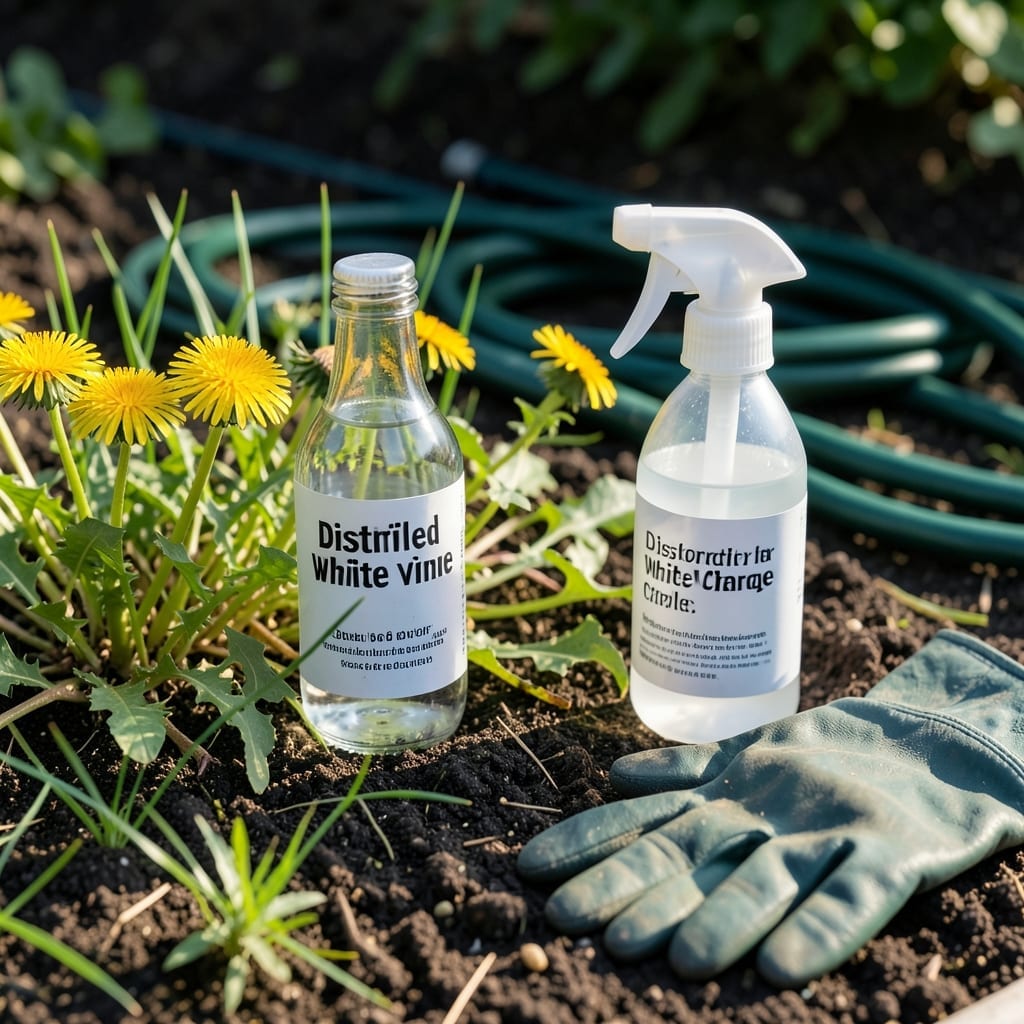
Distilled white vinegar can kill weeds due to its acetic acid content, which dries out plant tissues. It works best on young weeds and may require multiple applications for tougher growth.
I’ve seen this method work wonders in my own garden for controlling unwanted growth. The acetic acid essentially breaks down the weed’s cellular structure, but it’s most effective on sunny days when the solution can fully absorb. For stubborn patches, I recommend adding a bit of dish soap to help the mixture stick to the leaves longer. 🔥
💡 In This Article
The herbicidal power comes from acetic acid’s ability to rapidly lower the pH of plant cells. When sprayed, it disrupts cell membranes, causing the contents to leak out. This process, called cytolysis, effectively dehydrates the plant within 24-48 hours of application. 🔥
Household distilled white vinegar typically contains 5% acetic acid, which works well on young, tender weeds. For tougher broadleaf varieties like dandelions, horticultural vinegar with 20-30% acetic acid is significantly more effective. The higher concentration penetrates thicker cuticles and woody stems more efficiently. ✨
What most people don’t realize is that acetic acid doesn’t discriminate between weeds and desirable plants. It’s a non-selective herbicide, meaning it will damage any foliage it contacts. This makes precise application crucial, especially in garden beds with nearby flowers or vegetables. 💫
The acid also alters soil pH temporarily, which can affect future plant growth. In my experience, light applications (1-2 sprays) cause minimal soil disruption, but repeated use in the same spot may require soil testing. For best results, apply on a sunny day when temperatures exceed 60°F to maximize absorption. ⚡
Compared to commercial herbicides, vinegar breaks down quickly in the environment. Acetic acid decomposes into water and carbon dioxide within days, leaving no long-term residue. However, it lacks the systemic action of glyphosate, meaning it only kills what it directly contacts rather than traveling through the plant’s vascular system. 🌟
Household vinegar with 5% acetic acid works well on young, tender weeds like crabgrass. For tougher varieties such as dandelions, you’ll need horticultural vinegar with 20-30% acetic acid for better results.
Most weeds will show wilting within 24-48 hours of application. Complete death typically occurs in 3-5 days, depending on the weed type and weather conditions. Sunlight and warmth speed up the process.
Once dry, vinegar solutions are generally safe. However, keep pets and children away until the spray has fully dried (1-2 hours). Avoid direct contact with skin or eyes, as the acid can cause irritation.
Be extremely careful—vinegar is non-selective and will harm any plant it touches. Use a shield or apply on windless days to prevent drift. For precision, use a paintbrush to target weeds directly.