
Beautiful Plants For Your Interior
Beautiful Plants For Your Interior
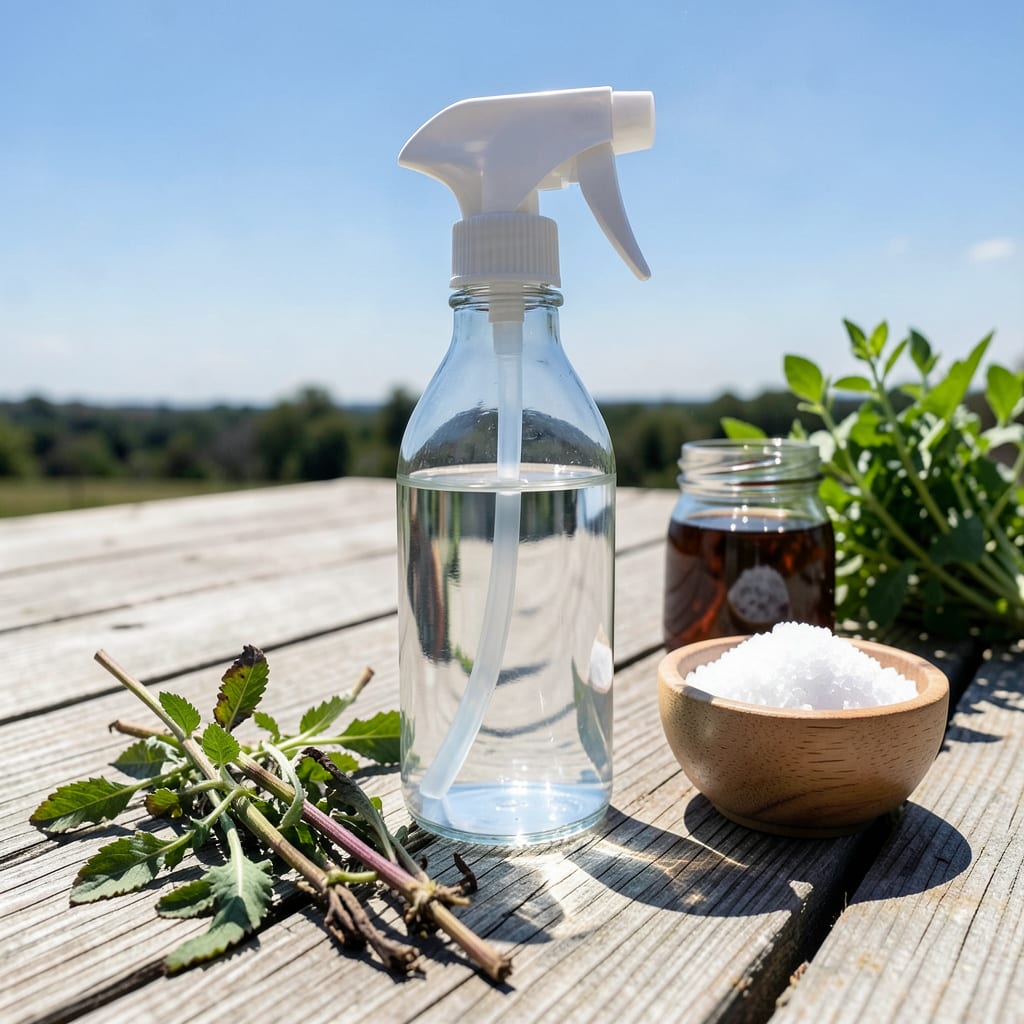
I discovered this natural weed solution after years of battling driveway invaders. White vinegar and salt work together to eliminate weeds without harsh chemicals, and it’s surprisingly effective on cracks and edges.
Fair warning: it’s non-selective—any plant it touches will suffer. I use it carefully, avoiding flower beds and lawns, and reapply only as needed for stubborn growth.
📚 In This Guide
Here’s the method I use to eliminate weeds naturally and keep them from coming back.
Pick a hot, sunny day with no rain in the forecast for at least 24-48 hours. The heat accelerates the vinegar’s effectiveness, while dry conditions ensure the solution stays on the weeds instead of diluting. I’ve found that treating weeds in the late morning allows the sun to amplify the mixture’s impact throughout the day.
Avoid windy days, as the spray can drift onto nearby plants. You’ll also want to target weeds that are actively growing, not dormant—this means they’re pulling the solution into their roots, which is what kills them for good.
Combine 1 gallon of white vinegar (with at least 5% acetic acid), 1 cup of table salt, and 1 tablespoon of dish soap in a large container. The vinegar’s acidity breaks down the weed’s cell structure, while the salt dehydrates it, and the dish soap helps the mixture cling to the leaves.
Stir thoroughly until the salt fully dissolves. I use a wooden stick or an old spoon to avoid any chemical reactions with metal. Real talk: if the salt doesn’t dissolve completely, it can clog your sprayer or leave uneven coverage on the weeds.
Pour the solution into a spray bottle or garden sprayer and apply it directly to the leaves and stems of the weeds. Focus on the center of the plant, where the growth is most concentrated. I like to get close—within 6-12 inches—to ensure precision and avoid overspray.
Saturate the weeds thoroughly but don’t drench them to the point of runoff. You’ll see the leaves start to wilt within 24 hours, and full die-off typically occurs in 2-3 days. This is the moment that matters: resist the urge to reapply too soon—patience ensures the roots absorb enough to die completely.
Check the treated area after 3 days. If some weeds are still green or showing signs of regrowth, spray them again. Stubborn weeds, like dandelions or clover, may require 2-3 applications spaced a week apart. I’ve found that younger weeds die faster, while established ones need extra persistence.
Don’t pull up the weeds immediately after spraying. Let them decompose naturally, as the dead plant matter will act as a light mulch to suppress new growth. If you’re treating a large area, work in sections to avoid overwhelming yourself with follow-up applications.
Once the weeds are gone, take steps to prevent them from returning. Spread a layer of mulch or landscape fabric over the area to block new weed seeds from sprouting. For driveways or walkways, consider applying the vinegar-salt mixture as a preventive every 4-6 weeks during the growing season.
Here’s the thing—this solution is non-selective, meaning it will kill any plant it touches. Keep it away from grass, flowers, or vegetables, and always spot-test a small area first if you’re unsure how nearby plants will react.
Small adjustments in timing and application make a big difference with natural weed control.
Timing Secret: The 24-48 hours of dry weather after application isn’t just a suggestion—it’s critical. Rain washes away the solution before it can fully penetrate the roots, rendering your efforts useless. I’ve ruined batches by spraying right before a shower, so always check the extended forecast first.
Application Precision: Getting within 6-12 inches of your target weeds, as mentioned in Step 3, prevents drift to desirable plants. Here’s what nobody tells you—wind can carry spray much farther than you expect. I learned this the hard way after accidentally killing a patch of prized petunias.
The Waiting Game: Those 24 hours before you see wilting can feel like an eternity, but resist the urge to reapply. The solution needs this time to work through the plant’s system. I’ve found that impatient reapplication actually weakens the overall effect by diluting the concentration on each leaf.
Preventive Strategy: For driveways, the 4-6 weeks reapplication schedule in Step 5 works best if you stick to it religiously. Weeds have growth cycles, and hitting them at this interval disrupts their establishment before they can take hold and spread.
Most weeds start wilting within 24-48 hours, but full effects may take up to a week. Factors like sunlight, weed size, and concentration can influence the speed.
No, this solution is non-selective and can harm any plant, including grass and flowers. Use it only on driveways, walkways, or areas where you want to eliminate all vegetation.
Apply on a sunny day for best results. Early morning or late afternoon is ideal to avoid rapid evaporation and ensure maximum absorption by the weeds.
Once dry, it’s generally safe, but keep pets and children away until the solution has fully dried. Avoid areas where they frequently play or walk.
Yes! Adding a teaspoon of dish soap helps the mixture stick to the weeds, improving effectiveness. Just ensure it’s mild and free of harsh chemicals.
