
Beautiful Plants For Your Interior
Beautiful Plants For Your Interior
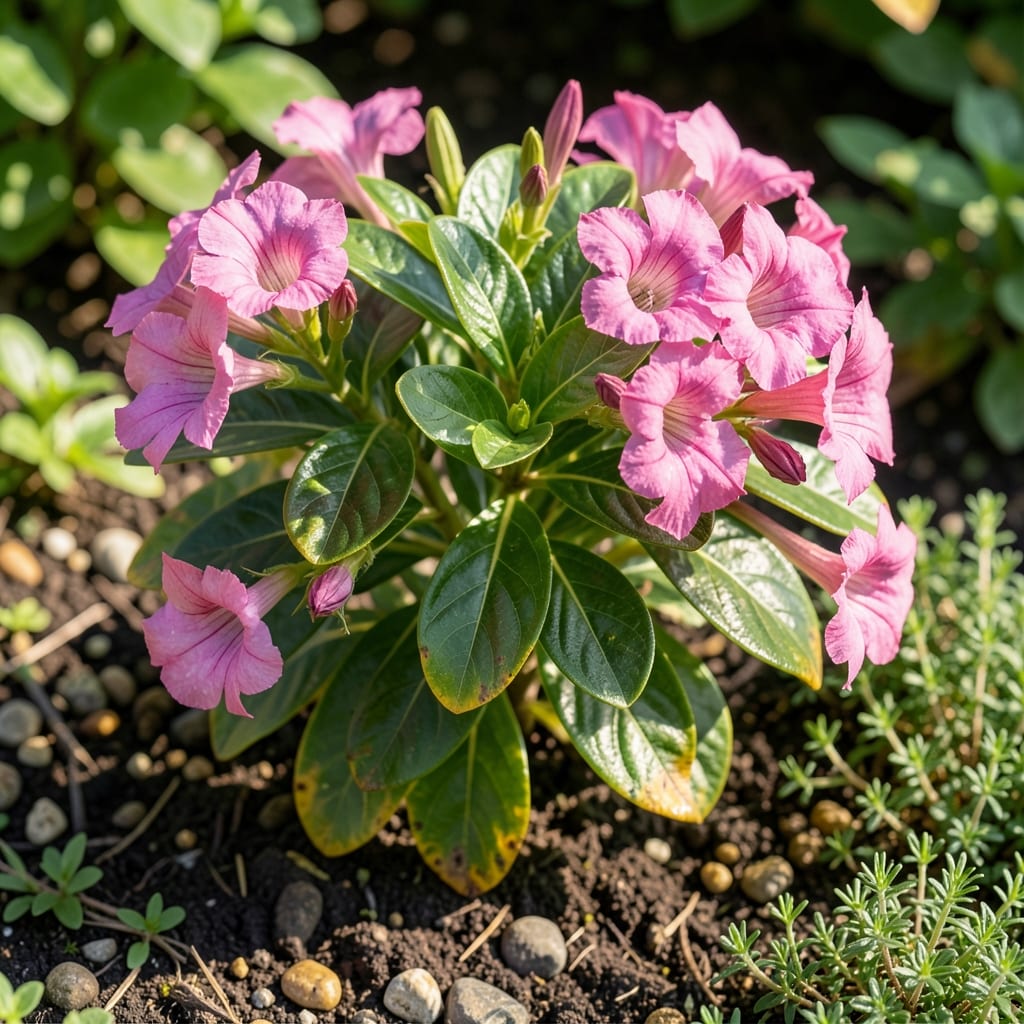
Yellow leaves on dipladenia usually signal overwatering, nutrient deficiencies, or poor drainage. Check soil moisture, adjust watering, and ensure proper fertilization for vibrant foliage.
I’ve noticed these plants often struggle when their roots sit in soggy soil for too long, which suffocates them and blocks nutrient uptake. 🌟 A quick soil test can reveal if you’re dealing with compacted earth or a lack of essential minerals like nitrogen or iron. In my experience, adjusting the care routine early makes all the difference for recovery.
💡 In This Article
Dipladenia leaves turn yellow primarily due to root suffocation from excessive moisture. When soil stays waterlogged, oxygen can’t reach the roots, halting their ability to absorb nutrients. This triggers chlorophyll breakdown, causing the green pigment to fade into yellow hues.
The process starts at the lower leaves first, as they’re the oldest and most vulnerable to nutrient deprivation. 💛
Nutrient deficiencies play a major role too. Nitrogen shortage often appears as uniform yellowing across older leaves, while iron deficiency causes interveinal chlorosis—yellowing between green veins. A soil pH above 7.0 can lock out iron, making it unavailable to the plant even if present in the soil.
Testing your soil’s pH and nutrient levels reveals these hidden issues.
Poor drainage compounds these problems. Compacted soil or containers without drainage holes trap water around the roots. Dipladenia thrive in well-draining mixes with perlite or sand added. I’ve seen plants recover dramatically when repotted into a lighter, airier medium that allows excess water to escape quickly. ✨
Environmental stressors like sudden temperature drops below 50°F or direct hot afternoon sun can also trigger leaf yellowing. These conditions disrupt the plant’s normal physiological processes, leading to chlorophyll degradation. The yellowing often appears on the most exposed leaves first, serving as an early warning system. 🌟
Fungal infections from overwatering manifest as yellow patches with brown edges. These typically start as small spots that expand over time. The fungus Phytophthora is particularly destructive to dipladenia, thriving in wet conditions and attacking the root system. Preventative measures include using sterile potting mix and ensuring proper air circulation around the plant.
Water when the top 1-2 inches of soil feel dry. Typically, deep watering once a week suffices, but adjust based on your climate and season. Overwatering is the most common cause of yellowing leaves.
Unfortunately, once leaves turn yellow, they won’t regain their green color. Focus on fixing the underlying issue and promoting new, healthy growth. Prune affected leaves to redirect energy.
Use a well-draining mix of 50% potting soil, 30% perlite, and 20% coarse sand. This prevents waterlogging and encourages healthy root growth.
Older leaves at the bottom are most vulnerable to nutrient deprivation. When roots struggle to absorb nutrients due to overwatering or poor soil, the plant sacrifices these leaves first.