
Beautiful Plants For Your Interior
Beautiful Plants For Your Interior
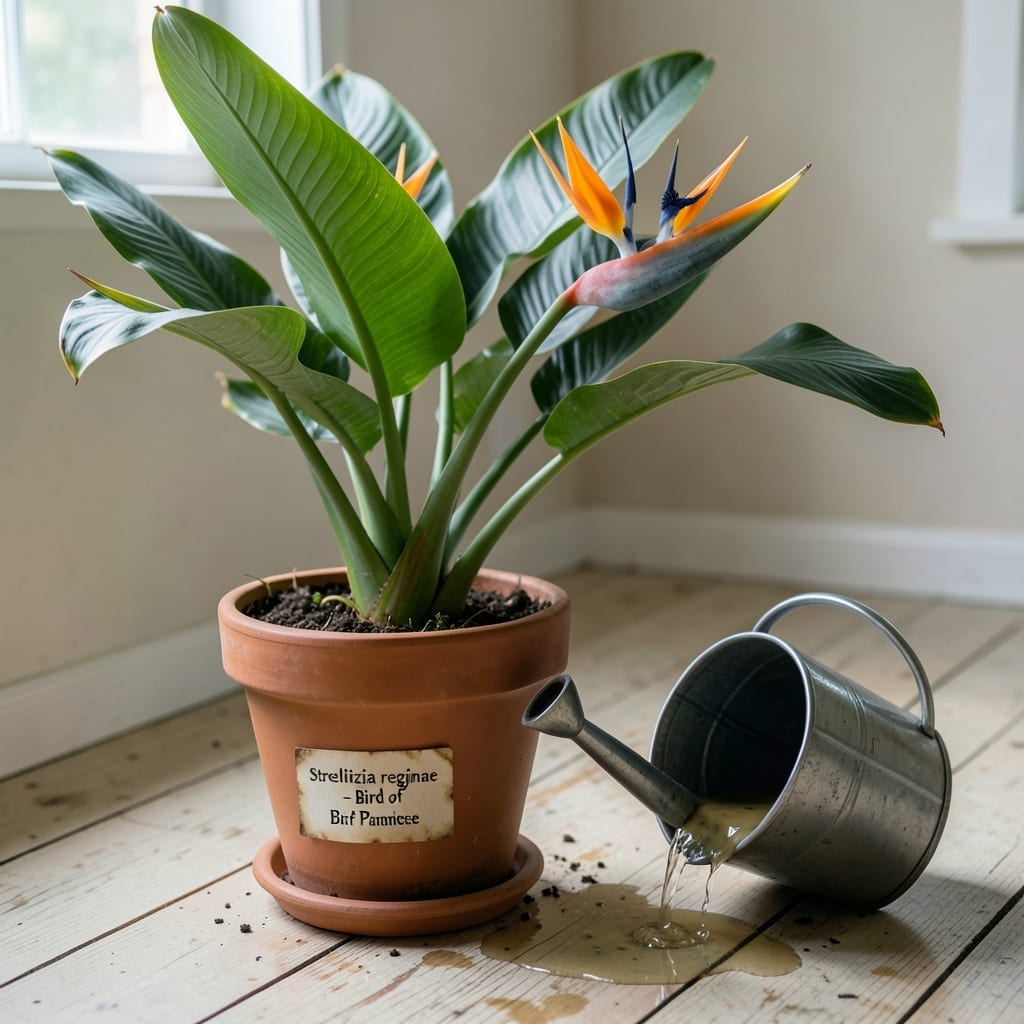
My bird of paradise leaves started curling after I got a little too enthusiastic with the watering can. Turns out, these tropical beauties hate soggy roots more than they love a drink.
The first sign is leaves that look like they’re trying to hug themselves. Then comes the yellowing, the mushy stems, and that sinking feeling when you realize you’ve loved your plant a little too much.
Here’s the thing—root rot sets in fast with overwatering, but catching it early means you can still save your plant. We’re talking drainage fixes, soil adjustments, and a new watering routine that lets the soil dry out between drinks.
With the right steps, those dramatic leaves will unfurl and stand tall again. No green thumb required—just a little patience and the willingness to let your plant breathe.
Overwatering is the primary culprit behind curling leaves in your Bird of Paradise, but the issue stems from a chain reaction in the plant’s physiology. Here’s why it happens:
Excess water displaces air in the soil, suffocating the roots. Without oxygen, Strelitzia roots can’t respire, leading to root rot. As roots die, they fail to absorb water and nutrients, causing the leaves to curl inwards as a stress response to conserve moisture.
Soggy soil creates a breeding ground for pathogens like Phytophthora and Pythium. These fungi attack the roots, impairing their function. The plant, sensing distress, curls its leaves to reduce surface area and slow water loss through transpiration.
Overwatering leaches essential nutrients (e.g., nitrogen, potassium) from the soil or makes them inaccessible due to pH imbalances. Without these nutrients, the plant struggles to maintain turgor pressure in its cells, leading to weak, curled foliage.
Cold drafts or sudden temperature drops can exacerbate overwatering symptoms. Bird of Paradise prefers warm, stable conditions; when combined with wet soil, cold stress slows metabolism, worsening root damage and leaf curling.
Overwatering is a common issue with Bird of Paradise plants, but don’t worry—your plant can bounce back with the right care. Below are practical fixes for each cause, paired with prevention tips to keep your plant thriving. 🌿
If the roots are mushy or black, act fast. Gently remove the plant from its pot and trim away any rotted roots with sterilized scissors. Repot in fresh, well-draining soil and a clean container with drainage holes. Water only when the top 1-2 inches of soil are dry. Prevention tip: Use a pot with drainage and avoid letting the plant sit in a saucer of water. 💡
Heavy or compacted soil traps moisture, leading to curling leaves. Switch to a fast-draining mix—combine potting soil with perlite or orchid bark. If repotting isn’t an option, poke holes in the soil with a chopstick to improve aeration. Prevention tip: Mix in coarse sand or perlite to keep soil light and airy. ✨
Stick to a watering schedule: check soil moisture with your finger before watering. In bright, warm conditions, water every 7-10 days; in cooler or low-light spots, stretch it to 2 weeks. Prevention tip: Use a moisture meter to avoid guesswork. 🎯
Even with proper watering, poor light or stale air can stress the plant. Move it to a spot with bright, indirect light and ensure good airflow around the leaves. A gentle fan can help, but avoid direct drafts. Prevention tip: Rotate the plant weekly for even light exposure. 🌞
Water every 7-10 days in warm, bright conditions. In cooler or low-light areas, stretch it to 2 weeks. Always check that the top 1-2 inches of soil are dry first.
Use a fast-draining mix with potting soil, perlite, and orchid bark. This prevents soggy conditions that lead to curling leaves. Coarse sand can also improve aeration.
Yes! Trim the mushy roots with sterilized scissors, repot in fresh soil, and avoid overwatering. Ensure the new pot has drainage holes to prevent future issues.
Poor light or airflow can stress the plant. Move it to bright, indirect light and ensure good air circulation. Rotate weekly for even exposure.