
Beautiful Plants For Your Interior
Beautiful Plants For Your Interior
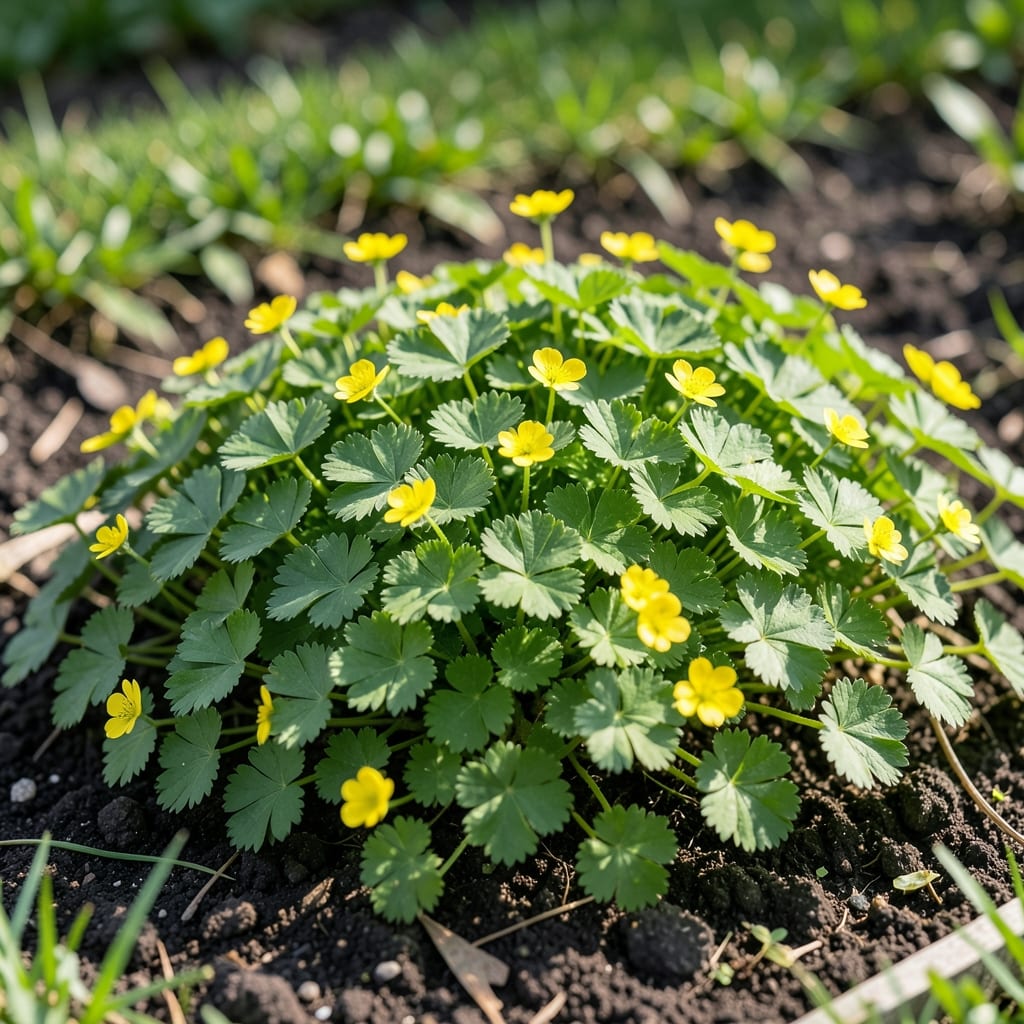
I first planted creeping cinquefoil as a desperate fix for a bare, muddy slope. Within one season, those bright green leaves spread into a lush carpet that choked out weeds and handled foot traffic like a champ.
This ground cover thrives in full sun to partial shade and tolerates poor soil better than most plants. The palmate leaves stay vibrant with minimal care—just occasional trimming to keep it tidy.
📚 In This Guide
Here’s the method I rely on to grow this vigorous ground cover successfully in any garden.
Choose a location with full sun to partial shade—this adaptable plant tolerates both but thrives in 6+ hours of sunlight. Test your soil’s drainage by digging a 1-foot-deep hole and filling it with water. If it drains within 4 hours, you’re good to go. Creeping cinquefoil hates soggy roots more than most plants.
Remove all weeds and debris from the area, then loosen the soil to a depth of 8-12 inches with a garden fork. I like to work in a 2-inch layer of compost at this stage to improve fertility without making the soil too rich—too much organic matter can cause this plant to grow too lush and flop over.
Space plants 12-18 inches apart to allow for their spreading habit. Dig a hole slightly larger than the root ball, place the plant at the same depth it was growing in its container, and backfill with native soil. Press gently to remove air pockets but don’t compact the soil too firmly—this can impede root establishment.
Water thoroughly after planting until the soil is moist to a depth of 6 inches. You’ll know you’ve watered enough when the top 1-2 inches of soil feel damp but not waterlogged. This initial deep watering helps settle the soil around the roots and eliminates air gaps that can stress the plant.
For the first 2-3 weeks, water when the top 1 inch of soil feels dry to the touch. After establishment, creeping cinquefoil is remarkably drought-tolerant—I’ve seen it survive summer dry spells with no supplemental water once its root system develops. When you do water, do it deeply to encourage deep root growth.
Watch for wilting as your cue to water. The leaves will droop slightly in the heat of the day but should perk up by evening. If they remain wilted in the morning, that’s your signal to water immediately. Overwatering is more dangerous than underwatering with this species—it quickly leads to root rot.
Once established, this ground cover requires minimal care. Apply a 2-3 inch layer of mulch around plants to retain moisture and suppress weeds, but keep it 3 inches away from the crown to prevent rot. I use bark mulch for a natural look that complements the plant’s appearance.
To control its spread, trim back the edges with shears in early summer if it’s encroaching on other plants. This also encourages denser growth. You’ll notice the plant produces runners with new plantlets at the nodes—these can be removed or used to propagate new plants. Regular mowing at a height of 3-4 inches works well for large plantings.
In early spring, rake off any winter mulch and remove dead foliage to allow new growth to emerge. This also helps prevent disease by improving air circulation. If your planting looks thin, you can divide established clumps in spring or fall and replant the divisions to fill in bare spots.
Fertilization isn’t typically necessary, but if your soil is very poor, apply a balanced 10-10-10 fertilizer in early spring at half the recommended rate. Too much fertilizer produces excessive foliage at the expense of the plant’s natural spreading habit and can make it more susceptible to disease.
The details that separate a thriving ground cover from a struggling one often come down to soil and sunlight.
Sunlight Strategy: While creeping cinquefoil tolerates partial shade, the 6+ hours of sunlight mentioned in Step 1 truly brings out its best growth. If your garden has shady spots, prioritize areas that get morning sun, which is gentler and helps prevent leaf scorch during hot afternoons.
Drainage Test Insight: That 4-hour drainage test in Step 1 isn’t just a suggestion—it’s critical. If water lingers longer, consider amending the soil with coarse sand or creating a slight mound to improve drainage. I learned this the hard way after losing several plants to root rot in a low-lying area.
Planting Depth Matters: In Step 2, planting at the same depth as the container is non-negotiable. Planting too deep can suffocate the crown, while planting too shallow exposes roots. Press the soil gently to eliminate air pockets, but avoid compacting it—this plant prefers to establish its own root system without resistance.
Watering Wisdom: During those first 2-3 weeks in Step 3, consistency is key. The 1 inch of dry soil rule works perfectly, but don’t let the soil dry out completely between waterings. A moisture meter can be a helpful tool if you’re unsure about the feel of the soil.
Creeping cinquefoil is generally non-toxic to cats and dogs, but excessive ingestion may cause mild stomach upset. Monitor pets and consult a vet if they show signs of discomfort.
This low-growing perennial spreads moderately via runners, covering about 1-2 feet per year under ideal conditions. It thrives in full sun to partial shade with well-drained soil.
Consider creeping thyme, sedum, or clover for similar low-maintenance coverage. These options offer drought tolerance and varied textures for different landscapes.
Yellowing leaves often indicate overwatering, poor drainage, or nutrient deficiencies. Check soil moisture and amend with compost if needed. Fungal issues may also be a cause.
Plant in early spring or fall to allow roots to establish before extreme temperatures. Avoid summer planting in hot climates, as heat stress can hinder growth.