
Beautiful Plants For Your Interior
Beautiful Plants For Your Interior
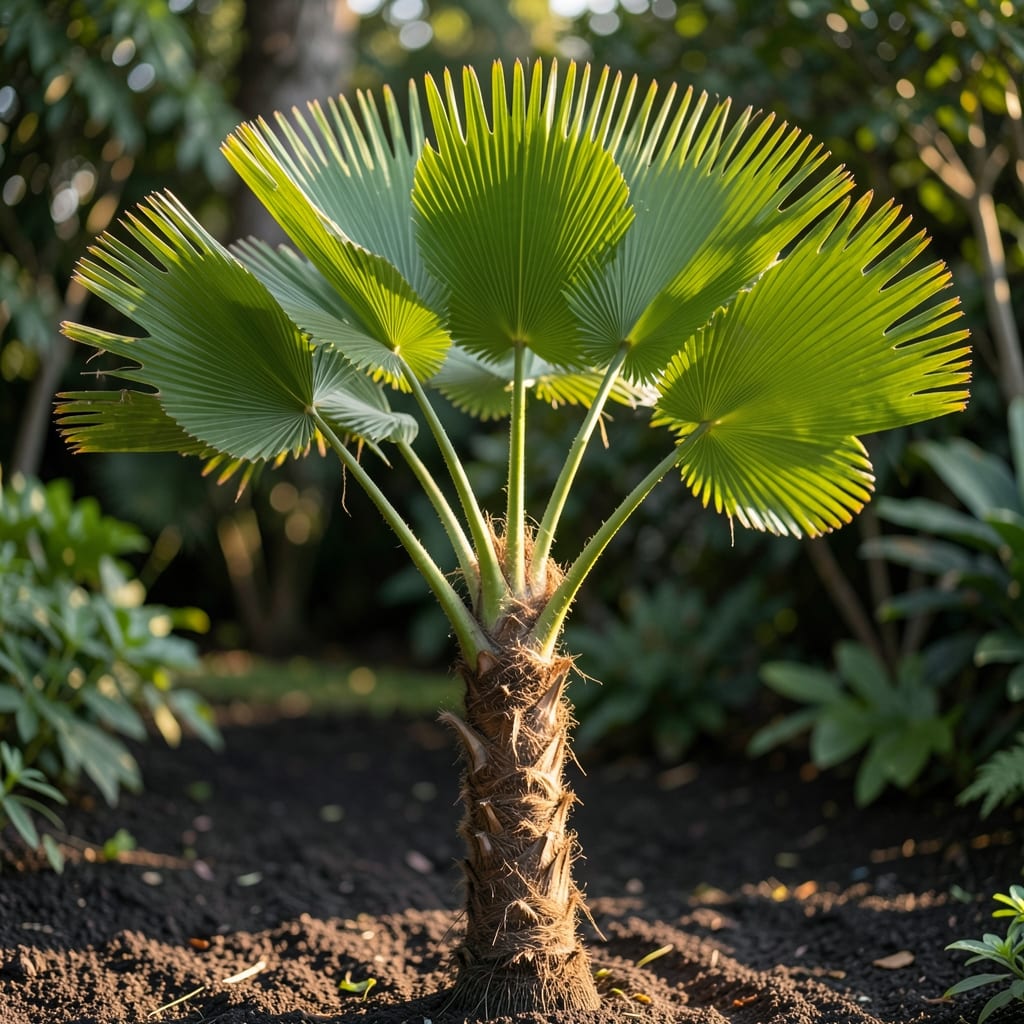
Chinese fan palm tolerates temperatures down to 15-20°F, with mature plants surviving brief dips to 10°F. Younger palms need protection below 25°F to prevent foliage damage and stunted growth.
I’ve grown these palms in USDA zones 8-11 and can confirm their resilience comes from a thick, fibrous trunk that insulates against frost. In my experience, mulching heavily around the base with straw or leaves provides that extra 10°F buffer younger specimens need during unexpected cold snaps. 🌟
💡 In This Article
The Chinese fan palm’s cold resistance starts with its thick, fibrous trunk. This structure acts like natural insulation, protecting the plant’s vital vascular system from freezing temperatures. The trunk stores starches and sugars, which act as antifreeze compounds, preventing ice crystal formation in cells.
Its fronds are coated with a waxy cuticle that reduces moisture loss and creates a barrier against cold winds. This adaptation is similar to how conifers retain water in winter. The palm’s extensive root system also anchors it deeply, accessing groundwater that remains warmer than surface soil during cold snaps.
Mature specimens develop a hardened wood core that resists temperature swings better than younger palms. This is why established plants can survive 10°F briefly, while juveniles struggle below 25°F. The palm’s slow growth rate contributes to this density, with older trunks accumulating more protective lignin over time. ✨
Climate zone matters significantly. In USDA zone 8, these palms thrive with minimal protection, while zone 7 requires winter wrapping. The palm’s native habitat in southern China and Taiwan experiences similar temperature ranges, explaining its adaptability to subtropical climates.
Microclimates play a crucial role in survival. A south-facing wall can provide 5-10°F of additional warmth, making the difference between damage and survival. Urban heat islands often allow these palms to grow in slightly colder zones than their official rating suggests.
What most gardeners overlook is the palm’s ability to recover. Even if fronds suffer cold damage, the meristem (growth point) often remains protected, allowing new growth to emerge in spring. This resilience makes it a favorite for landscape designers pushing zone boundaries. 🌟
Mature plants survive brief dips to 10°F, but sustained exposure below 15°F risks damage. Younger specimens need protection when temps drop below 25°F.
Wrap trunks with burlap in zones 7-8 during hard freezes. Container-grown palms should move indoors when temps hit 25°F. Always use breathable fabric to prevent moisture buildup.
Look for blackened or wilted fronds after a freeze. Don’t prune immediately—wait until spring to assess recovery. Healthy meristem often regrows even if foliage appears dead.
A south-facing wall or urban heat island can provide 5-10°F extra warmth. This often allows survival in zone 7 where it’s officially marginal.