
Beautiful Plants For Your Interior
Beautiful Plants For Your Interior
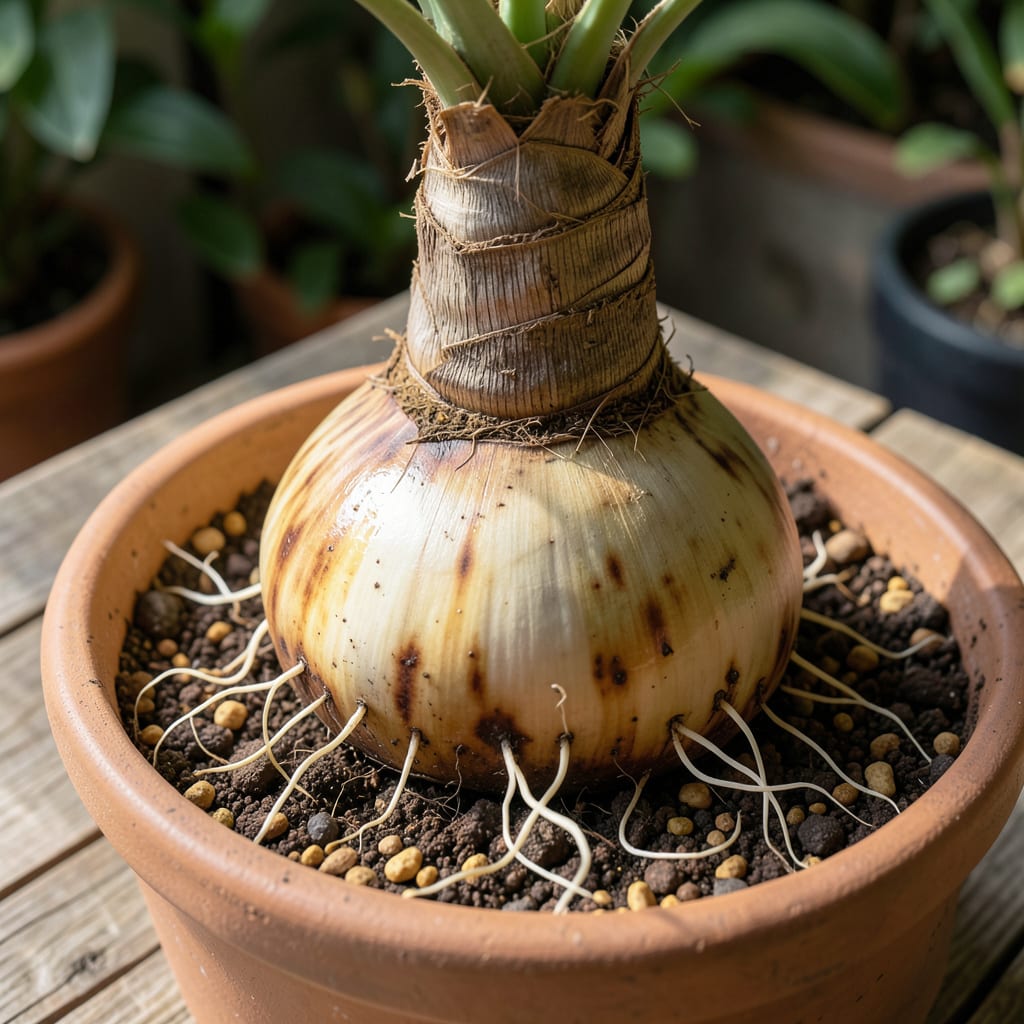
That swollen trunk isn’t just for looks. The ponytail palm stores water in its base, giving it a built-in survival mechanism that most houseplants don’t have.
I’ve watched mine go 6 weeks without water in summer and bounce right back. The roots are shallow but efficient, pulling moisture from the soil while the trunk handles the rest. This means you can be a little lazy with watering and still get thriving growth.
📚 In This Guide
This unique plant stores water in its base, making it nearly indestructible with the right care.
Look at the base of your plant where the trunk meets the soil. You’ll notice a distinctive bulbous, swollen area—this is the caudex, the plant’s water storage system. It’s not a disease or deformity, but a natural adaptation for survival in dry conditions.
This swollen base can grow quite large over time, sometimes reaching several feet in diameter in mature specimens. The size directly correlates with the plant’s age and water storage capacity. Don’t mistake this for root rot—it’s completely normal and healthy.
Unlike many plants, ponytail palms develop a shallow but wide root system. The roots spread outward just beneath the soil surface rather than growing deep. This allows the plant to quickly absorb any available moisture from light rains or dew.
You can gently dig around the base (being careful not to damage roots) to observe this pattern. The roots are typically thin and fibrous, designed to cover a wide area efficiently. This adaptation helps the plant maximize water collection in its native arid environments.
The caudex acts like a natural reservoir, storing water during dry periods. When you water your plant, the caudex absorbs moisture and expands slightly. During drought, it slowly releases this stored water to keep the plant alive.
This is why the plant can survive weeks without water. The larger the caudex, the more water it can store. You’ll notice the base feels firm when full and slightly softer when the plant needs water—this is your cue to water deeply.
The roots connect directly to the caudex, which then distributes water to the rest of the plant. This efficient system means the ponytail palm can survive where other plants would wither. The caudex also contains nutrients that sustain the plant during lean times.
If you repot your plant, you might see a thick central root connecting the root system to the caudex. Be extremely careful with this—damaging it can disrupt the plant’s water storage ability. The plant will recover, but it may take time to re-establish its storage capacity.
Because of this unique system, ponytail palms need well-draining soil and infrequent watering. Water only when the soil is completely dry and the caudex feels slightly soft. When you do water, give it a thorough soaking to refill the caudex.
Avoid shallow, frequent watering—this encourages weak root growth. Instead, water deeply every 2-3 weeks (or less in winter). The plant’s natural design means it thrives on neglect, making it perfect for forgetful gardeners or those with busy schedules.
Understanding these details will help you provide the best care for your plant.
Identification Insight: In Step 1, when examining the swollen base, remember that the caudex isn’t a sign of poor health. Its size directly reflects the plant’s age and water storage capacity, so a larger caudex means your plant is maturing well and can go longer between waterings.
Root System Observation: For Step 2, when inspecting the shallow root spread, use a small hand trowel to gently expose the roots. The thin, fibrous nature of these roots is perfectly normal—they’re designed to spread widely just below the surface to capture moisture efficiently from even light rainfall.
Watering Wisdom: Step 5 emphasizes the 2-3 week watering schedule for a reason. The caudex’s firmness is your best indicator—when it feels slightly soft to the touch, that’s your signal to water deeply. This method prevents both under and over-watering, which are the most common issues with these plants.
Repotting Caution: As mentioned in Step 4, that thick central root connecting to the caudex is crucial. If you’re repotting, plan to do it during the plant’s active growing season and be extremely gentle with this root. Damaging it can set back your plant’s ability to store water effectively, potentially requiring months to recover.
The swollen base, or caudex, is a natural feature! It stores water, helping the plant survive droughts. This adaptation makes the ponytail palm low-maintenance and perfect for forgetful gardeners.
Water deeply but infrequently—every 2-3 weeks in warm weather. Let the soil dry completely between waterings to prevent root rot. Overwatering is the most common issue!
Yes! Its compact root system thrives in small containers. Just ensure the pot has drainage holes to avoid waterlogging. Repot only when roots outgrow the container.
Trim affected roots with sterilized shears, repot in fresh, well-draining soil, and reduce watering. Prevention is key: always use a cactus/succulent mix and avoid soggy soil.
Try the elephant foot plant (Beaucarnea recurvata) or desert rose (Adenium obesum). Both have water-storing caudexes and thrive in similar conditions.
