
Beautiful Plants For Your Interior
Beautiful Plants For Your Interior
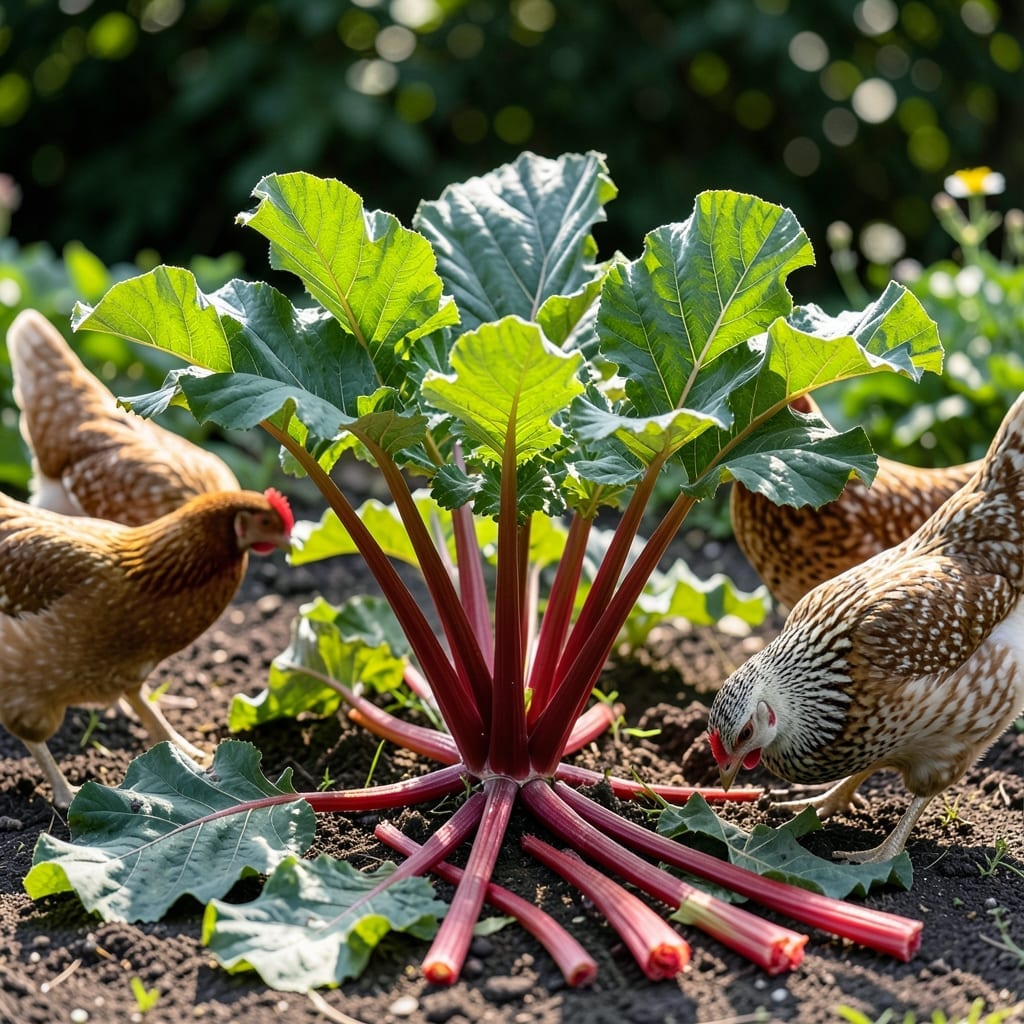
Rhubarb leaves contain 0.5-1.5% oxalic acid by weight, which binds to calcium in a hen’s digestive tract. This forms insoluble calcium oxalate crystals that the body can’t absorb, leading to a dangerous calcium deficiency. The kidneys then struggle to filter these crystals, causing damage or failure.
Even 10-20 grams of leaves can trigger toxicity in a standard-sized hen. 🔥
The symptoms appear rapidly—within 1-6 hours of ingestion. You’ll notice tremors, excessive thirst, or greenish diarrhea as the oxalates irritate the digestive lining. Unlike some plant toxins that affect the liver, oxalic acid specifically targets the kidneys and calcium metabolism, making it uniquely dangerous for egg-laying hens that need constant calcium. ✨
What makes this especially risky is how quickly oxalates accumulate. A hen’s small body size means toxins reach critical levels faster than in larger animals. The leaves also contain anthraquinones, which act as additional irritants, compounding the damage. This is why vets recommend immediate removal of any rhubarb foliage from chicken coops. 💫
For comparison, rhubarb stalks contain only 0.1-0.2% oxalic acid—far lower concentrations. But the leaves are so potent that even dried or wilted ones retain their toxicity. Some backyard farmers assume cooking neutralizes the risk, but heat doesn’t break down oxalic acid’s chemical structure. It remains just as harmful whether raw or cooked. ⚡
Prevention is straightforward: keep rhubarb plants entirely separate from chicken areas. If accidental exposure occurs, provide calcium-rich treatments like crushed oyster shell immediately to help counteract the oxalates. However, this is only a temporary measure—veterinary care is essential for any suspected poisoning. 🌟
Rhubarb leaves contain 0.5-1.5% oxalic acid, which binds to calcium in their digestive system. This creates harmful crystals that damage kidneys and disrupt calcium absorption. Even small amounts can be deadly.
Symptoms typically show within 1-6 hours of ingestion. Watch for tremors, excessive thirst, or green diarrhea. These signs indicate the oxalates are already affecting their system.
No, cooking doesn’t neutralize the oxalic acid. The toxin remains just as dangerous whether the leaves are raw, cooked, or dried. Always keep them completely away from your flock.
Remove access immediately and provide crushed oyster shell to help counteract the oxalates. Then contact a vet—this is a medical emergency that requires professional care.