
Beautiful Plants For Your Interior
Beautiful Plants For Your Interior
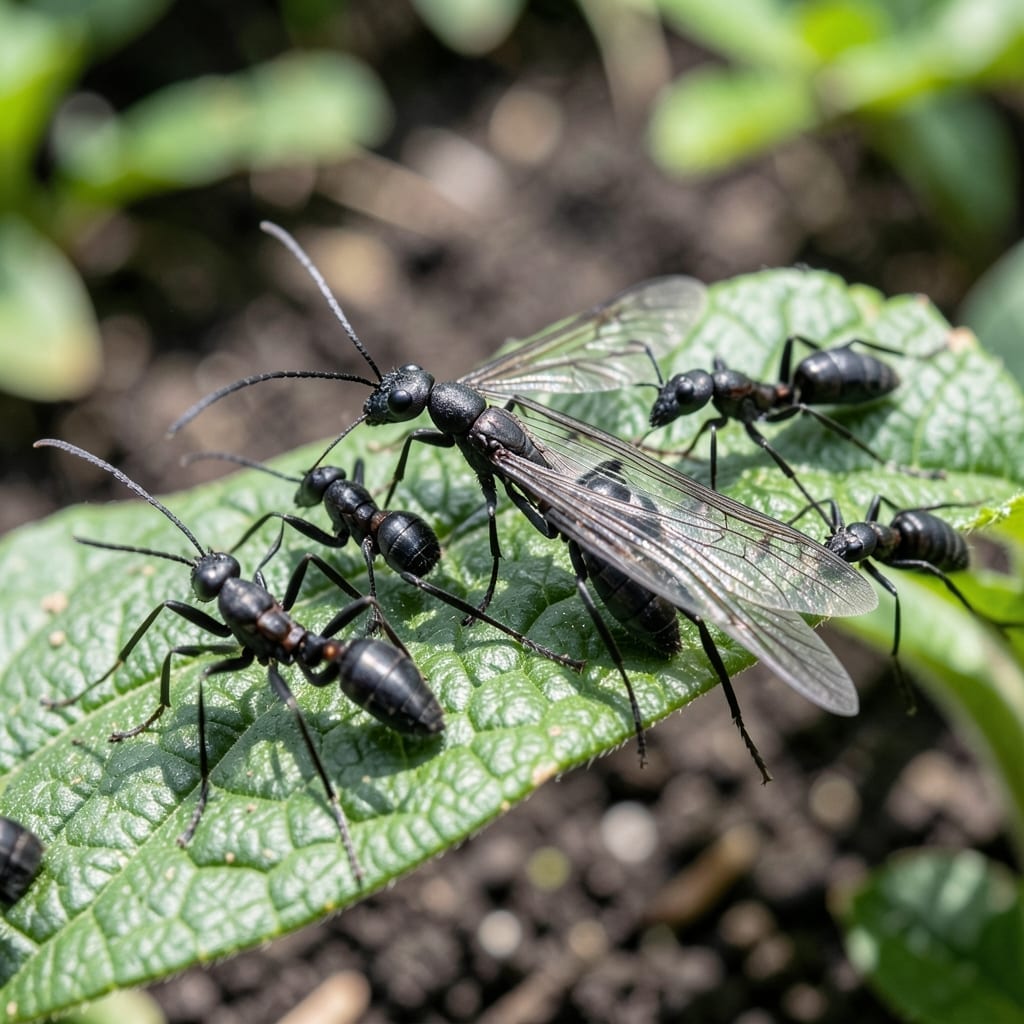
I noticed winged insects swarming my garden last spring. They looked like ants but had clear wings, and I knew immediately something was off.
Turns out these were either reproductive ants or termites—both love moist wood and garden debris. The good news? You can spot the difference with a close look: termites have straight antennae and equal-length wings, while winged ants have elbowed antennae and uneven wings.
Natural solutions work best here. Diatomaceous earth around entry points creates a barrier they can’t cross. A mix of vinegar and water disrupts their trails, and removing decaying wood eliminates their favorite hideouts.
Prevention is simpler than you think. Keep your garden clean, fix leaks promptly, and store firewood away from your home. These steps stop them before they start.
Nature’s mimicry often leaves us baffled, and winged bugs that resemble ants are no exception. This evolutionary quirk isn’t random—it’s a survival strategy honed over millennia. Below, we break down the scientific reasons behind this fascinating phenomenon.
Many winged insects, like winged termite alates or ant-mimicking wasps, have evolved to look like ants to exploit their fierce reputation. Ants are aggressive defenders, and predators (e.g., birds, lizards) often avoid them. By mimicking ants’ body shape, color, and movement, these bugs gain a false sense of danger, deterring potential threats. This is called Batesian mimicry—where a harmless species copies a harmful one for survival.
Ants dominate specific ecological niches, like soil or decaying wood, where resources (food, shelter) are abundant. Winged insects that coexist in these spaces may evolve similar traits to blend in or compete effectively. For example, myrmecomorphic beetles (ant-like beetles) thrive in ant colonies by mimicking pheromones and behaviors, allowing them to infiltrate and feed without detection.
Some winged bugs, such as male velvet ants (which are actually wasps), use ant-like appearances to access mates or nesting sites. Female velvet ants are wingless and ant-like, while males—with wings—retain partial resemblance to avoid aggression from territorial ants during mating season. This sexual dimorphism ensures reproductive success in ant-dominated environments.
In rare cases, random genetic mutations can lead to ant-like traits in winged insects. If these traits offer even a slight survival advantage (e.g., camouflage, predator avoidance), they may become more common over generations through natural selection. For instance, certain fly species in ant-rich areas develop elongated abdomens and constricted “waists” to resemble their armored neighbors.
If you’ve spotted winged bugs that resemble ants around your home or garden, don’t panic. These pests—often termites, winged aphids, or carpenter ants—can be managed naturally. Below are targeted solutions for each common cause, plus prevention tips to keep them from returning.
Termites thrive in damp wood. Fix leaks, improve drainage, and ensure wooden structures (like decks or fences) don’t touch soil. Replace damaged wood with termite-resistant materials. For active infestations, apply orange oil or neem oil to affected areas—both are natural termiticides.
Aphids with wings often appear when populations grow too large. Use a strong jet of water to knock them off plants, then apply insecticidal soap or introduce ladybugs (natural predators). Prune heavily infested leaves to limit their spread.
💡 Pro Tip: Plant aphid-repelling herbs like mint or basil nearby to deter future outbreaks.
These ants nest in damp or decaying wood. Locate their trails and seal cracks in walls, windows, or foundations with caulk. Use a vinegar-water spray to disrupt their scent trails. For nests, sprinkle diatomaceous earth (food-grade) in problem areas—it dehydrates them without chemicals.
With these steps, you can safely and effectively tackle winged ant-like bugs without harsh chemicals. Stay consistent, and your space will stay pest-free!
Not always. Winged ants are real, but termites and some beetles mimic them closely. Check for elbowed antennae and uneven wings to confirm true ants. Others may be impostors!
Swarming signals mating season, typically in spring or after rain. Termites and reproductive ants both do this to start new colonies. It’s nature’s way of expanding their reach.
Termites absolutely can—they eat wood silently. Carpenter ants tunnel into damp wood but don’t eat it. Act fast if you spot either near structures.
Termites have straight antennae and equal-length wings. Winged ants have bent antennae and longer front wings. A magnifying glass helps!