
Beautiful Plants For Your Interior
Beautiful Plants For Your Interior
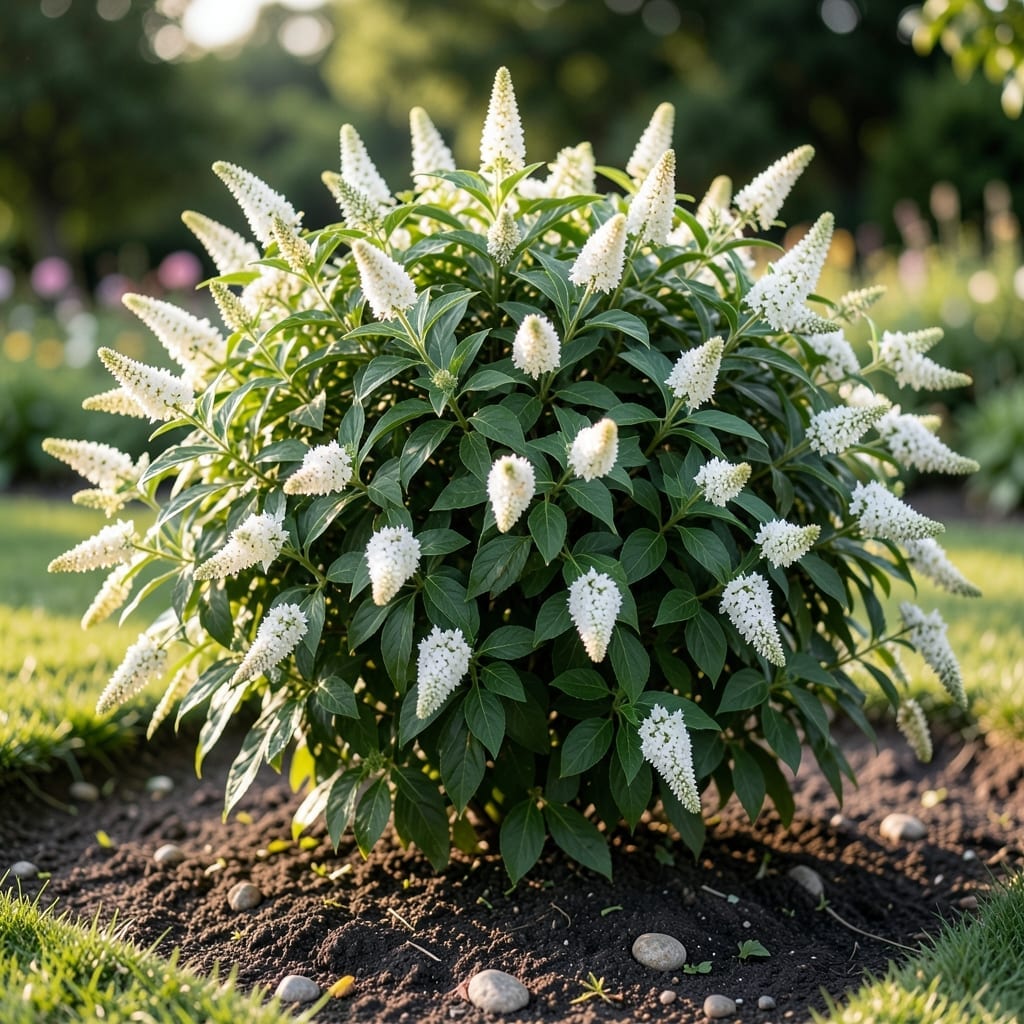
White buddleja transforms gardens into butterfly havens with minimal effort. I planted my first one three summers ago, and it’s been a nonstop pollinator magnet ever since.
Full sun and well-drained soil are all it needs to thrive. Within one season, you’ll have fragrant blooms and more butterflies than you can count. The key is pruning in early spring to encourage new growth.
📚 In This Guide
This method delivers vibrant, butterfly-attracting blooms with minimal fuss and maximum impact.
Choose a location with full sun exposure—at least 6-8 hours of direct sunlight daily. Buddleja davidii thrives in well-draining soil, so avoid low-lying areas where water pools. I always test drainage by digging a 12-inch deep hole, filling it with water, and checking if it empties within 2-3 hours.
Amend heavy clay or compacted soil with compost to improve structure. The ideal pH range is 6.0-7.5, but this plant tolerates slight alkalinity. Remove weeds and loosen the soil to a depth of 18-24 inches to encourage deep root establishment.
Dig a hole twice as wide and just as deep as the root ball. Place the plant so the top of the root ball sits 1-2 inches above the surrounding soil level—this prevents settling, which can suffocate the crown. Backfill with native soil, pressing lightly to eliminate air pockets.
Space plants 5-6 feet apart to allow for mature spread. Buddleja davidii grows rapidly, and proper spacing prevents overcrowding, which reduces airflow and invites fungal issues. Water thoroughly after planting to settle the soil around the roots.
Water deeply 2-3 times per week during the first 4-6 weeks after planting to help roots establish. The goal is to keep the soil consistently moist but not soggy. I check by inserting my finger 2 inches into the soil—if it feels dry, it’s time to water.
Once established, Buddleja davidii is drought-tolerant and only needs watering during prolonged dry spells. Overwatering is a common mistake; yellowing leaves often signal too much moisture, not too little. Always water at the base to avoid wetting the foliage, which can lead to mildew.
Prune in late winter or early spring, just as new growth begins to emerge. Remove all dead or damaged wood first, then cut back the remaining stems to 12-18 inches from the ground. This encourages strong, new growth and abundant flowering.
Throughout the growing season, deadhead spent blooms by cutting back to the next set of leaves or side shoot. This not only tidies the plant but also stimulates continuous flowering. Avoid pruning after mid-August, as late cuts may produce tender growth that won’t harden off before winter.
Apply a balanced, slow-release fertilizer in early spring, following package instructions for dosage. I prefer a 10-10-10 formulation, which provides steady nutrients without encouraging excessive leafy growth at the expense of flowers. Scatter the fertilizer around the base and water it in thoroughly.
Mulch with a 2-3 inch layer of organic material, like bark chips or straw, to retain moisture and suppress weeds. Keep mulch a few inches away from the stem to prevent rot. Monitor for pests like spider mites or aphids, and treat with insecticidal soap if necessary. With proper care, your Buddleja davidii will reward you with stunning white blooms and a constant parade of butterflies all season long.
Took me a few seasons to figure these out, so here’s what works.
Sunlight Strategy: That 6-8 hours of direct sunlight daily in Step 1 isn’t just a suggestion—it’s essential. Without it, you’ll get leggy growth and sparse blooms. I track the sun’s path in my garden for a full day before planting to confirm the spot gets consistent light. Morning sun with afternoon shade works, but full sun all day delivers the most vibrant flowers and butterfly activity.
Soil Preparation Insight: When loosening soil to 18-24 inches in Step 2, don’t skimp on depth. Shallow prep restricts root growth, leading to weaker plants. I use a garden fork to aerate deeply, then mix in compost until the soil feels loose and crumbly. If your soil is heavy clay, raised beds are your best friend—they prevent waterlogging that can rot roots.
Planting Precision: The detail in Step 3 about digging a hole twice as wide as the root ball is critical. A narrow hole crowds roots, forcing them to circle instead of spreading outward. After planting, press the soil firmly around the base to eliminate air gaps, but don’t compact it—roots need oxygen too. That 2-3 inch layer of mulch retains moisture, but pile it against the stem and you’ll invite rot.
Watering Wisdom: The deep watering once a week in Step 4 isn’t just about frequency—it’s about depth. Shallow watering encourages shallow roots, making plants vulnerable to drought. I water slowly, letting the moisture soak 1 inch into the soil before moving the hose. If your plant’s leaves wilt in the heat of the day but perk up by evening, it’s thirsty; if they stay droopy, you’re likely overwatering.
Water deeply once a week during the first growing season to establish roots. After that, it’s drought-tolerant—water only during prolonged dry spells. Avoid overwatering to prevent root rot.
Prune in late winter or early spring before new growth starts. Cut back old wood to encourage vigorous blooms and maintain shape. Avoid pruning in fall, as it can stimulate tender growth before winter.
Consider cold-hardy options like Buddleja alternifolia or Caryopteris (Bluebeard). Both attract pollinators and thrive in cooler zones with proper winter protection.
Lack of blooms often means too much shade, over-fertilizing (especially with nitrogen), or pruning at the wrong time. Ensure full sun, well-drained soil, and prune old wood in spring.
Improve air circulation by spacing plants properly. Remove affected foliage and avoid overhead watering. Use fungicides or a baking soda spray (1 tbsp baking soda + 1 tsp dish soap + 1 gallon water) as a natural remedy.