
Beautiful Plants For Your Interior
Beautiful Plants For Your Interior
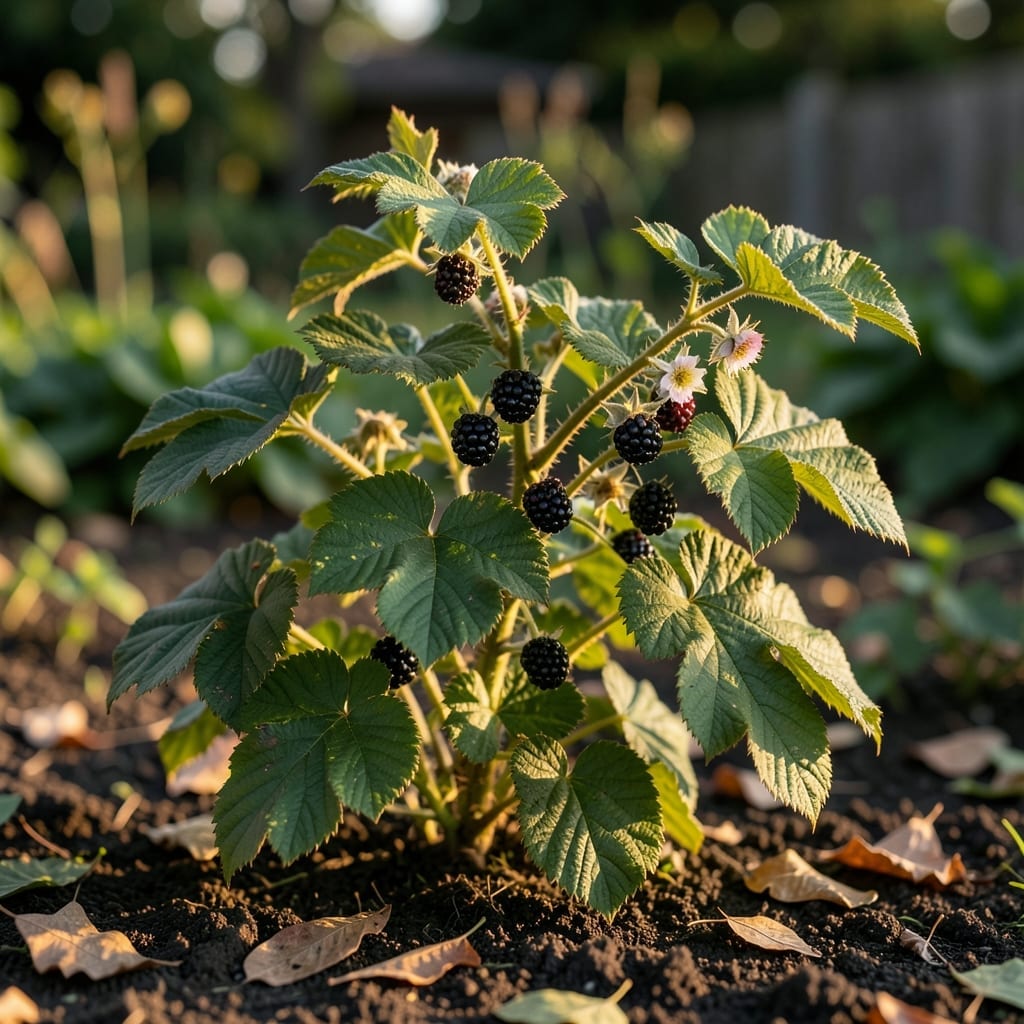
Spotting wild blackberries means knowing exactly what to look for. I’ve walked past countless thickets before learning the telltale signs: thorny canes, compound leaves in groups of three to five, and those unmistakable white spring blooms.
The plants often grow in tangles along fence rows, field edges, or forest clearings. Their arching stems can reach 6-10 feet long, and the leaves have finely serrated edges that catch the light just right in summer.
By late summer, the berries shift from red to deep black when fully ripe. The fruit clusters form on second-year canes, which is one of the easiest ways to confirm you’re looking at a blackberry and not a similar plant.
This knowledge turns any hike or country drive into a chance to identify these productive natives with confidence.
Correctly identifying blackberry plants can be tricky, and several factors contribute to the confusion. Here’s why misidentification happens and how to avoid it.
Blackberries (Rubus spp.) share traits with raspberries, dewberries, and even some wild roses. Their compound leaves, thorny stems, and aggregate fruits look alike to the untrained eye. For example, Rubus fruticosus (blackberry) and Rubus idaeus (raspberry) both have five leaflets, but blackberries have a solid core when picked, while raspberries are hollow. Action: Examine the fruit’s core and stem attachment closely.
Blackberry plants change appearance dramatically as they grow. First-year canes (primocanes) are green and upright, while second-year canes (floricanes) turn woody and arch. Young leaves may be red or bronze, later turning deep green. Action: Note the plant’s maturity—floricanes bear fruit, while primocanes do not.
Cultivated blackberries often crossbreed with wild varieties, creating hybrids with mixed traits. Thornless cultivars (e.g., ‘Apache’) lack the prickles typical of wild blackberries, leading to confusion. Action: Check for thorns, leaf shape, and fruit color—hybrids may have glossier leaves or larger berries.
Blackberry species vary by region. In the Pacific Northwest, Rubus laciniatus (cutleaf blackberry) has deeply lobed leaves, while the Southeast’s Rubus allegheniensis (Allegheny blackberry) has simpler foliage. Action: Use a regional field guide to narrow down the species.
If you’ve struggled with blackberry plant ID, these practical fixes will help you get it right. Below are the most common pitfalls and how to resolve them—plus tips to avoid future mix-ups.
Blackberry leaves often resemble raspberry or dewberry foliage. Fix: Look for serrated edges with fine teeth—blackberries typically have sharper, more pronounced serrations than raspberries. Compare side by side using a field guide or app like iNaturalist. Prevention: Take close-up photos of leaves, stems, and fruit for later comparison.
Misidentifying stems? Blackberry canes are woody, thorny, and often reddish or purplish when young. Fix: Run your finger (carefully!) along the stem—blackberries have curved thorns, while raspberries may have finer, straighter prickles. Prevention: Note the cane’s texture and color in your journal for future reference.
Blackberries and raspberries look similar when ripe. Fix: Pick a fruit and inspect the core. Blackberries have a solid white core that stays attached when picked, while raspberries are hollow. Also, blackberries usually have more drupelets (tiny segments) clustered together. Prevention: Sample a few fruits from different plants to train your eye.
Unsure if it’s a wild blackberry? Fix: Blackberries thrive in sunny edges, disturbed areas, and fence rows. If the plant is in deep shade or a forest understory, it’s likely not a blackberry. Prevention: Learn the typical habitats of look-alike plants (e.g., dewberries prefer shaded, moist areas).
Pro Tip 💡: Use multiple identifiers (leaves, stems, fruit, habitat) together—never rely on just one trait. When in doubt, consult a local expert or extension office.
Blackberry leaves have sharper serrations with finer teeth, while raspberry leaves have softer edges. Also, blackberry leaflets often grow in groups of 3-5.
Most wild varieties do, but cultivated types like ‘Apache’ or ‘ Ouachita’ are thornless. Always check the stem for curved prickles in wild plants.
Pick a ripe berry and check the core. Blackberries have a solid white center that stays attached when picked, unlike raspberries.
Look in sunny edges, fence rows, or disturbed areas. They thrive in well-drained soil and often form dense thickets.