
Beautiful Plants For Your Interior
Beautiful Plants For Your Interior
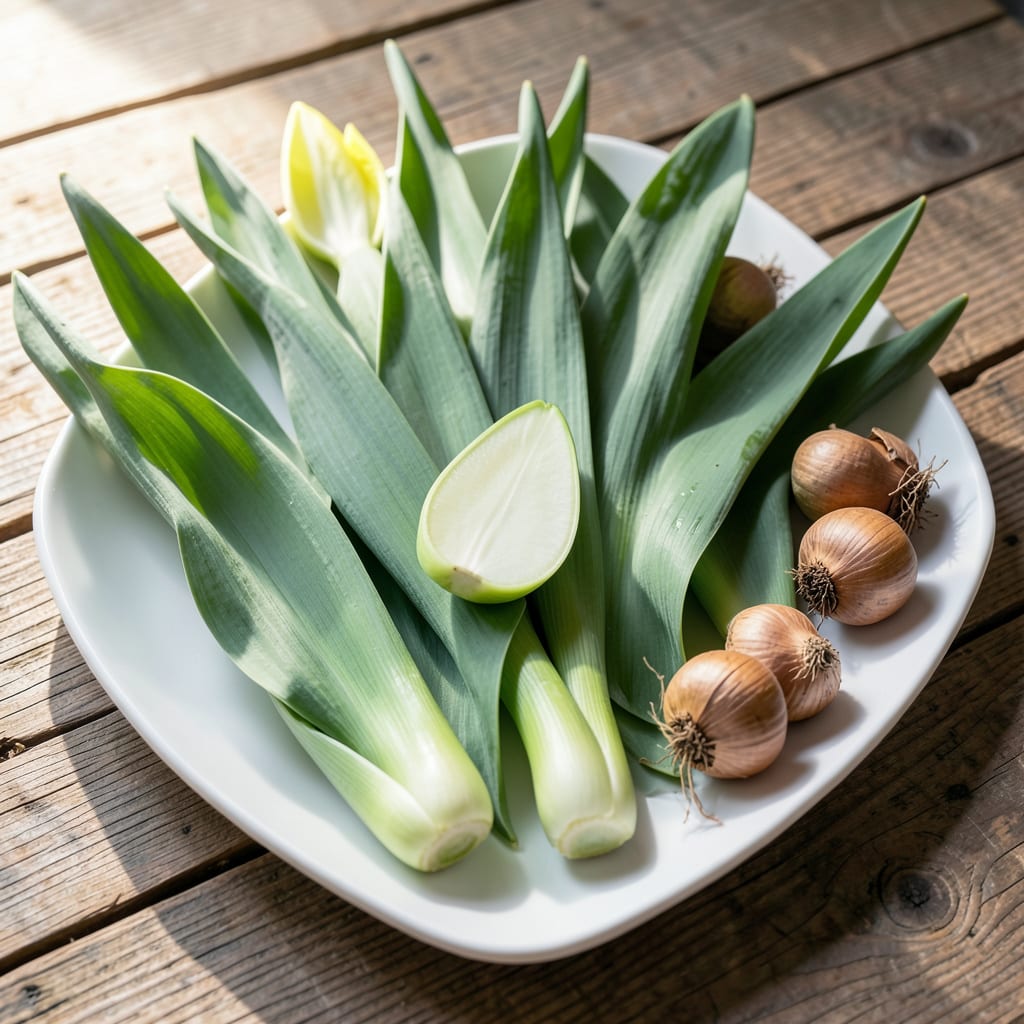
I used to stare at my garden wondering which bulbs were coming up. Leaf shape is the simplest clue—long and grass-like, broad and strap-like, or even round and hollow.
Once you notice the patterns, identification becomes second nature. You’ll spot the difference between daffodils and tulips before they bloom, and give each plant exactly the care it needs.
📚 In This Guide
Master these visual cues and you’ll distinguish bulb species with confidence in any garden setting.
Begin by examining where the leaf emerges from the bulb or stem. Strap-shaped leaves like those of daffodils and tulips wrap around the stem at the base, creating a distinctive sheath. This is a key identifier for many true bulbs in the Amaryllidaceae family.
In contrast, lance-shaped leaves such as those on hyacinths attach directly to the stem without wrapping. Note the texture too—some bulb leaves have a slight waxy coating, while others feel more papery or leathery to the touch.
Slice a leaf lengthwise (or gently fold it) to reveal its internal structure. Flat leaves with parallel veins, like those of alliums, indicate monocotyledonous plants typical of bulb species. These veins run the entire length without branching.
The thickness matters as well. Succulent bulb leaves, such as those on agapanthus, have a fleshy, almost rounded cross-section, while others like crocus leaves appear nearly paper-thin when viewed edge-on.
Use your fingers or a ruler to compare leaf dimensions. Narrow leaves with a length-to-width ratio greater than 10:1 (like chives) are characteristic of many edible bulb plants. These often grow in clumps rather than solitary stems.
Conversely, broad leaves with ratios closer to 3:1 or 4:1, such as those on hosta-like bulb plants, suggest species adapted to shadier conditions. The midrib (central vein) is often more pronounced in broader leaves, creating a visible ridge on the underside.
Some bulb leaves develop specialized structures. Look for keeled leaves (with a sharp ridge) on plants like iris, or hollow leaves in some allium species. These adaptations often correlate with the plant’s native habitat and water conservation needs.
Color patterns can be diagnostic too. Many bulb leaves show glaucous coloring (a blue-green, waxy appearance) or variegation (stripes or spots), which are stable identifiers. Note that some varieties change color as they mature, from deep green to purple-tinged in full sun.
Observe how the leaves change throughout the growing season. Some bulbs, like daffodils, produce erect leaves that persist long after flowering. Others, such as tulips, have leaves that yellow and die back within weeks of blooming.
The emergence pattern matters too. Spring bulbs often push leaves through the soil before flowers appear, while summer bulbs may produce leaves and flowers simultaneously. This timing is one of the most reliable identification clues available.
These refined techniques will sharpen your ability to distinguish bulb species in any garden.
The Texture Factor: In Step 1, pay close attention to leaf texture as it often reveals more than shape alone. Waxy coatings typically indicate species adapted to dry conditions, while papery or leathery textures often belong to moisture-loving bulbs. I’ve found this distinction particularly helpful when dealing with similar-looking species.
Cross-Section Insight: For Step 2, remember that the internal structure is just as telling as the external shape. Parallel veins are a hallmark of monocots, but the thickness of the leaf can also hint at the bulb’s water storage capacity. Succulent leaves suggest a plant that thrives in arid environments.
Ratio Precision: When measuring length-to-width ratios in Step 3, use a ruler for accuracy, especially with narrow leaves. A ratio greater than 10:1 often indicates edible species, while broader leaves may belong to ornamental bulbs. This simple measurement can save you from misidentifying a plant.
Seasonal Clues: Step 5’s emphasis on seasonal changes is critical. Documenting when leaves emerge, their color shifts, and their lifespan provides a timeline that’s often unique to each species. I always note these changes in my garden journal for future reference.
Look for key traits: long, strap-like leaves (e.g., daffodils), wide, flat blades (e.g., tulips), or grass-like, thin leaves (e.g., crocus). Shape, width, and veining are your best clues!
Early spring is ideal, as leaves emerge fresh and distinct. Avoid late summer when foliage may yellow or die back, making traits harder to spot.
Not always! Combine leaf shape with other clues like flower structure, height, or bloom time for accurate ID. Some bulbs share similar leaves.
Pests, disease, or poor soil can distort leaves. Check for spots, holes, or discoloration—these may hint at health issues rather than the bulb’s true identity.
Yes! Apps like PlantNet or iNaturalist use photo recognition to suggest matches. Pair them with a field guide for best results.
