
Beautiful Plants For Your Interior
Beautiful Plants For Your Interior
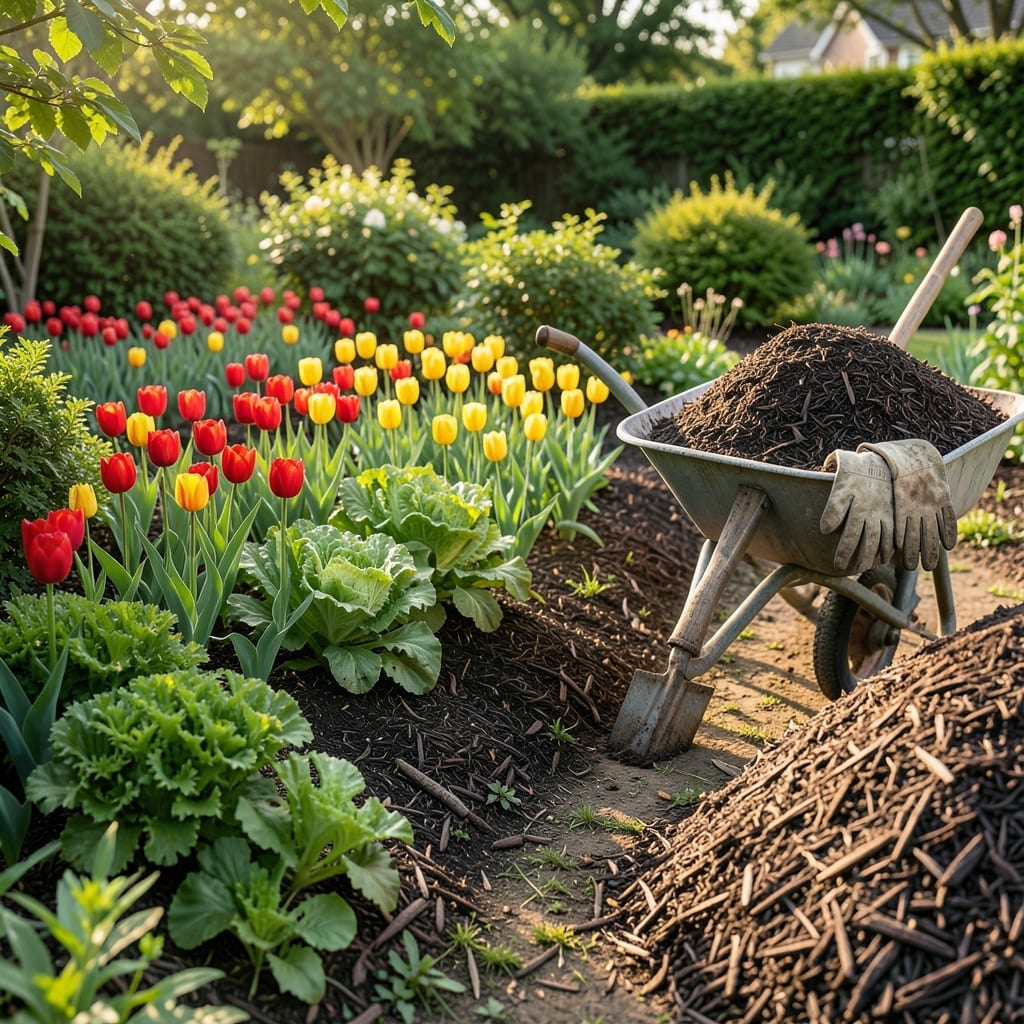
Start by clearing weeds and debris, then spread a 2-4 inch layer of mulch evenly around plants, keeping it 2-3 inches away from stems to prevent rot and pests.
I always recommend this method because it creates a protective barrier that locks in moisture while blocking weeds from sprouting. 🔥 This spacing is crucial—mulch too close to stems can trap excess moisture, leading to fungal issues. Proper application also helps regulate soil temperature, giving roots a stable environment to thrive in all seasons.
💡 In This Article
Mulch creates a protective layer that slows water evaporation from soil by up to 70%. This moisture retention means you can water less frequently while ensuring plants receive consistent hydration. The barrier also blocks sunlight from reaching weed seeds, preventing germination and reducing weed growth by 80-90% in well-maintained beds. 🔥
Soil temperature stays more stable under mulch, fluctuating only 5-10°F between day and night compared to 20-30°F in bare soil. This stability protects roots from extreme heat or cold. As organic mulch breaks down, it adds nutrients to the soil, improving structure and fertility over time. 🌟
For best results, use finer mulches like shredded bark in vegetable gardens where you need to replenish annually. Coarser options like wood chips work better around trees and shrubs, lasting 3-5 years before needing replacement. The decomposition process also encourages beneficial microbial activity in the soil. ✨
Proper spacing prevents stem rot by allowing air circulation. Mulch piled against plant bases can create humid conditions that attract pests and diseases. A 2-3 inch gap lets plants breathe while still enjoying all the benefits of mulch coverage. 💫
In hot climates, mulch can reduce soil temperatures by 10-15°F during peak summer months. This cooling effect is especially valuable for heat-sensitive plants. The same layer also prevents soil compaction from heavy rains, maintaining better aeration for roots. ⚡
Aim for a 2-4 inch layer across the entire area. Too thin and it won’t suppress weeds effectively, while too thick can suffocate plant roots and prevent water from reaching the soil.
Spring and fall are ideal, after soil has warmed up in spring or before the first freeze in fall. This timing helps regulate soil temperature and retain moisture during critical growing periods.
Yes, a 1-2 layer of newspaper can help block weeds before adding mulch. Use only black ink pages and avoid glossy inserts, as these may contain harmful chemicals.
Organic mulches like wood chips typically need refreshing every 1-2 years as they decompose. Check annually and top up as needed to maintain the proper depth.
Piling mulch against plant stems, called “volcano mulching,” traps moisture and invites pests. Always keep a 2-3 inch gap around stems and tree trunks.