
Beautiful Plants For Your Interior
Beautiful Plants For Your Interior
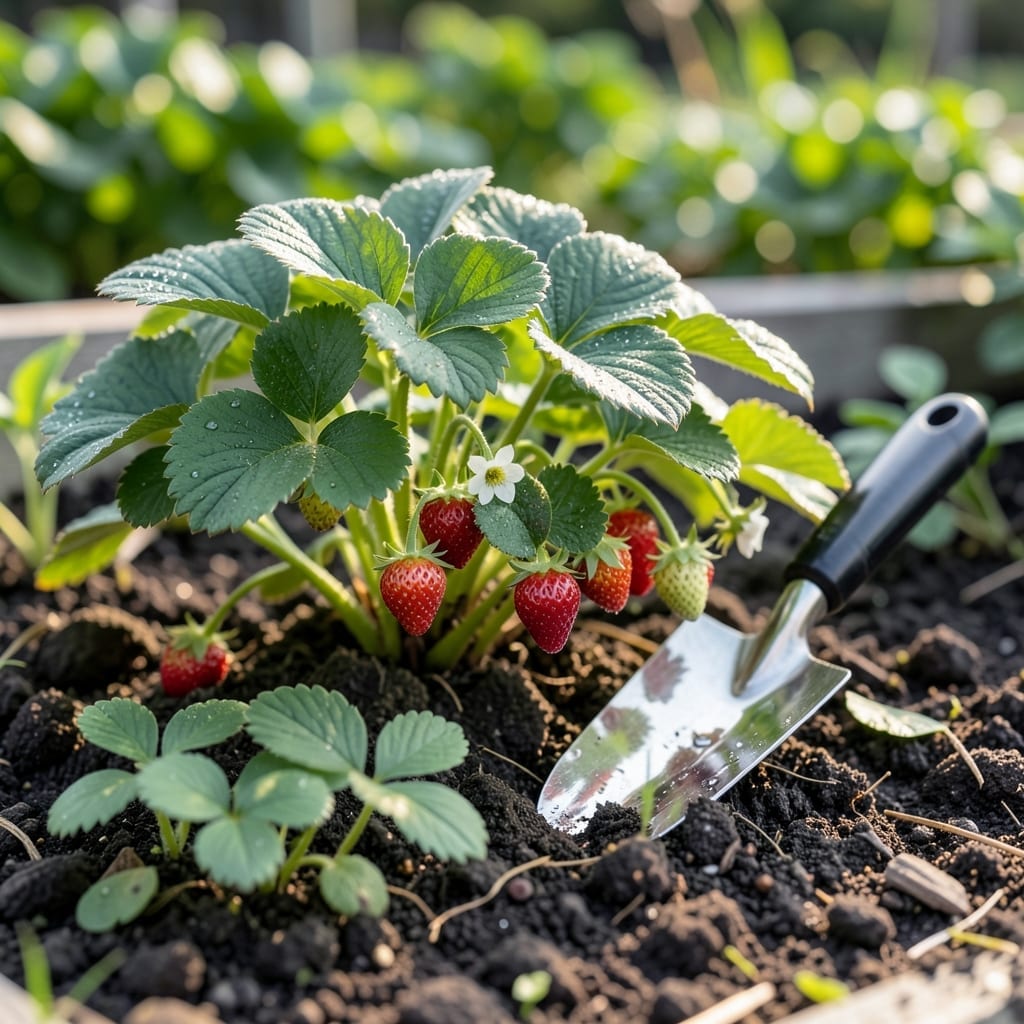
Plant strawberries in early spring or fall for best results. Spring planting yields fruit the following year, while fall planting establishes roots before winter for an earlier harvest.
I’ve found that timing directly impacts root strength and fruit production. Early spring planting gives 4-6 weeks of growth before summer heat, while fall planting leverages cooler temps for robust root systems. This approach ensures plants survive winter and produce bigger berries earlier in the season. 🌟
Different varieties respond uniquely to these windows, so matching your climate zone with the right planting schedule maximizes success.
💡 In This Article
Strawberry plants develop roots most efficiently in 50-60°F soil, which is why spring and fall are ideal. This temperature range triggers rapid root growth without stressing the plant. The crown (where roots meet leaves) remains dormant below 40°F, but warms quickly in spring to kickstart growth. 🔥
Day length is the secret switch for fruiting. June-bearing varieties need 14+ hours of daylight to set buds, while day-neutral types produce regardless of photoperiod. Fall planting leverages shortening days to establish roots before winter dormancy, then bursts into growth as days lengthen in spring.
Frost tolerance varies by variety, but most strawberries survive down to 20°F once established. Fall-planted strawberries develop a thicker crown and deeper roots, giving them a 30-50% better survival rate through winter. This head start means they can produce fruit 2-3 weeks earlier than spring-planted counterparts.
Temperature also affects flower production. Blossoms can be damaged at 28°F, but established plants often produce a second flush of flowers. Spring planting may yield fewer berries the first year, but the wait allows plants to build energy reserves for bigger harvests in following seasons.
What most gardeners overlook is how soil temperature lags behind air temperature. Even when air hits 60°F, soil may still be 10-15°F cooler. Using black plastic mulch can warm soil 5-10°F faster, giving spring-planted strawberries a critical early boost. ✨
It’s not ideal, but possible with extra care. Summer heat stresses new plants, so you’ll need to provide consistent watering and shade. Expect lower survival rates and delayed fruit production compared to spring or fall planting.
Spring planting yields fruit the following year, while fall planting establishes roots before winter for an earlier harvest. Fall-planted strawberries often produce 2-3 weeks sooner the next season.
Soil should be workable and at least 50°F. Test by squeezing a handful—if it crumbles easily, it’s ready. If it stays in a tight ball, wait a few more days for it to dry slightly.
Yes! June-bearing types prefer spring planting in cooler zones, while day-neutral varieties can handle both spring and fall. Everbearing types are most flexible. Always match your variety to your climate.