
Beautiful Plants For Your Interior
Beautiful Plants For Your Interior
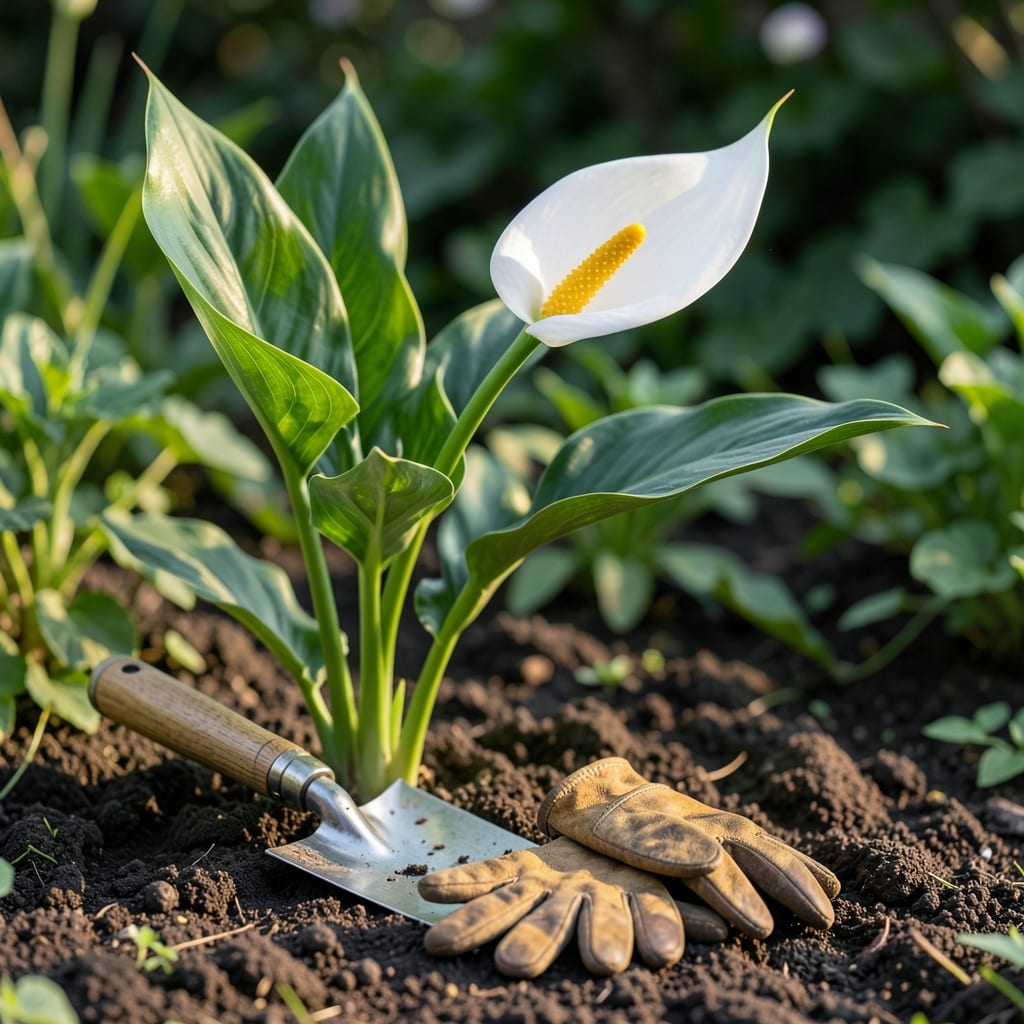
Calla lilies thrive in partial shade to full sun locations with well-draining, moist soil. Plant them in spots protected from strong winds for best growth and blooming.
I’ve found these elegant plants do exceptionally well near eastern-facing walls or under dappled tree canopies, where they get morning light without harsh afternoon exposure. Their rhizomes rot easily in soggy ground, so amending clay soil with compost creates the perfect balance of moisture retention and drainage for healthy root systems. ✨
💡 In This Article
Calla lilies develop their signature glossy foliage and trumpet-shaped blooms through photosynthesis optimized at 6-8 hours of indirect light daily. This light exposure triggers chloroplast activity in their arrowhead leaves, producing the energy needed for their striking white, pink, or yellow spathes.
Too much direct sun can scorch the leaves, while deep shade results in leggy, non-flowering plants.
Their rhizomes require soil with a pH of 6.0-6.5, slightly acidic to neutral, which allows optimal nutrient uptake. In this range, iron and phosphorus become most available, preventing the yellowing leaves that signal chlorosis. The soil should retain moisture like a wrung-out sponge but drain excess within 2-3 hours to prevent rot.
Amending with 30% compost improves both drainage and water retention.
Morning sun is ideal as it’s less intense, providing gentle warmth that accelerates metabolic processes without stressing the plant. Eastern exposures often provide this perfect balance. The warmth also helps dry morning dew from the leaves, reducing fungal disease risks that thrive in damp conditions. 🌟
In hotter climates, afternoon shade becomes crucial as temperatures above 85°F can inhibit flower formation. The plant conserves energy by closing stomata during peak heat, which would otherwise be used for bloom production. This is why gardeners in zones 8-10 often see better results with dappled shade throughout the day.
Well-draining soil prevents the most common calla lily killer: rhizome rot. The rhizomes store nutrients and water, but when submerged, they can’t access oxygen. Adding 1-2 inches of perlite or coarse sand to planting holes creates air pockets that keep roots breathing while maintaining moisture. ✨
Morning sun is ideal as it’s gentler and helps dry dew from leaves, reducing disease risk. Afternoon shade is best in hot climates, as temperatures above 85°F can inhibit flowering.
Amend soil with 30% compost and add 1-2 inches of perlite or coarse sand to planting holes. This creates air pockets while maintaining moisture.
Yes, under dappled tree canopies works well. They get filtered light while roots stay cool. Just ensure they’re not competing with shallow tree roots.
They thrive in slightly acidic to neutral soil, with a pH of 6.0-6.5. This range optimizes nutrient uptake and prevents leaf yellowing.