
Beautiful Plants For Your Interior
Beautiful Plants For Your Interior
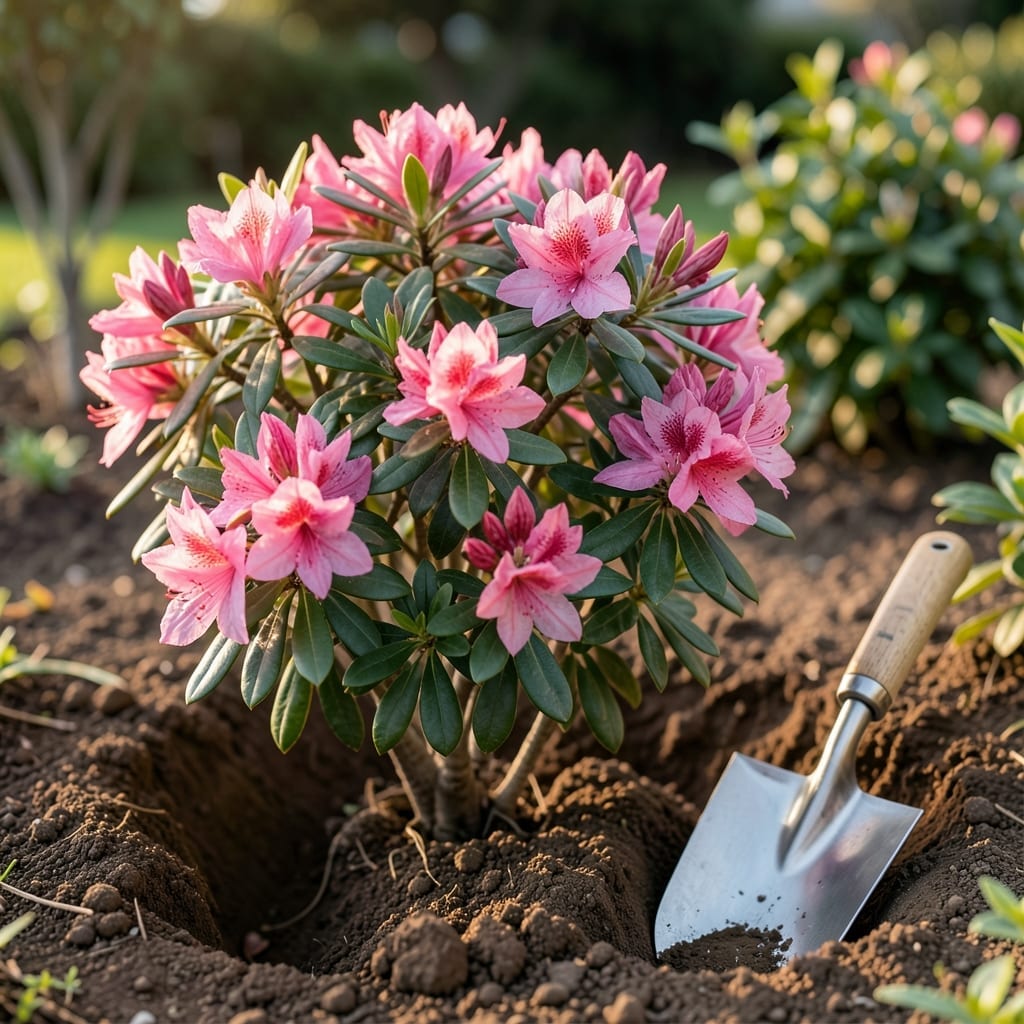
Azaleas struggle in clay soil due to poor drainage and compacted roots. Amend the soil with organic matter like compost or pine bark to improve aeration and water flow for healthier plants.
I’ve seen firsthand how heavy clay can suffocate azalea roots by trapping water and blocking oxygen. 🌱 The key is breaking up that dense structure with coarse organic material—think pine fines or leaf mold—which creates air pockets while maintaining moisture balance. This approach also helps adjust the typically alkaline pH of clay toward the acidic range azaleas prefer.
💡 In This Article
Clay’s tiny, plate-like particles pack tightly together, creating a dense matrix that traps water and suffocates plant roots. Azaleas, which need consistent moisture but hate soggy conditions, drown when their fine roots can’t access oxygen in waterlogged clay.
The soil’s poor porosity means 90% of pore space may be filled with water after rain, leaving almost no room for air.
This compaction also restricts root growth physically. Azalea roots, which naturally spread wide and shallow, get stunted when they hit the hardpan typical of clay. Without proper expansion, the plant can’t absorb nutrients efficiently, leading to yellowing leaves and stunted growth.
The issue worsens in heavy clay where drainage rates drop below 0.1 inches per hour. 🌱
pH imbalance compounds the problem. Most clay soils test between 7.0-8.5 on the pH scale, while azaleas thrive in acidic conditions of 4.5-6.0. In alkaline clay, essential nutrients like iron become chemically locked up, causing chlorosis (yellow leaves with green veins) even if the nutrients are present in the soil.
The solution lies in breaking up that dense structure. Adding coarse organic matter like pine bark fines or composted oak leaves creates macropores that allow both water and air to move freely. These amendments also introduce beneficial microbes that help decompose organic material into plant-available nutrients.
What most gardeners don’t realize is that clay isn’t inherently bad—it holds nutrients well. The trick is improving its physical structure without removing it entirely. A 50/50 mix of existing clay and amendments often works better than replacing all the native soil, as the clay still provides mineral nutrients while the organic matter improves drainage.
⚡
Azaleas will likely develop yellow leaves and stunted growth due to poor drainage. Their roots suffocate in waterlogged clay, and alkaline pH locks up essential nutrients like iron.
Work amendments into the top 12-18 inches of soil. This gives shallow azalea roots room to spread while improving drainage throughout their active growing zone.
No, fine sand can create a concrete-like mixture with clay. Use coarse sand or better yet, organic matter like pine bark for effective structure improvement.
Test after the first amendment, then annually. Azaleas prefer 4.5-6.0 pH. Adjust with sulfur or acidic fertilizers if needed.